









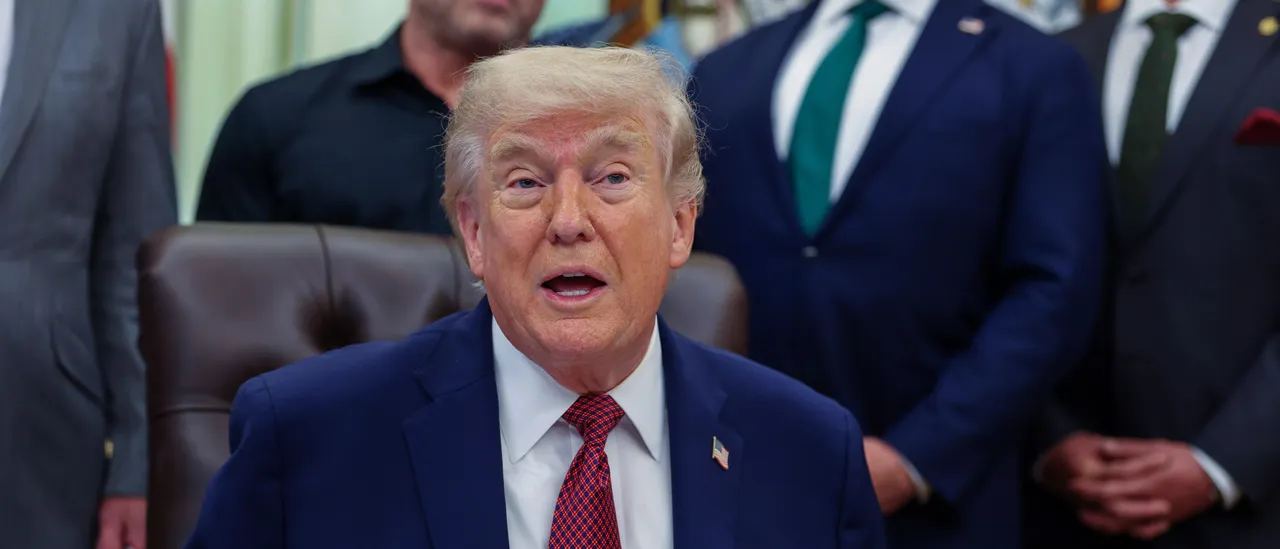
In a Friday letter to Speaker Mike Johnson and President pro tempore of the United States Senate Chuck Grassley, President Donald Trump declared that U.S. hostilities with Iran have concluded ahead of a critical congressional deadline.
The White House laid out its rationale in the letter to the congressional leaders as the Middle East conflict reached the 60-day legal deadline under the 1973 War Powers Resolution, which requires operations to halt unless Congress authorizes continued military force, according to a Politico report.
NEW: President Trump formally sent a letter to Mike Johnson and Chuck Grassley on war powers Friday, writing that hostilities “have terminated:”
“On April 7, 2026, I ordered a 2-week ceasefire. The ceasefire has since been extended. There has been no exchange of fire between… pic.twitter.com/taskW8zOXe
— Kit Maher (@KitMaherCNN) May 1, 2026
Citing a ceasefire with Tehran that he said has been extended indefinitely, Trump argued that the clock has effectively stopped. “On April 7, 2026, I ordered a 2-week ceasefire. The ceasefire has since been extended. There has been no exchange of fire between United States Forces and Iran since April 7, 2026. The hostilities that began on February 28, 2026, have terminated,” the letter states. (RELATED: Iran, US Peace Talks Still Stuck In Mud, Trump Says)
The letter aims to preempt a growing fight on Capitol Hill, where Trump risks losing Republican support as the conflict enters its second month without a clear exit strategy. Still, the administration’s rationale is unlikely to satisfy Democrats and some Republicans, who argue the U.S. must wind down operations now.
🚨 NOW — REPORTER: Will you do new strikes on Iran?
PRESIDENT TRUMP: “WHY would I tell you that?!”
The fake news never learn! 🤣🔥 pic.twitter.com/hyz57H2cwO
— Eric Daugherty (@EricLDaugh) May 1, 2026
Before departing the White House for Florida on Friday, Trump told reporters he had presented Iran with “a final proposal” but expressed doubt about securing a deal with what he called the country’s “disjointed” government. He said Iran has “made strides,” but added he’s “not happy” with the progress. (RELATED: Voters Now Trust Democrats More Than GOP On Economy Due To Iran War)
Defense Secretary Pete Hegseth had signaled the administration’s legal position a day earlier, telling senators during testimony that the ceasefire “means the 60-day clock pauses, or stops,” according to a report by The Hill.
Republican Maine Senator Susan Collins, in a notable break from her party, became the first Republican senator to support a measure to end the hostilities, citing the deadline. “That deadline is not a suggestion; it is a requirement,” she said in a Thursday statement explaining her vote.
🇺🇸🇮🇷 US President Trump says he is “not satisfied” with Iran’s new peace proposal.pic.twitter.com/vVyapplHRp
— Jackson Hinkle 🇺🇸 (@jacksonhinklle) May 1, 2026
Iran war opponents argue Trump is misinterpreting the War Powers statute, pointing out that U.S. involvement hasn’t fully ended. Despite the ceasefire, American forces continue enforcing a blockade on Iran, and roughly 50,000 troops remain stationed in the Middle East. (RELATED: As Iran War Oil Stranglehold Continues, Another Crisis Brews)
Trump pushed back Thursday, dismissing lawmakers seeking congressional authorization. “I don’t think it’s constitutional what they’re asking for,” he said. “These are not patriotic people,” according to Politico.
He also argued that past presidents have gone beyond the 60-day limit, saying, “Many presidents, as you know, have gone and exceeded it,” and adding, “Every other president considered it totally unconstitutional.”
Source: Read Full Article