









As “free birth” and low-intervention pregnancies remain an attractive option to some, a recent episode of “The Pitt” highlighted what can happen when routine prenatal monitoring is absent.
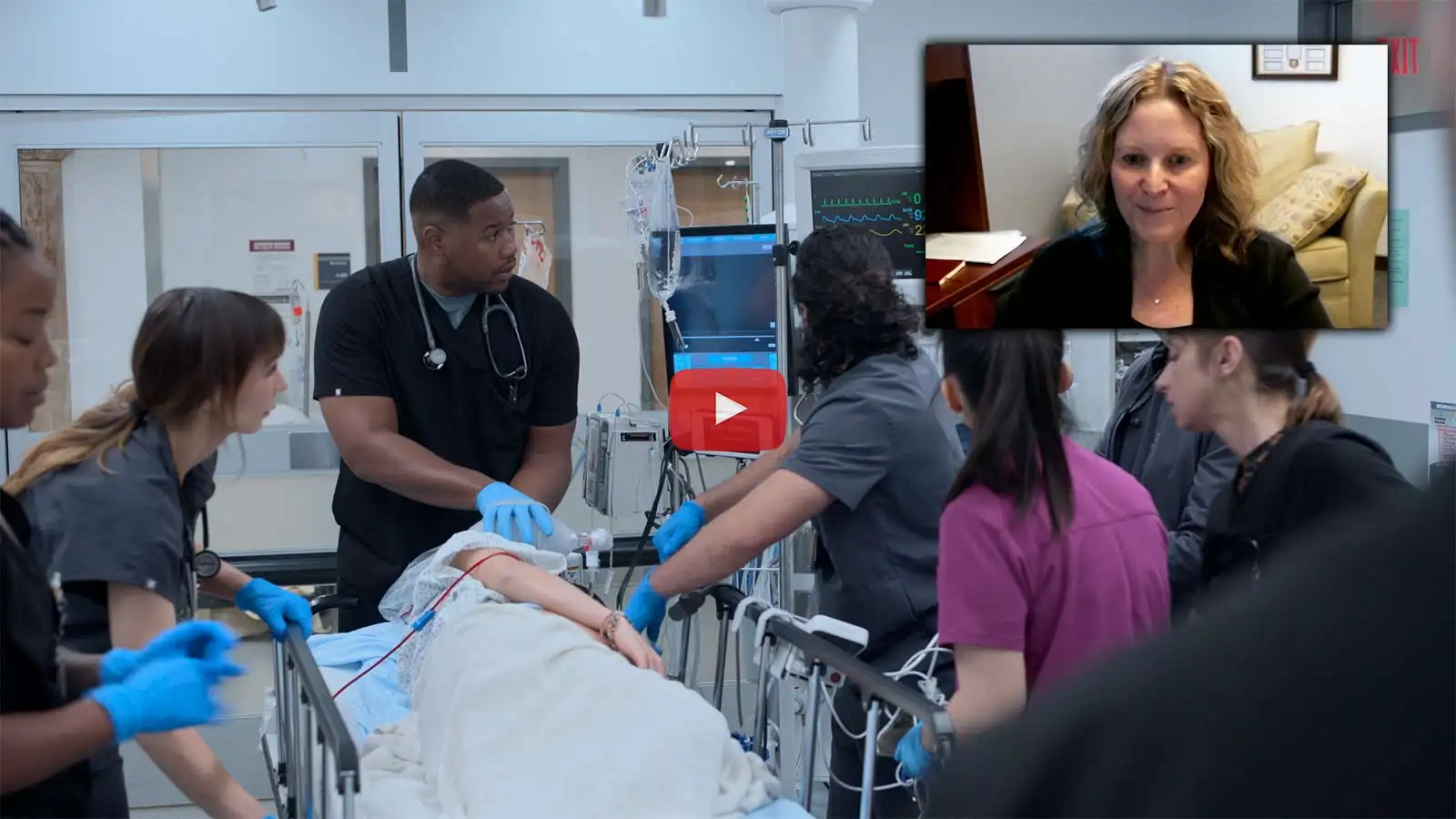
In this MedPage Today video, Nikki B. Zite, MD, MPH, of the University of Tennessee Medical Center in Knoxville, breaks down a case of undiagnosed preeclampsia that rapidly progressed to hemolysis, elevated liver enzymes, and low platelets (HELLP) syndrome and eclampsia on the show — and what people should take away from the scenario.
The following is a transcript of her remarks:
“The Pitt” clip: Preeclampsia
Zite: So the story in “The Pitt” involved a patient who came in by ambulance who was term pregnant and had a headache not relieved by anything that she had tried at home. Upon initial evaluation, she was found to have dangerously high blood pressure, and when they asked her about her prenatal care, she stated that she had not obtained any prenatal care because she had desired a free birth or wild birth.
I think they mentioned that she also had abnormal labs, which they got amazingly fast, but that her platelets were very low and her liver enzymes were high. So she actually had HELLP syndrome, which is even further down the spectrum of preeclampsia or pregnancy-induced hypertensive disorders. And then once she seized, she had eclampsia.
We like to say that pregnancy is low risk until it’s not low risk, and that a lot of people probably can have non-hospital, non-medicated, low-intervention births and be just fine. But it’s the constant assessment of whether or not someone would risk out of that that could make that situation safer. Freebirths or people with those wild births, they don’t have those assessments. They’re not even seeing a midwife to get a blood pressure check or a midwife to check and see if they do have protein in their urine. So they wouldn’t diagnose preeclampsia early enough that we could intervene before it becomes eclampsia.
I mean, eclampsia is pretty rare, but if it’s going to happen, it would happen in a situation where it’s not well monitored. Or this situation, she made it to 37 weeks. That’s actually great because the baby was term. When we see people come in, either they were found down at home because they had a seizure or they’re seizing as they’re coming in. That’s less ideal than what they had. So at one point one of the doctors said, “It doesn’t get worse than that.” I’m like, oh, it gets worse. We’ve seen worse.
I actually think “The Pitt” did a really nice job of both the clinical vignette and addressing what I would say is a kind of public health issue right now with people who are attempting these wild or freebirths. I think that they showed that, again, while pregnancy is usually safe and not needing of interventions like an emergency section, it does happen. And when it does happen, you want to be in a setting where someone could get a baby out in less than a minute and could intubate mom and take care of her.
While they said that this was one of the worst-case scenarios, the fact that it all happened while she was already in a unit that was able to take care of her was amazing. If she had seized at home, she and her baby would have died.
Source: Read Full Article