







US government releases huge batch of UFO files

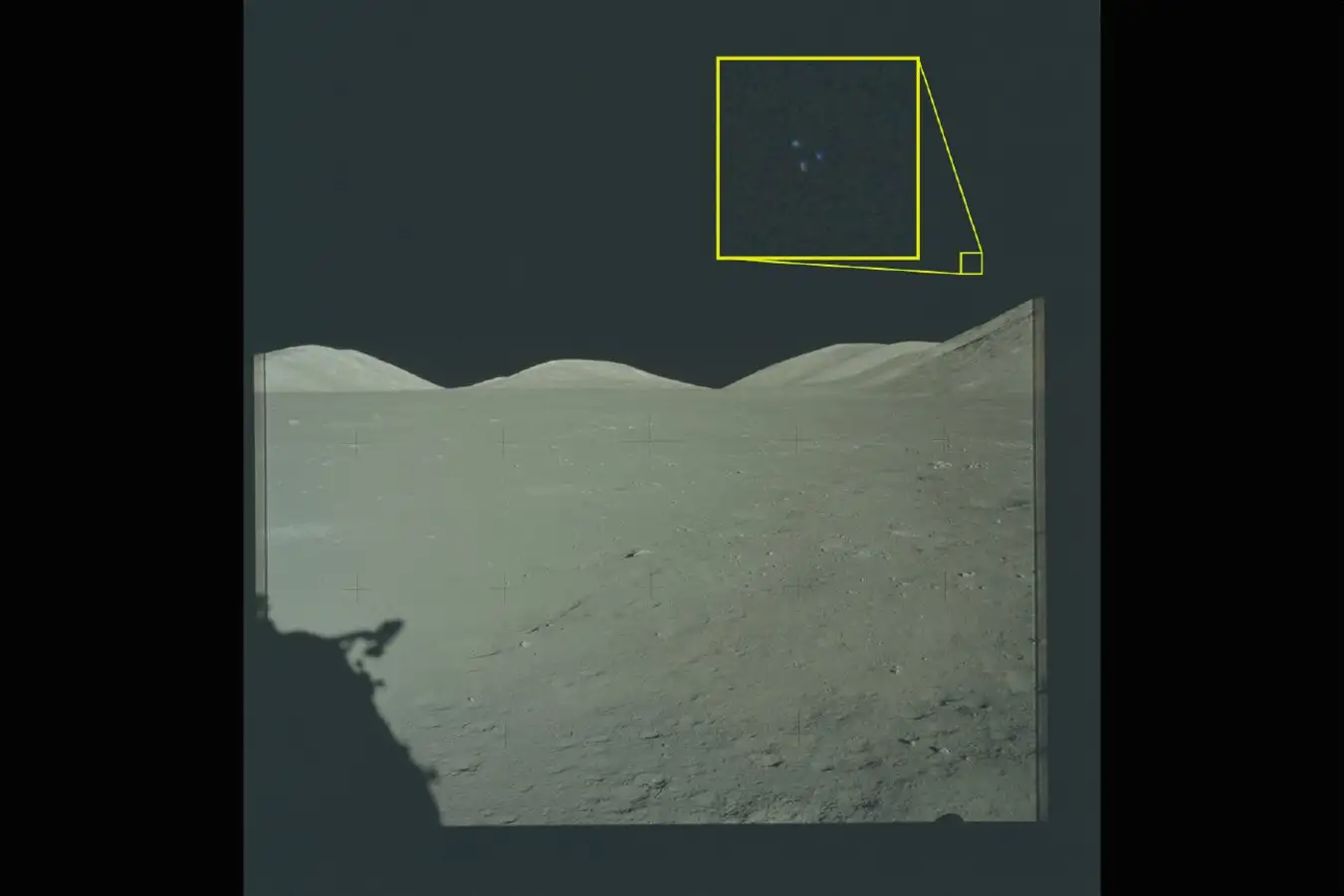
Archival imagery from the Apollo 17 mission to the moon. The yellow box contains an enlarged area of the original photo in which three lights are visible above the lunar terrain US Department of Defense The US Department of Defense (DoD) released a trove of files on UFOs. The files include images along with government…

Read More

Why Geologists Love Pond Scum

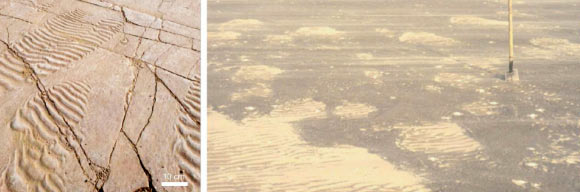
If you’ve ever wondered how geologists know so much about ancient beaches and shallow oceans — from the paleoenvironment to the animals roaming around, the seasonality of the weather, and even the time of day when the ancient scene was preserved — they owe it all to the sand particles bound together by microbes, forming…

Read More

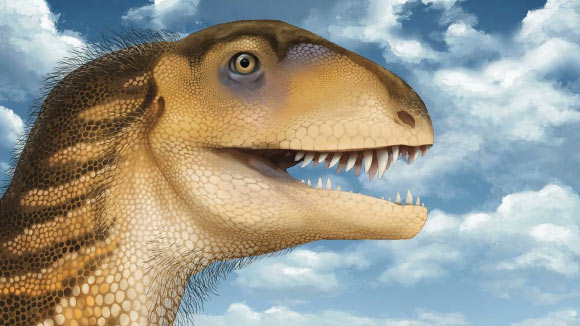
New Triassic Dinosaur Species Identified in New Mexico

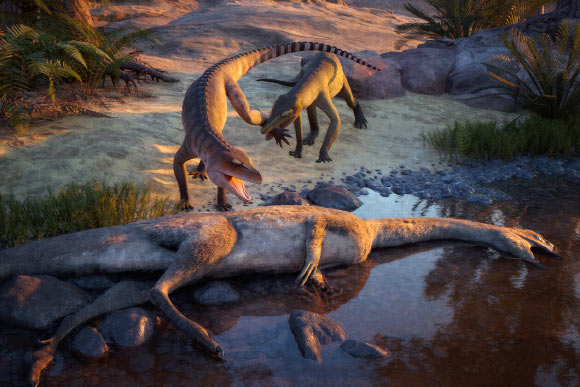
A new genus and species of carnivorous herrerasaurian dinosaur has been described from an incomplete but well-preserved skull found in northern New Mexico, the United States. An artistic rendition of Ptychotherates bucculentus. Image credit: Megan Sodano / Virginia Tech. The new dinosaur species roamed our planet around 201 million years ago during the Rhaetian stage…

Read More

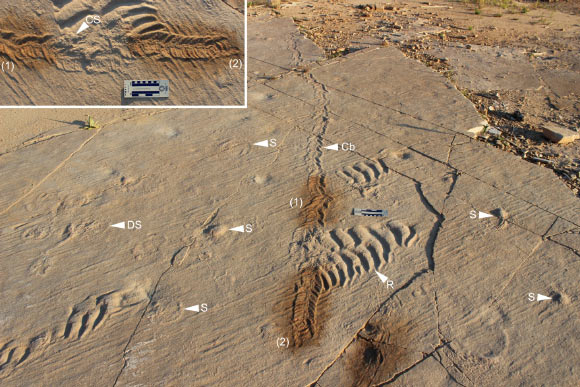
Ancient Tidal Flats Were Busier Than We Thought

New trace fossil discoveries from the half-billion-year-old Cambrian tidal flats of Wisconsin at a site called Blackberry Hill continue to paint the picture of some of the earliest animals to set foot on land and what they might have been eating. The mollusk trail Climactichnites blackberriensis (Cb) presumably stopping to eat a scyphozoan (jellyfish) that…

Read More

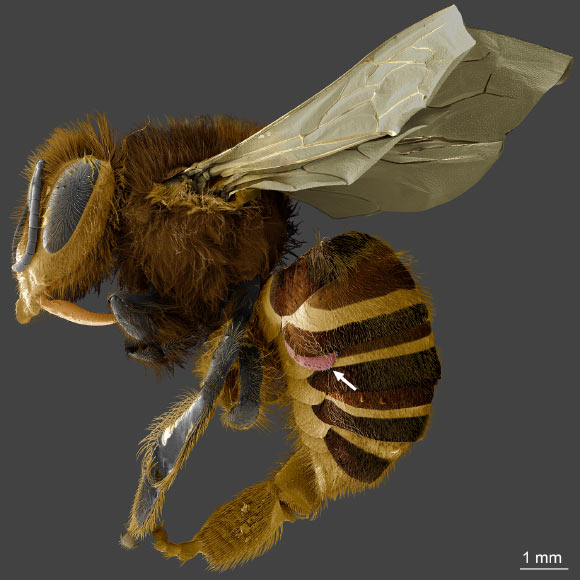
Californian Hybrid Honeybee Population Has Evolved Natural Defense against Varroa Mites: Study

Honeybees (Apis mellifera) are important ecological and agricultural pollinators. In the United States, beekeepers experience substantial annual colony losses, largely driven by parasites such as the mite Varroa destructor. In new research, scientists studied a hybrid honeybee population in Southern California, a genetic mix of Western European, Eastern European, Middle Eastern, and African lineages. They…

Read More

Permian Fossil is Earliest Evidence of Rib-Powered Breathing

Paleontologists have examined 289-million-year-old specimens of the early reptile Captorhinus aguti that preserve a covering of three-dimensional skin, a complete shoulder girdle and ribcage with cartilages, and — most astonishingly — protein remnants that predate the previous oldest-known example by nearly 100 million years. Captorhinus aguti. Image credit: Michael DeBraga. The move from water to…

Read More

500-Million-Year-Old Fossil Identified as Oldest Known Chelicerate

Paleontologists at Harvard University have described a large predatory arthropod from the Middle Cambrian of Utah featuring massive three-segmented chelicerae. Named Megachelicerax cousteaui, this soft-bodied animal represents the earliest known member of the chelicerates, pushing back the origins of spiders, scorpions, horseshoe crabs, and sea spiders by 20 million years. The surprisingly complex anatomy of…

Read More