









When you buy through links on our articles, Future and its syndication partners may earn a commission.
The Lyrid meteor shower peaks tonight! We’re ready… are you?. | Credit: Created in Canva Pro
Heads up, skywatchers! Don’t miss the Lyrid meteor shower tonight, as activity peaks in the predawn hours of April 22.
Under ideal conditions, it’s possible to see up to 20 meteors per hour during the peak, with the chance to witness dramatically bright flashes known as fireballs.
Viewing conditions are looking promising for the Lyrids this year. The moon will set around midnight, leaving darker skies for the peak hours before dawn. While the shower continues through April 25, tonight offers your best chance to catch it at its peak.
Where to look
Lyrids can appear anywhere in the sky, but they trace back to an origin point known as a radiant in the constellation Lyra, near the bright star Vega.
Lyra rises in the northeast and climbs higher as the night goes on, making the early morning hours the best time to watch. For the most impressive streaks, look slightly away from the radiant — this is where meteors appear longer and more dramatic,
And if you can’t get outside, you can still enjoy the show via live night sky streams from around the world.
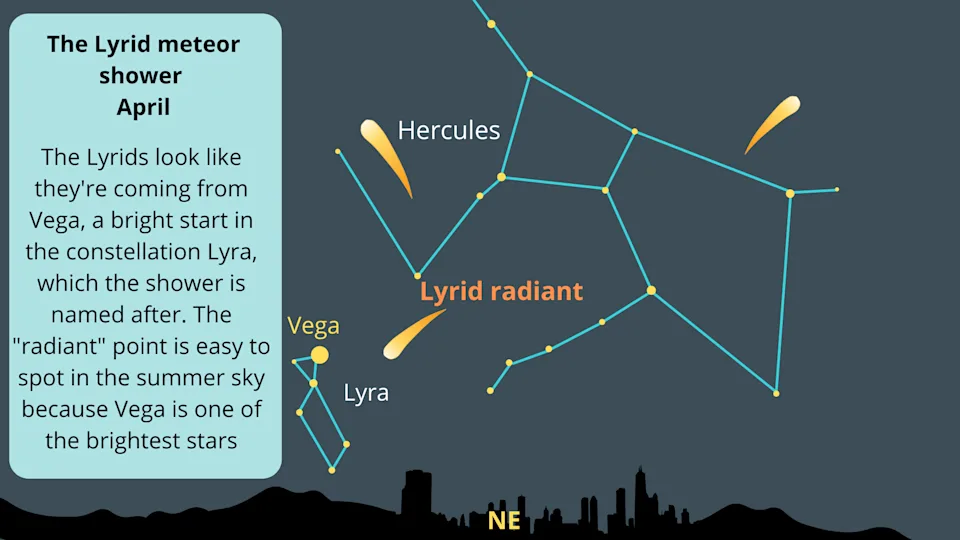
The radiant of the Lyrid meteor shower is located near the Hercules-Lyra border. | Credit: Future
When to look
The best time to look for Lyrids is in the early morning hours of April 22, just before dawn. By this time, Lyra is high in the sky and the moon has already set, reducing light interference.
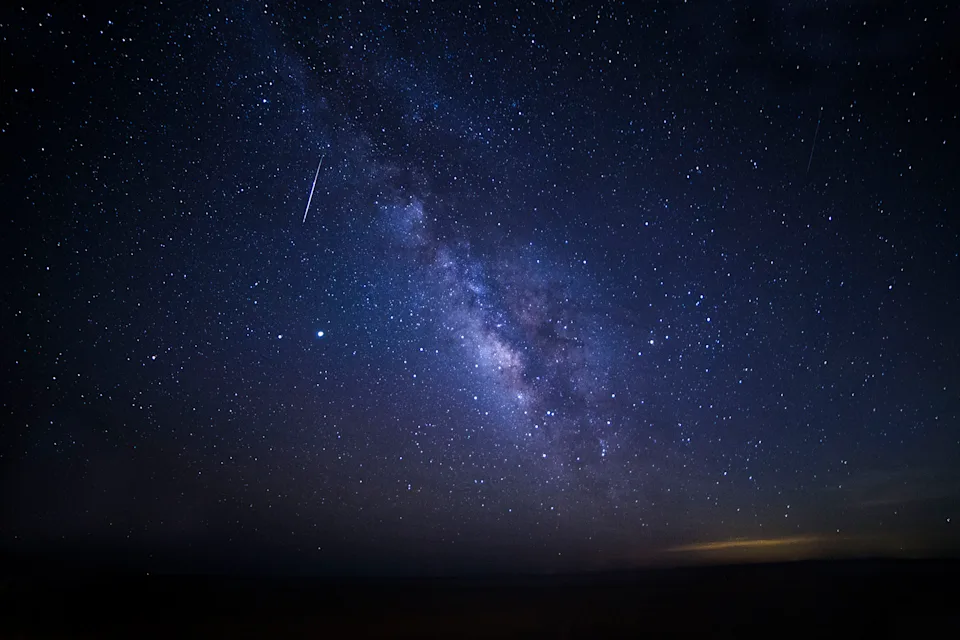
A Lyrid meteor crosses the Milky Way galaxy in this photo taken by Tina Pappas Lee on Fripp Island, South Carolina. The photo was taken at approximately 4:45 a.m. local time on April 22, 2020. | Credit: Courtesy of Tina Pappas Lee
What are they?
When you see a Lyrid meteor, you’re watching a tiny piece of Comet Thatcher burning up in Earth’s atmosphere.
Comet Thatcher is a long-period comet that last made its closest approach to Earth in 1861. Each year, our planet plows through the debris it left behind, producing the Lyrid meteor shower.
Viewing tips
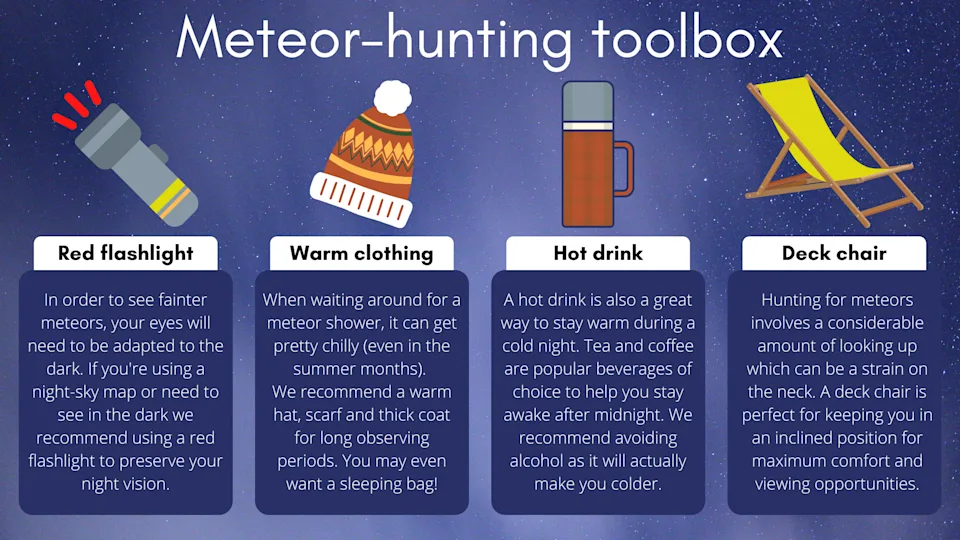
To best see the Lyrids, go to the darkest possible location, lean back and relax. | Credit: Future
-
Head to a dark location away from city lights if possible
-
Once there, allow your eyes at least 20-30 minutes to adjust to the darkness and avoid looking at your phone during this time (easier said than done!) as doing so will reset your night vision
-
Wrap up warm as you could be outside for a long time. Meteors can come in bursts, so give yourself at least an hour to enjoy the show.
If you’re hoping to capture the Lyrid meteor shower on camera, our guide on how to photograph meteor showers can help. We’ve also rounded up the best cameras for astrophotography if you’re thinking of upgrading your kit for the next big sky show.
Editor’s note: If you capture a photo of the Lyrid meteor shower and would like to share it with Space.com’s readers, send your photo(s), comments, and your name and location to spacephotos@space.com.
Source: Read Full Article