










Manufacturing computer chips is never a perfect process
Apple
Apple may be ramping up its use of defective chips to manufacture its new low-cost laptop. That may sound bad, but it is actually an example of a common practice called “binning”, which reduces the cost and environmental impact of our smartphones and laptops.
The name originated in farming, where premium fruit and vegetables are sold to one type of customer, misshapen ones are set aside for others and the worst, perhaps even rotten, produce is used as animal feed. Everything has its purpose, separated into bins of different grades, with no waste. The same happens in semiconductor manufacturing.
Take Apple’s new MacBook Neo – it promises customers a more affordable Apple laptop option, using an A18 Pro system with five GPU cores. But the A18 Pro was previously used on the iPhone 16 Pro and had six GPU cores. Reports suggest that the reason for the discrepancy is that Apple is using leftover and binned A18 Pros that had a flaw in one core and making good use of chips that would have been disposed of otherwise. Apple didn’t respond to a request for comment, but experts told New Scientist that it is common practice for makers of everything from phones to cars and microwaves.
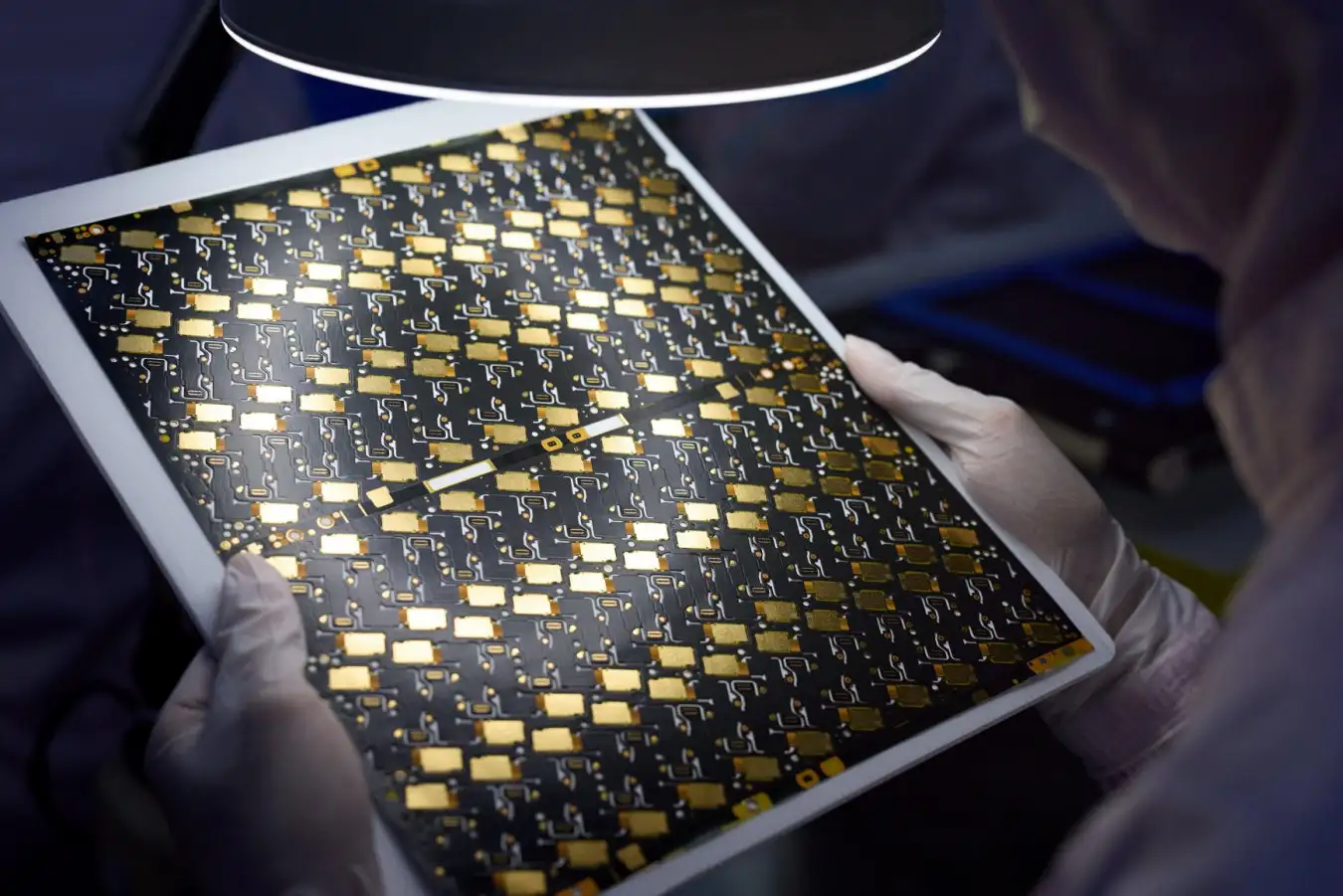
Owen Guy at Swansea University in the UK says that chips are made in batches of hundreds on a single 300-millimetre silicon wafer that contains trillions of individual transistors. Complex machinery performs thousands of individual operations on the wafer, setting down layers of circuit, insulation and various chemicals with thicknesses of just a few nanometres. If anything, it is more surprising that the fiendishly complex process works at all than that some chips will have flaws.
“There’s a small possibility that something could go wrong at each of those process steps,” says Guy.
The number of errors on a given wafer determines the yield rate – the number of chips that meet specifications. This might be as high as 99 per cent for relatively normal chips on silicon, which has been used to make chips since the 1960s, but rise with more ambitious chip designs and relatively newer and rarer substrate materials like silicon carbide or gallium nitride.
“The question then is what are the numbers of defects, and how serious are those defects? Because you can still have a chip, which works, which has some defects in it as long as they’re not what they call a killer defect,” says Guy.
Imagine a yield of 90 per cent, where 9 in 10 chips function exactly as planned. In that scenario, 1 in 10 chips will be binned. If there’s an error in a single core, this could mean labelling as a different product with five cores rather than six, or it could mean that it’s rated to work only at a lower voltage or frequency, or is specified as having a higher power use or running at a higher temperature. Somewhere there will be a customer who can make use of it.
Tony Kenyon at University College London says that to a user, there will be no indication that anything is wrong. Error-correction software will isolate broken transistors in a memory chip so that no data is ever lost, or route calculations around a damaged processor core so that no software ever crashes.
“If you lift the hood a little bit and look under that and see what’s going on at the level of individual transistors and gates and so on and so forth, there will be bits of the chip that maybe don’t function,” says Kenyon. “It’s very common. Everyone thinks that all chips are identical, and the reality is that they’re not.”
Topics:
Source: Read Full Article