










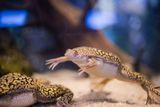
Cannibal frogs with prey-slicing claws, once used by doctors to determine whether women were pregnant, have been escaping their laboratories for decades.
African clawed frogs (Xenopus laevis) are an amphibian species native to much of sub-Saharan Africa. They have relatively flat bodies, including their heads, according to the Smithsonian’s National Zoo and Conservation Biology Institute. These amphibians can carry deadly diseases and are now invading ponds and waterways around the world — and they aren’t easy to get rid of.
“Pretty much every attempt to trap them or poison them or drain the pond failed,” Max Lambert, science director for The Nature Conservancy’s Washington state chapter, told Discover.
Whether it was doctors or repentant pet owners, many people over the decades have released their captive animals into nearby water instead of euthanizing or giving the animals away. This species of frog has an unusual history, one that has led to its invasion of natural habitats.
Read More: Detective Dogs, Toads, and Artificial Intelligence Can Help Control Invasive Species
African Clawed Frogs and Pregnancy Tests
Starting in the 1930s, South African researchers discovered that injecting urine from pregnant women into female clawed frogs could induce ovulation in the frogs. If the frogs laid eggs within a few hours or the next day, it signaled that the woman was pregnant, since injecting the urine of a non-pregnant woman wouldn’t have the same effect.
“Some doctors’ offices had aquariums full of these frogs,” Lambert said.
The African clawed frog is large. Some females will fit roughly in two human hands together, fingers and all. Though not actually claws, these frogs use their toes to tear and manipulate larger pieces of prey.
The pregnancy test was possible mainly because the hormones of many animals are similar.
“Vertebrates in general have very similar endocrinology pathways for reproduction,” Lambert told Discover.
Eventually, the frog test gave way to more efficient tests, but by then, researchers had found other uses for these frogs, which are easy to breed in captivity because they don’t require a well-cleaned tank.
Even today, researchers use the frogs to study the genetic pathways to limb regeneration — African clawed frogs are adept at this — and embryonic development, as their eggs are large and relatively easy to genetically modify and monitor. They are also relatively popular in the pet trade.
How African Clawed Frogs Became Invasive
Even as a scientific asset, some researchers would dispose of live embryos down laboratory drains, allowing them to get into sewers and waterways if conditions permitted.
One of the older invasive populations in the U.S. is found around Stanford University’s campus — a place where researchers have used the frogs in labs for decades. In Washington state, the frogs have at least three separate populations that likely stemmed from three releases.
In Lacey, a city south of Seattle, wildlife managers tried for years to eradicate the invasive frogs with little success.
Efforts to trap the frogs or treat the water with poison just prompted the frogs to retreat up into sewer drains until conditions improved.
“They’re pretty hard to kill, which also makes them a pretty problematic Invasive species,” Lambert added.
Do the Frogs Spread Disease?
Like many amphibians, African clawed frogs are vectors for chytridiomycosis, a deadly disease caused by the fungus Batrachochytrium dendrobatidis. Though they carry the fungus, they aren’t particularly susceptible to its effects, making them vectors for transporting the disease to other amphibians.
Some researchers believe that this fungus, whose origin is still debated, has led to the wholesale extinction of various amphibian species in the Americas and abroad. The fungus affects amphibian skin and their ability to breathe.
Lambert isn’t quite sure that the disease is as deadly as many herpetologists believe; however, he still thinks it can be a problem, especially when these invasive frogs colonize new areas. African clawed frogs are highly mobile and may introduce disease to new areas when they first arrive.
But once the clawed frogs — and chytrid — are established in an area, he added, they don’t continue to pose a huge threat in spreading the disease.
He’s more concerned about the way the large frogs muscle out the competition. African clawed frogs are generalist predators that eat other amphibians and small fish, such as salmon fry, according to the Canadian Journal of Zoology. They will even cannibalize themselves, eating tadpoles or smaller frogs. They will also compete with native frogs for food.
“It might just make it hard for native species to eat things in that food web,” Lambert told Discover.
Authorities in some areas are working on the problem. According to the Washington Department of Fish and Wildlife, it’s now prohibited to have African clawed frogs as pets in Washington state, for example. But trapping them in areas once established is still difficult. While they make great research subjects in the lab, it’s very difficult to learn more about them in the wild, which exacerbates the challenge of controlling invasions, according to a study in Frontiers in Amphibian and Reptile Science.
“They are very hard to research because of how hard they are to trap and monitor,” Lambert said.
Read More: Species Slip Through the Cracks of the U.S. Frog Trade, Some Sold at a Premium
Article Sources
Our writers at Discovermagazine.com use peer-reviewed studies and high-quality sources for our articles, and our editors review for scientific accuracy and editorial standards. Review the sources used below for this article:
Source: Read Full Article