









- Concomitant influenza and pertussis vaccination during pregnancy was not tied to an increased rate of adverse outcomes compared with pertussis vaccination alone.
- There was no difference in the rate of preterm birth or the odds of small for gestational age or low birth weight between matched concomitant and control groups.
- The findings “may help clinicians more confidently recommend pregnancy vaccination concomitantly and potentially provide more opportunities to optimize uptake,” the researchers noted.
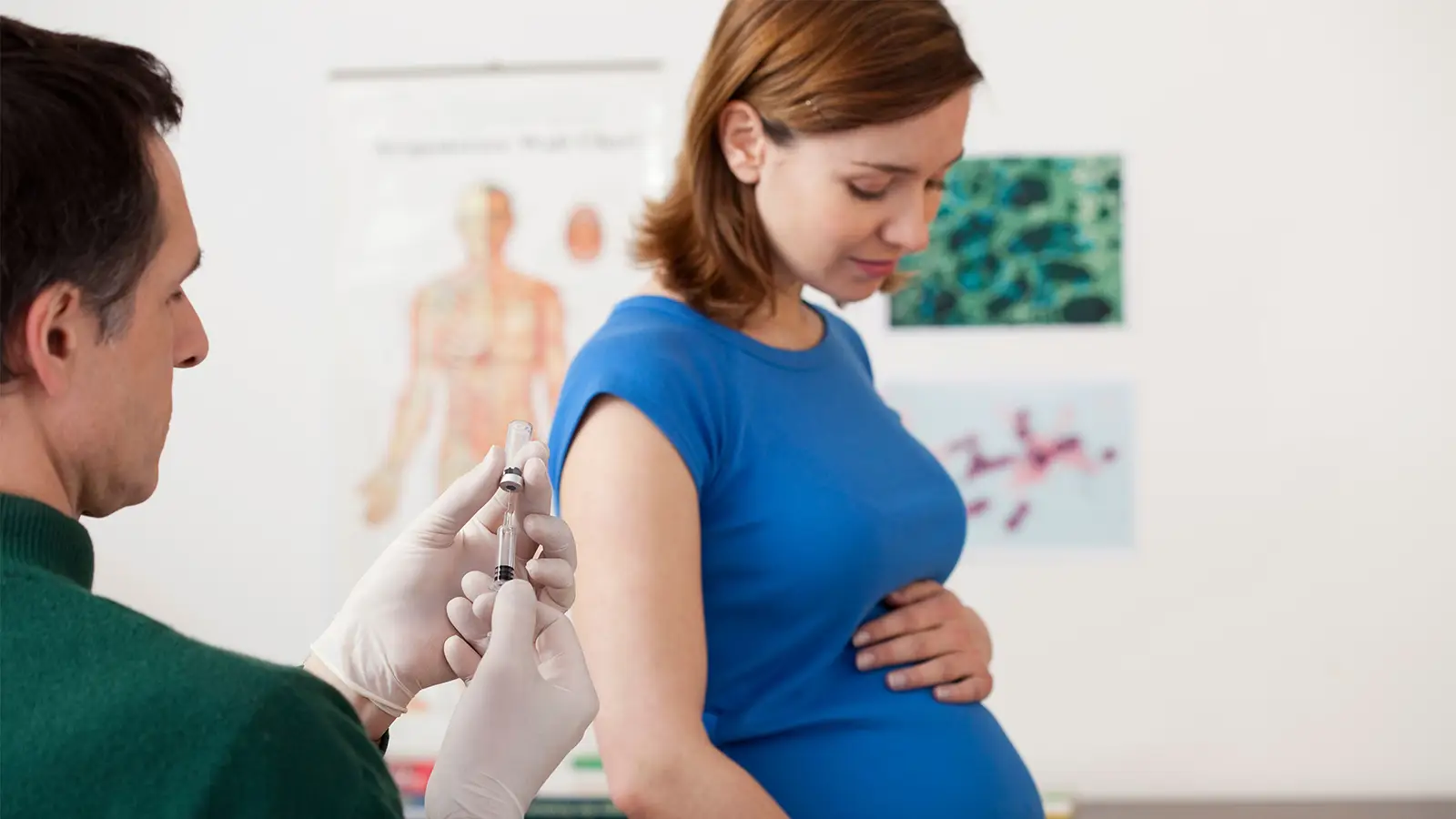
Giving influenza and pertussis vaccines to pregnant women on the same day appeared safe, a retrospective Australian cohort study showed.
Among nearly 14,000 pregnancies, there was no difference in the rate of preterm birth (adjusted hazard ratio [aHR] 0.83, 95% CI 0.66-1.05) between those who received concomitant vaccines or those who got the pertussis shot alone, reported Nicole Sonneveld, MSc, of the National Centre for Immunisation Research and Surveillance at Sydney Children’s Hospitals Network in Westmead, New South Wales, Australia, and colleagues.
There also were no differences in the odds of small for gestational age (adjusted odds ratio [aOR] 0.87, 95% CI 0.74-1.04) or low birth weight (aOR 0.94, 95% CI 0.66-1.35) between the two groups, they reported in JAMA Network Open.
Due to the small number of stillbirths across both groups (17, or 0.1%), further analyses were not performed for this outcome, they noted.
“These results should provide immunization providers evidence to have informed conversations with pregnant women and feel confident in being able to recommend having the vaccines at the same time,” Sonneveld told MedPage Today in an email. “This may hopefully contribute to improved vaccine uptake in pregnancy by addressing concerns about concomitant vaccination safety and reducing the need for multiple vaccination appointments.”
Previous research has shown low uptake of both influenza and pertussis vaccines during pregnancy, meaning continued vulnerability of women and their babies to infection and serious complications. Giving shots concomitantly can help maximize uptake, they noted, cautioning that “few studies have focused on the safety of concomitant vaccination during pregnancy.”
Though limited evidence has been reassuring, the researchers wanted to assess rates of pregnancy, birth, and neonatal outcomes in women receiving concomitant influenza and pertussis vaccines (delivered under the Australian National Immunisation Program as diphtheria-tetanus-pertussis vaccine).
They saw no differences between the concomitant and control groups in rates of secondary outcomes:
- antepartum hemorrhage (aHR 0.73, 95% CI 0.52-1.04, P=0.08)
- postpartum hemorrhage (aHR 1.10, 95% CI 0.95-1.27, P=0.22)
- preeclampsia or eclampsia (aHR 1.24, 95% CI 0.87-1.78, P=0.24)
- pre-labor rupture of membranes (aHR 1.05, 95% CI 0.85-1.31, P=0.63)
- preterm labor (aHR 0.75, 95% CI 0.53-1.06, P=0.10)
There were just 91 (1.1%) cases of chorioamnionitis across both groups, which precluded further analysis, the researchers said.
The results are especially relevant due to the recent availability of the maternal respiratory syncytial viru (RSV) vaccine, Sonneveld and colleagues noted. In many countries, this vaccine is the third or fourth one recommended during pregnancy and the second one recommended in the latter half of pregnancy.
Overall, a total of 13,918 singleton pregnancies were examined (6,959 with concomitant vaccination matched to 6,959 with pertussis vaccination alone). Mean maternal age at delivery was 31.7 years.
There were 264 (3.8%) preterm births in the concomitant group and 302 (4.4%) in the control group. Among term live births, 565 (8.8%) infants in the concomitant group and 633 (9.9%) in the control group were small for gestational age, and 107 (1.7%) infants in the concomitant group and 105 (1.6%) in the control group had low birth weight.
To complete their study, the researchers examined linked data from perinatal and immunization registers and hospitalization data for women with singleton pregnancies in New South Wales and their infants.
Limitations included the size and generalizability of the sample. The comparator population in the study also was more similar on sociodemographics and prior obstetric history than if the research team had compared the concomitant group with an unvaccinated population, they noted.
“Future research to assess a wider range of adverse outcomes, including rare events, those not requiring hospitalization, and less specific outcomes (eg, neonatal intensive care unit admission), and to evaluate the safety of different combinations of concomitantly administered vaccines, including RSV, is warranted,” they concluded.
Source: Read Full Article