









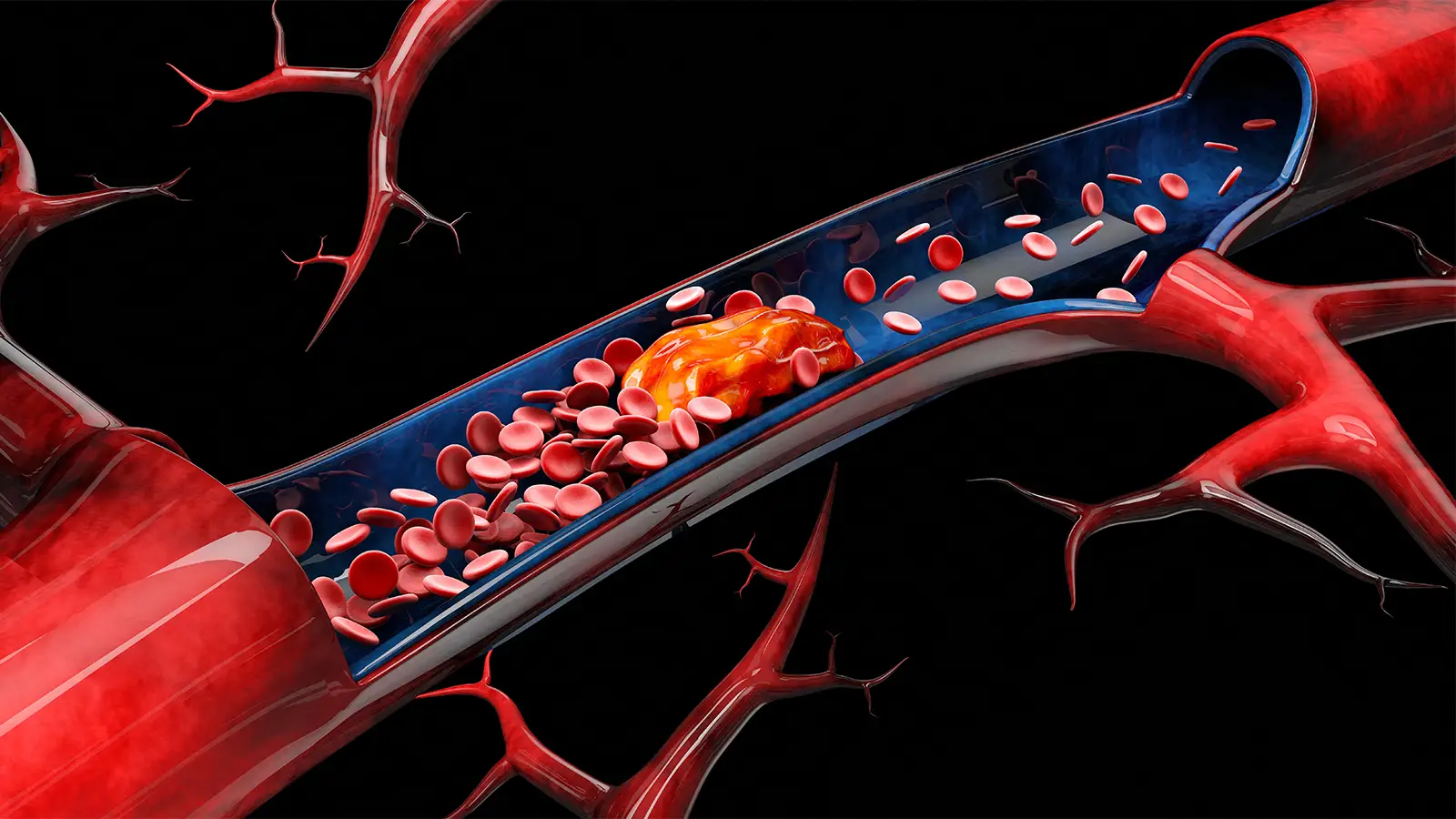
- Endovascular thrombectomy is indicated for acute ischemic stroke due to a large vessel occlusion in the anterior circulation within 24 hours of the time last known to be well.
- The ORIENTAL-MeVO randomized trial from China found that mechanical thrombectomy also improved outcomes for acute middle-vessel occlusion stroke.
- The findings might help expand patient selection for this treatment, although further trials in a Western population might be needed to confirm the benefit.
For patients with moderate-to-severe deficits from an acute middle-vessel occlusion stroke, endovascular treatment within 24 hours of onset improved functional independence, the Chinese ORIENTAL-MeVO trial found.
Survival without more than mild disability at 90 days (modified Rankin Scale score of 0-2 on the 6-point scale) was 24% more likely with randomization to thrombectomy compared with medical treatment alone (58.6% vs 46.6%, adjusted RR 1.24, 95% CI 1.07-1.44, P=0.004), Wei Hu, MD, of the First Affiliated Hospital of the University of Science and Technology of China in Hefei, and colleagues reported in the New England Journal of Medicine.
The impact on functional outcomes was clinically meaningful, the group wrote, with a number needed to treat of 8.2 to observe a functional-independence outcome — “a magnitude similar to that reported for established reperfusion therapies in acute ischemic stroke and consistent with meaningful improvement in patient-centered functional outcomes.”
The procedure led to numerically more symptomatic intracranial hemorrhage (4.7% vs 2.2% at 24-72 hours) and 90-day mortality (11.1% and 10.2%), although neither was statistically significant.
“These findings highlight the importance of careful patient selection, particularly given the smaller infarct burden that is typically associated with strokes due to medium-vessel occlusion,” Hu and colleagues wrote.
Indeed, in an accompanying editorial, Johanna M. Ospel, MD, PhD, and Michael D. Hill, MD, both of the University of Calgary in Canada, cautioned “[m]ost patients with stroke due to medium-vessel occlusion will not benefit from endovascular thrombectomy.”
“The neutral results of the ESCAPE-MeVO and DISTAL trials, taught us that although we can technically open medium-vessel occlusions, many patients with less severe stroke simply did not benefit,” they wrote.
“The ORIENTAL-MeVO trial now provides evidence from a randomized trial that a subset of patients with more severe stroke at a younger age and in earlier time windows has important characteristics with regard to the selection of treatment candidates,” Ospel and Hill added. “This result is concordant with the ESCAPE-MeVO and DISTAL trials, in which post hoc analyses suggest that favorable baseline imaging (good collaterals [pial-vessel filling] or a favorable mismatch profile on CT perfusion imaging) and faster treatment are likely to be important.”
Not being sequentially or concurrently treated with thrombolysis likely predicts greater benefit from mechanical thrombectomy for middle-vessel occlusion as well, they suggested.
ORIENTAL-MeVO included 563 adults who presented at 48 centers in China within 24 hours after the onset of a moderate-to-severe stroke (National Institutes of Health Stroke Scale score ≥6, median 10 on the 42-point scale) due to occlusion of a medium vessel. Median age was 71 years, 42.8% were women, and 36.6% received IV thrombolysis.
Patients were randomly assigned to open-label treatment with medical management alone or together with thrombectomy of the neurointerventionalist’s choice. Standard medical treatment followed clinical guidelines and included one or two antiplatelet agents (at the discretion of the treating physician) and IV thrombolysis (when patients met established eligibility criteria). Overall, 361 of the patients presented within 4.5 hours of stroke onset, and median time from onset to arterial access in the thrombectomy group was 5.3 hours.
Enrollment exclusively in China, where the incidence of embolic stroke is lower than that in Western populations, might limit the generalizability of the findings, according to Hu and colleagues. They noted that the DUSK trial is underway in the U.S. to test thrombectomy for medium-vessel strokes.
Imaging criteria for enrollment included less than 50% ischemic involvement of the clinically estimated at-risk territory on noncontrast CT or diffusion MRI or a penumbra-to-core mismatch ratio greater than 1.4 with a volume of at least 10 mL on CT perfusion or MR perfusion imaging. Key exclusion criteria were multiterritory occlusions, intracranial hemorrhage, or contraindications to MRI or CT angiography.
“The imaging criteria that were based on physician judgment will be essential to unpack,” the editorialists wrote. “Well-evolved infarcts may be readily recognized in everyday clinical practice but are hard to define precisely. Patients with well-evolved infarcts simply do not benefit, and a small proportion may be harmed with reperfusion therapies.”
They pointed to studies planned or under way that should help further refine the procedure and the target population.
Source: Read Full Article