








One tiny gene switch turns red lettuce upside down and reveals a hidden chemical tradeoff

Red-leaf lettuce is red due to anthocyanins, a class of polyphenolic pigments widely studied for their antioxidant properties. In plants, anthocyanins are synthesized through enzymatic reactions originating from the amino acid phenylalanine. Along this biosynthetic pathway, multiple flavonoids—an umbrella term for diverse plant secondary metabolites—are produced as intermediates and ultimately converted into anthocyanins. Source: Read…

Read More

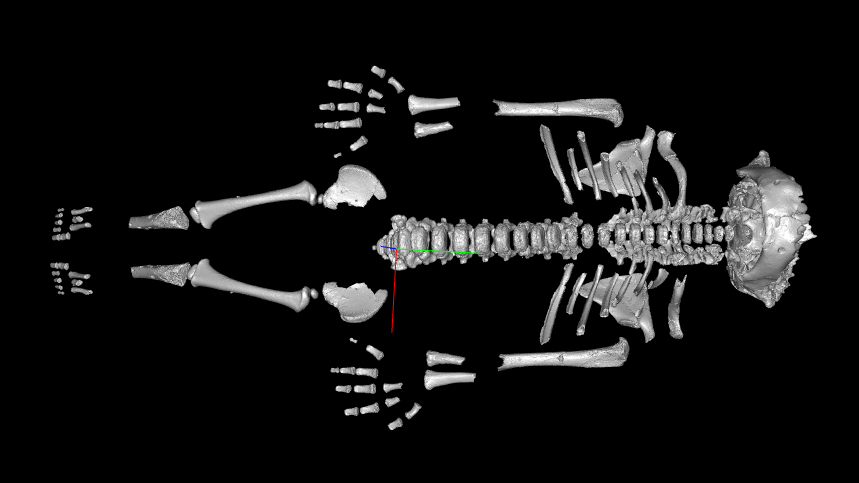
Neanderthal toddlers grew faster than modern humans, probably because of the harsh environment they evolved in

Neanderthal toddlers grew faster than their modern human counterparts, likely as an adaptation to living in a cold, harsh environment, new research suggests. The discovery, which was made using the bones of a young Neanderthal discovered in Amud Cave in northern Israel in the 1990s, suggests that Neanderthals and modern humans (Homo sapiens) followed different…

Read More
A Fresh Look at the Crab Nebula

A Fresh Look at the Crab Nebula

This observation from NASA’s Hubble Space Telescope, released on March 23, 2026, gives an unparalleled, detailed look at the aftermath of a supernova and how it has evolved over the telescope’s long lifetime. Hubble captured the nebula’s intricate filamentary structure, as well as the considerable outward movement of those filaments over 25 years, at a…

Read More
‘Is it life? We can’t tell’: Nasa’s Curiosity rover finds organic molecules on Mars | Mars

‘Is it life? We can’t tell’: Nasa’s Curiosity rover finds organic molecules on Mars | Mars

Nasa’s Curiosity rover has detected organic molecules on Mars, including chemicals widely considered building blocks for the origin of life on Earth. Five of the seven molecules identified in a dried lakebed near the equator had never previously been observed on the red planet. The analysis performed by the robotic rover cannot establish whether the…

Read More