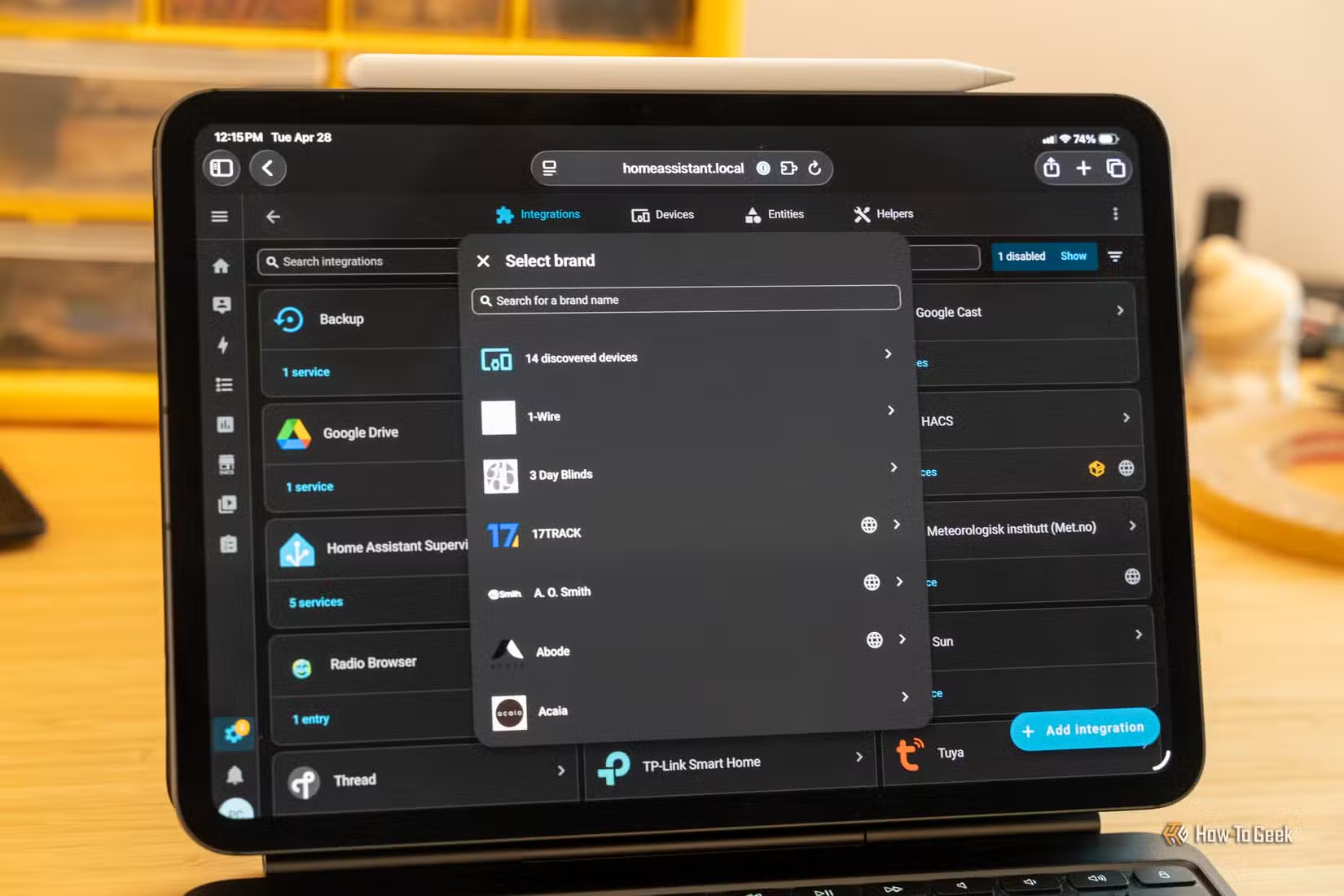










All ESP32 (and some ESP8266) devices can make use of at least one type of mesh network to communicate, peer-to-peer, without the need for a centralized “router.” Others can be used to interface with existing smart homes, communicate over long distances, or take advantage of low-latency data transfer in useful projects that are fun to make.
Here are five to get you started.
The $5 Thread border router for Home Assistant
Show me a cheaper way to get started with Thread
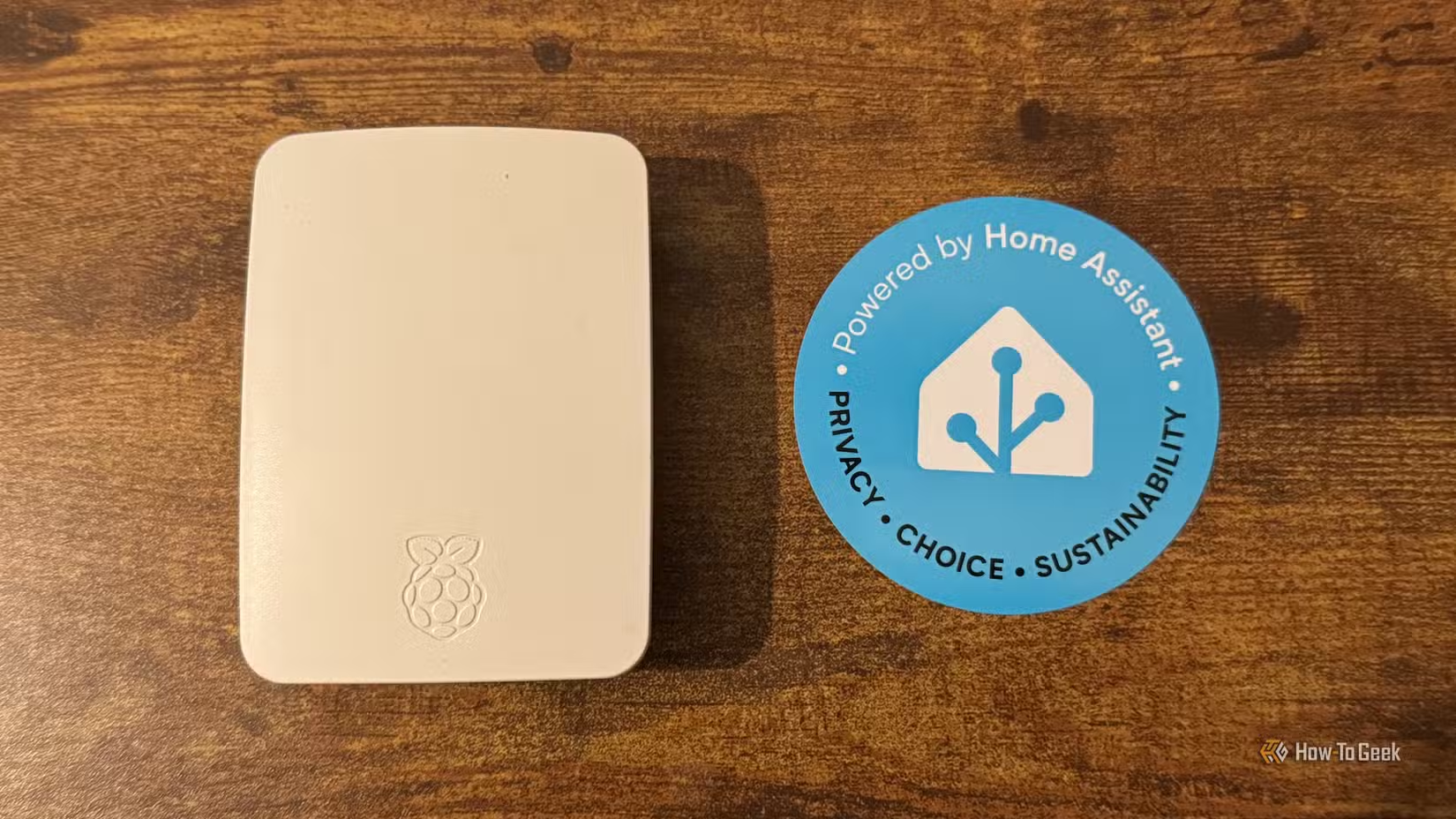
The ESP32-C6 and H2 boards have Thread capabilities, which makes them perfect for smart home projects like DIY sensors and switches. But did you know you can also use these cheap boards to create a Thread border router? You’ll need a C6 or H2 variant, a USB-C cable, and an optional (but highly recommended) antenna to improve range.
To get started, follow this simple guide from Home Assistant Community user parhelion. The project runs on OpenThread Radio Co-Processor firmware, which can be installed using the ESPHome firmware flasher. You can then connect the device to your Home Assistant server via USB and set it up using the Open Thread Border Router app.
This is probably the cheapest way to add Matter over Thread accessories (like IKEA’s new lineup of smart home devices) to your Home Assistant setup.
Matter over Thread air quality sensor
Build something useful
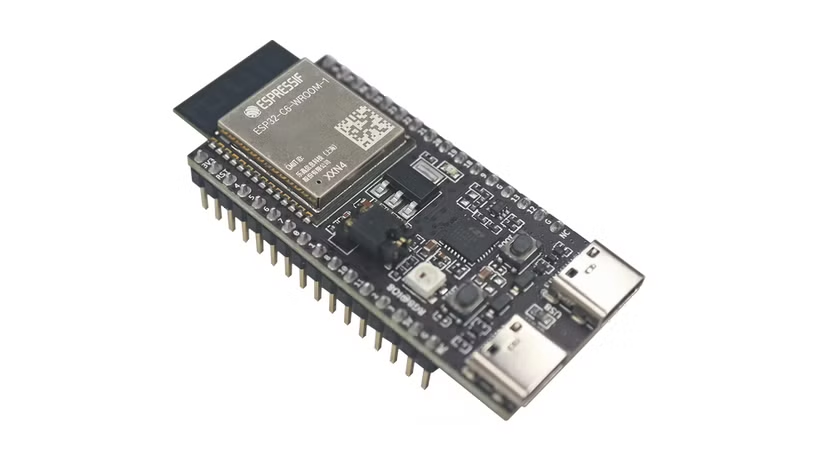
With your Thread network up and running, why not build your own air quality sensor too? Olav Tollefsen’s Matter Air Quality sensor uses an ESP32-C6 and a Sensirion SEN66 air quality sensor to monitor temperature, humidity, particulate matter, volatile organic compounds (VOCs), nitrogen oxide (NOx), and carbon dioxide (CO2).
Detailed instructions for each stage of the build are included. If you’d rather a more accurate turnkey solution and have a 3D printer, consider Project Aura instead.
The Zigbee macropad
Because sometimes you can’t beat a physical button
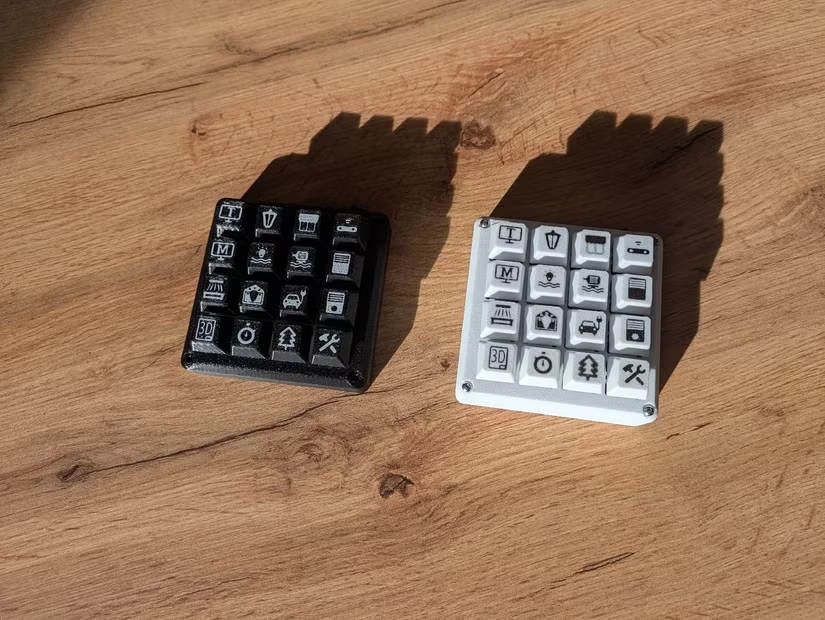
Last week, we featured a range of 3D printed mechanical keyboards and macropads that rely on microcontrollers like the Raspberry Pi Pico. This week, we’ve got a similar project, but rather than connecting to your computer, this one operates independently via low-power mesh network Zigbee.
The Zigbee macropad is a 16-key input device that can be used to trigger a variety of smart home functions using Zigbee2MQTT for Home Assistant. It uses an ESP32-C6, Cherry MX switches, an integrated 1000mAh 3.7V battery, and a 3D-printed chassis. Once set up, Home Assistant recognizes single, double, and long presses for a total of 48 possible inputs.
The project’s author estimates it should cost around €20 ($23) to build, but you might have switches and other bits lying around that you can use already. Check out the project’s GitHub page for detailed instructions.
ESP32 Meshtastic node
No internet necessary

Meshtastic is an open-source decentralized mesh network that works peer-to-peer over long distances. It’s designed to enable simple, encrypted text-based communication without relying on cellular networks, Wi-Fi, or the internet. Its mesh-based nature means that each device acts as a node, carrying communication further down the chain.
You can buy purpose-built Meshtastic ESP32 kits or you can build your own with an ESP32 devkit, LoRa module, antenna, OLED display, and some sort of enclosure (which can basically be anything). After this, you can connect the board to your smartphone or computer and use Meshtastic apps to chat with the outside world.
ESP-NOW remote control car
You’re never too old to play with RC cars
ESP-NOW is a mesh network protocol developed by Espressif Systems, the company behind the ESP microcontrollers. In addition to being peer-to-peer, the technology has very low latency, which makes it ideal for projects that demand good response times like the ESP-NOW RC controller and car.
Ultimately, this is a proof of concept that could be adapted to other projects that benefit from remote control. You’ll need to build both a transmitter and receiver (plus the car itself), and the bill of materials includes two ESP32 boards, some analog sticks from a PS2 (or anywhere else you can get them), six buttons and switches, an LED, and a battery holder.
It’s a fun introduction to robotics, and there’s no reason you couldn’t take the concept and use it in other remote-controlled projects. Just be mindful that the range on ESP-NOW tops out at around 15 meters indoors (about 50 ft).
Most of these projects rely on the ESP32-C6 for its Zigbee and Thread capabilities. For other projects, consider the full range of ESP32 microcontrollers.
Source: Read Full Article