







The build plate is the platform on which all of your 3D prints are created. But, just like filament and nozzles, build plates don’t last forever, and they eventually need replacing.
Build plates are consumables
Most printers now come with build plates that are coated in polyetherimide (PEI). This has been chosen for its durability, heat resistance, and adhesive properties that help filament stick and prints that are easy to remove. You can think of this a bit like the surface of a non-stick pan.
Over time, the surface begins to wear. This can be visible wear like scratches and gouges, or discoloration. Some beds can crack (glass) and warp (metal), or become dented through misuse. The 3D printer itself can damage the bed if the nozzle hits it too hard, which is a sign you probably need to calibrate your printer (and check the nozzle for damage too, maybe).
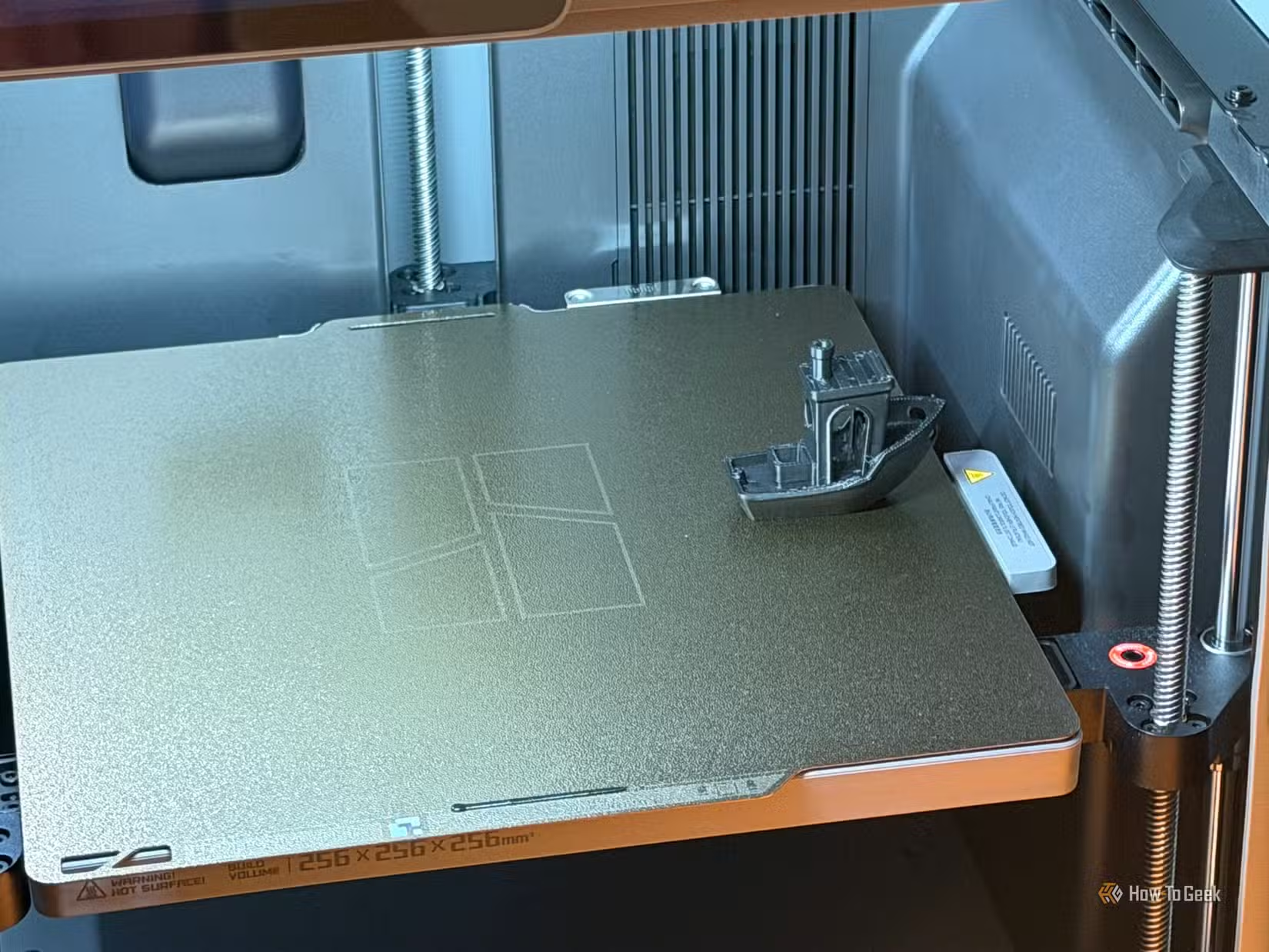
The good news is that build plates should last thousands of hours before they need replacing, unless you have an accident and prematurely age them first. The cost to replace can vary, depending on which printer you have and what you’re replacing the bed with.
To replace the textured PEI build plate that comes with a Bambu Lab printer, you’ll pay at least $21. To replace the smooth PEI print sheet that comes with a Prusa Core ONE+, you’ll pay $42. Third-party replacements from a brand like Darkmoon tend to cost more on account of being aimed at enthusiasts who are looking to achieve better results than stock plates.
How to tell your build plate needs replacing
The most obvious sign that your build plate needs replacing is visible signs of damage or wear. Though PEI plates tend to still be usable even with gouges or peeling surfaces, if the plate is starting to look beat up, then that’s a good sign that a replacement will soon be on the cards.
The other, less visible sign is that things just don’t stick to your build plate, regardless of what you try. You don’t always necessarily have to have noticeable damage to the plate for this to start happening, but you will likely have clocked thousands of hours’ worth of print time when it finally does.
Many build plates are in fact double-sided, which means you can just flip them over and print for another few thousand hours once you’ve started to encounter problems. The key is keeping track of which side is which!
Before replacing your build plate, try this
Cleaning your build plate is something you should do every few prints. You should make a habit of doing this before starting large prints that take hours to complete and risk wasting a lot of filament, or prints that make limited contact with the build plate and can easily slip off.
The best solution for this is hot water and dishwashing liquid (brands like Dawn, Fairy Liquid, and cheap supermarket equivalents). Use a clean sponge that doesn’t have a scouring pad on it and the hottest water you can stand without burning yourself. Dry the build plate with a clean, lint-free cloth.
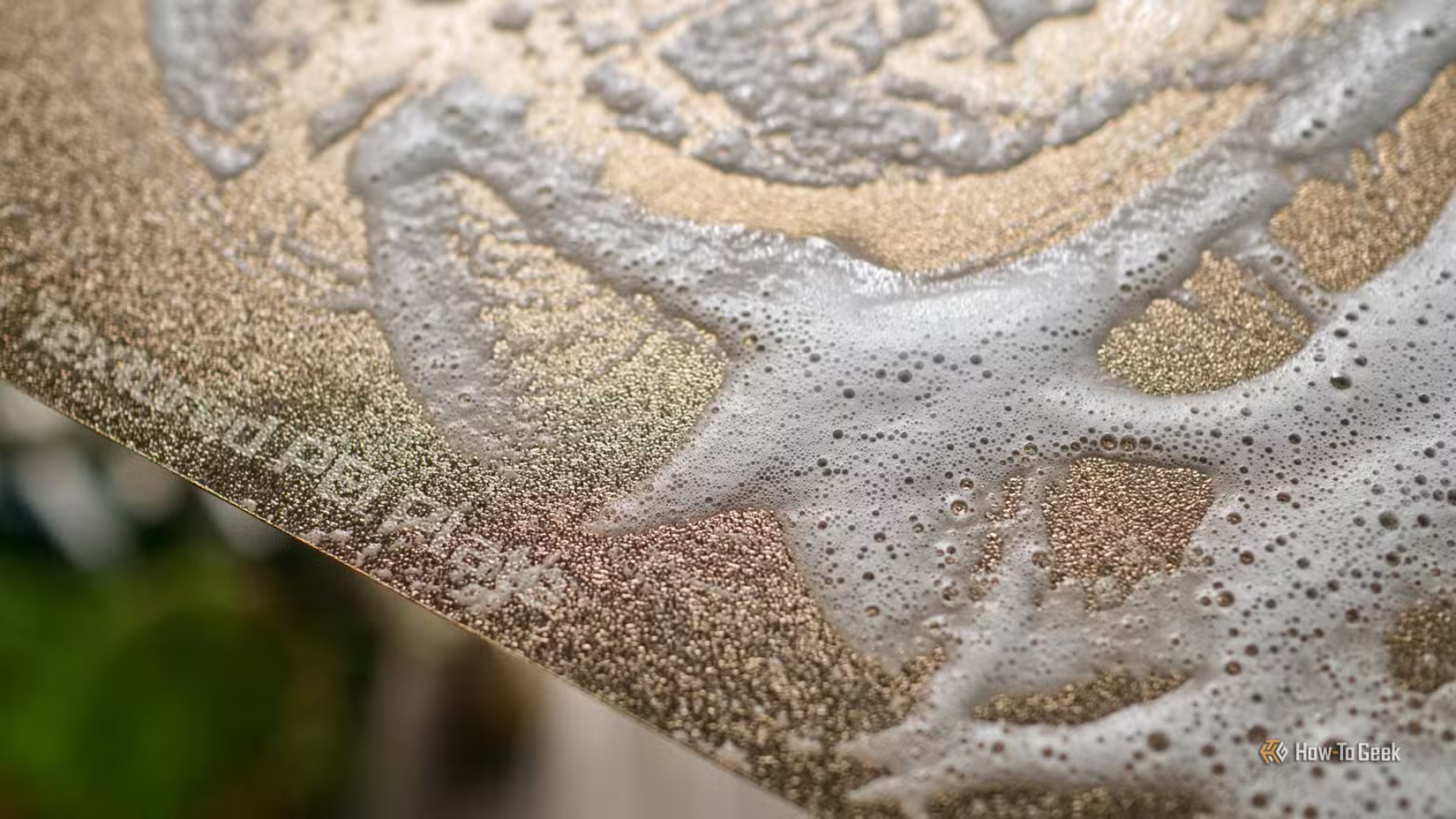
Don’t use the same sponge and cloth you’d use for washing the dishes, since you risk transferring food grease onto the build plate. You should also try to avoid getting your fingerprints all over the build plate, since grease will transfer from your digits and hamper adhesion.
Many 3D printer owners also turn to PVA glue sticks to provide a tacky first layer that eventually comes away easily once the glue has stuck. This is especially useful when working with more challenging materials like ABS or TPU (the latter of which can stick to the bed a little too well).
Choosing the right build plate for you
There’s a reason that most 3D printer manufacturers include a basic PEI build plate in the box. It’s a dependable all-rounder that’s ideal for working with everything from PLA through to more challenging filaments that include materials like wood, glass, and carbon fiber. PEI sheets are relatively cheap, and so it’s always a good idea to keep one around.
You might also be interested in more specialized build plates, like cool plates designed with improved adhesion in mind, engineering plates that are designed for high-temperature engineering filaments, smooth build plates (like glass) that provide a glossy finish, and patterned build plates.
These can come with their own set of considerations. For example, the temperature difference between hot filament and a cold plate can cause warping and lifting, whereas a glass plate provides an impressive finish at the cost of adhesion.
Choice is never a bad thing, but unless you have specific filaments and finishes in mind, then you can’t go far wrong with the jack-of-all-trades PEI gold standard.
In addition to build plates, did you know your printer’s PTFE tubes will also need replacing?
Source: Read Full Article