







Africa could split apart sooner than scientists thought
New research reveals that a rift in Earth’s crust is just a few million years away from splitting the continent of Africa into two—and creating a new ocean
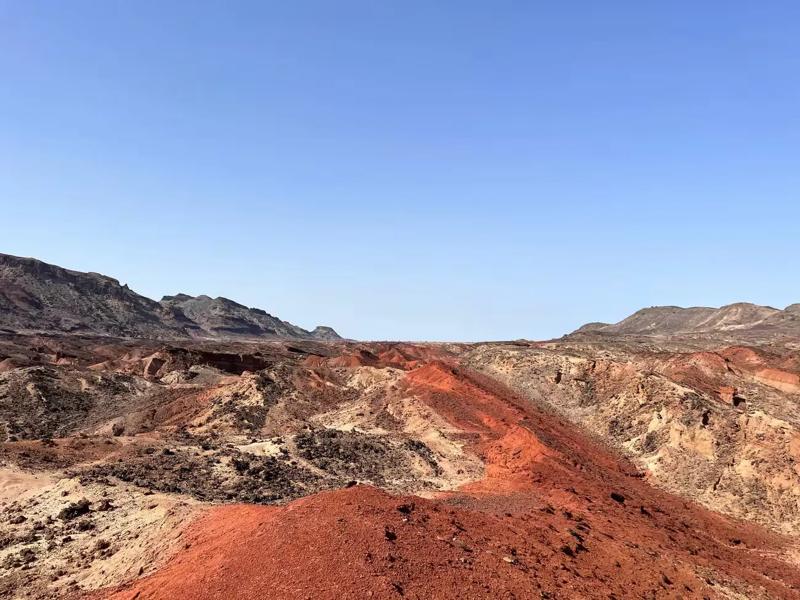
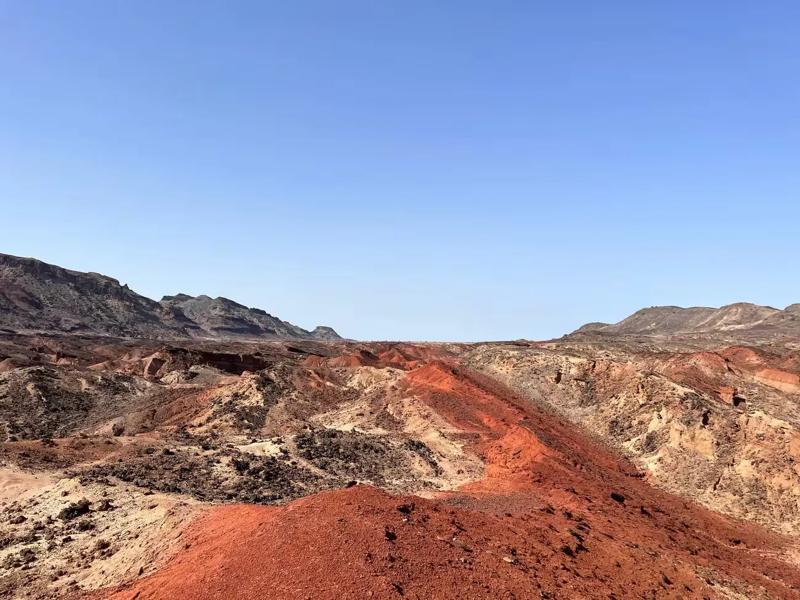
A segment of eastern Africa is “primed” to peel away from the rest of the continent far sooner than scientists had previously realized, according to new research.
The spot in question is the Turkana Rift, which spans 500 kilometers across Kenya and Ethiopia. The rift is just one segment of the East African Rift System, where three tectonic plates meet. Two of these plates are drifting apart at the Turkana Rift, a process that will eventually lead the continent to divide into two, creating a new ocean between the separated lands. These same forces may have made the Turkana Rift a rich site for ancient human fossil discoveries, such as the famous Turkana boy.
Now a new study published in Nature Communications on Thursday has found that Earth’s crust at the rift is much thinner than scientists had thought.
On supporting science journalism
If you’re enjoying this article, consider supporting our award-winning journalism by subscribing. By purchasing a subscription you are helping to ensure the future of impactful stories about the discoveries and ideas shaping our world today.
“We found that rifting in this zone is more advanced, and the crust is thinner, than anyone had recognized,” said the study’s lead author Christian Rowan, a Ph.D. student in Earth and environmental sciences at Columbia University, in a statement. “Eastern Africa has progressed further in the rifting process than previously thought.”
Rowan and his colleagues combined field observations with high-resolution seismic reflection—a technique that involves sending sound waves through the ground and analyzing the signal that bounces back. Geologists have known for some time that Africa is bound to become two separate continents, but the results indicate that the process is further along than they knew. Earth’s crust at the center of the rift is just 13 kilometers deep—far shallower than it is at areas farther away that are more than 35 kilometers deep. This is a sign that the crust at the center is “necking,” which means the middle of the rift is getting thinner and weaker as the two sides get pulled apart.
The team also found signs of previous rifting in the area that likely weakened the crust even further. The study “challenges some of the more traditional ideas of how continents break apart,” Rowan said.
The rift appears to be at a “critical threshold,” said Anne Bécel, a geophysicist at Columbia’s Lamont-Doherty Earth Observatory and a co-author of the study, in the same statement.
The continent isn’t at imminent risk of breaking apart, however: the rift first began tearing around 45 million years ago, and the researchers estimate it will take a few more million years to break away. That’s a long time for humans and a blink of an eye for the planet.
It’s Time to Stand Up for Science
If you enjoyed this article, I’d like to ask for your support. Scientific American has served as an advocate for science and industry for 180 years, and right now may be the most critical moment in that two-century history.
I’ve been a Scientific American subscriber since I was 12 years old, and it helped shape the way I look at the world. SciAm always educates and delights me, and inspires a sense of awe for our vast, beautiful universe. I hope it does that for you, too.
If you subscribe to Scientific American, you help ensure that our coverage is centered on meaningful research and discovery; that we have the resources to report on the decisions that threaten labs across the U.S.; and that we support both budding and working scientists at a time when the value of science itself too often goes unrecognized.
In return, you get essential news, captivating podcasts, brilliant infographics, can’t-miss newsletters, must-watch videos, challenging games, and the science world’s best writing and reporting. You can even gift someone a subscription.
There has never been a more important time for us to stand up and show why science matters. I hope you’ll support us in that mission.
Source: Read Full Article