









Nine years after the unveiling, Tesla has started mass production of its Semi electric truck with hopes of transforming the shipping world.
The EV maker revealed on X that the first big rig has rolled off its “high volume” manufacturing line at a devoted plant near Gigafactory Nevada. It’s not certain when Tesla assembled this first example.
Stop spending thousands on Cybertruck upgrades—these 5 Amazon finds cost $200 total
You could buy designer jeans that look like they were run over by a Cybertruck, or spend it on the actual truck itself.
The company introduced the production version of the Semi in February. It boasts Model Y-style design cues and comes in two trim levels: a Standard Range model with 325 miles of range at its fully rated gross combination weight of 82,000lbs, and a 500-mile Long Range version with an extended wheelbase.
Both versions have a 1,072HP tri-motor system. The battery can charge at up to 1.2MW when plugged into Tesla’s specialized Megachargers, helping them reach a 60 percent charge in 30 minutes. It’s not clear how much the finished Semi costs, but Electrek notes California documents have listed prices around $260,000 for Standard Range and $300,000 for Long Range.
Deliveries are expected to begin later this year, although Tesla is unlikely to come close to reaching its factory’s peak output of 50,000 Semi trucks per year.
The long road to Tesla Semi production
Only a handful have been on roads in nine years
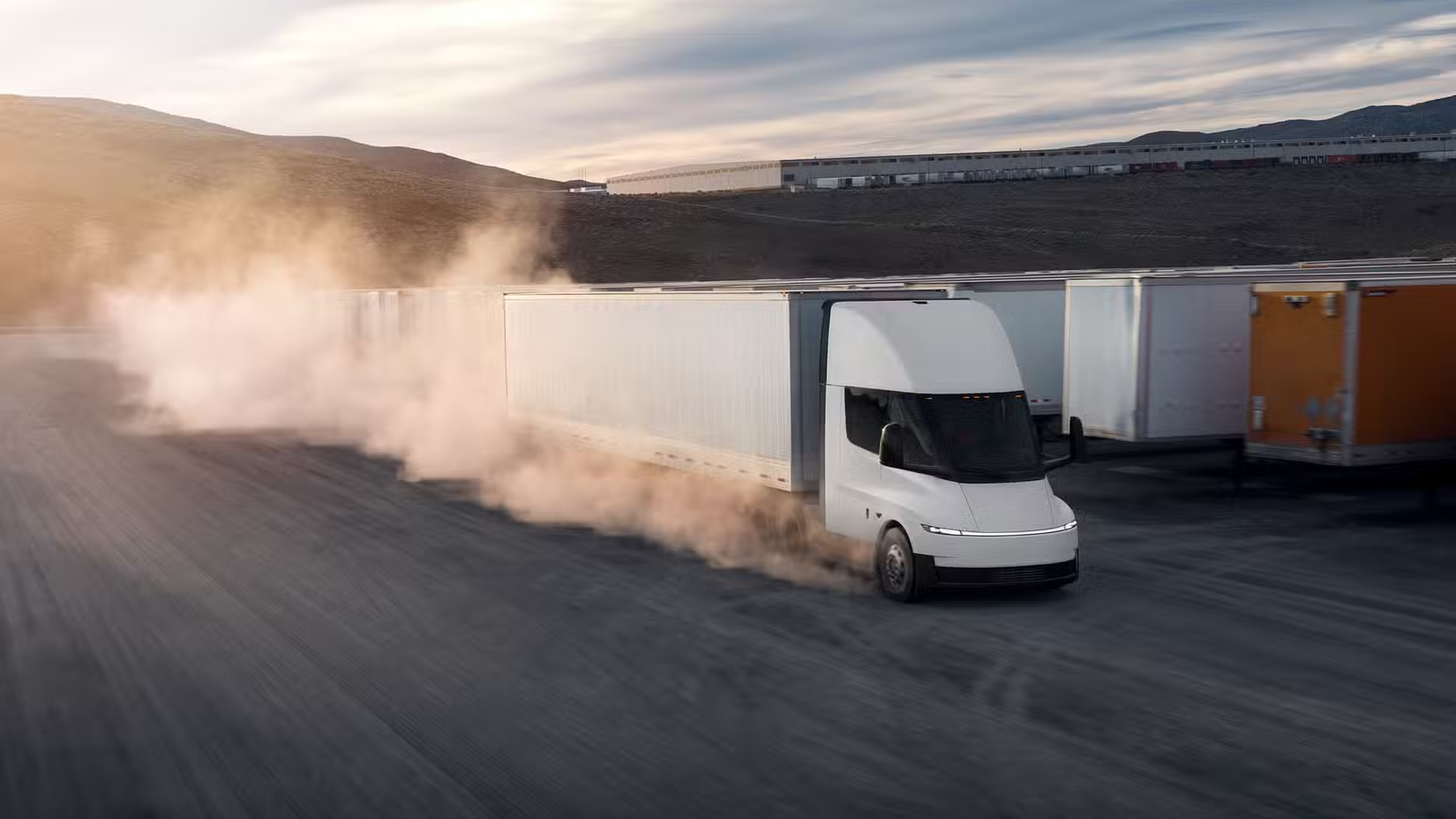
Tesla introduced the Semi in 2017 alongside its still-unreleased second-gen Roadster. At the time, the strategy was clear: Tesla wanted to both electrify trucking and bring increasing levels of autonomy to the category. Production was originally expected in 2019.
Multiple delays pushed back the release, however, including a 2022 shift toward AI that left Tesla ramping up production for existing EVs. While the first Semis reached the road in October 2023, they were limited to pilot models for testing by both Tesla and early customers like PepsiCo and Walmart. Only a few hundred are known to have entered service, some of them for Tesla’s own testing.
Mass production changes the equation by making the Semi available in meaningful numbers. Companies can not only put the Semi to work in real-world conditions, but buy enough to replace signification portions of their fleets. The exact level of demand isn’t clear, but Tesla will at least have the capacity to support large customers.
Ahead of the electric truck competition
As late as Semi mass production might be, it still gives Tesla an edge. Chief rivals Freightliner and Volvo have produced their respective electric trucks, the eCascadia and VNR Electric, in relatively small numbers. These both have shorter ranges (230 miles and 275 miles) and higher prices ($400,000 and $350,000).
Tesla theoretically undercuts these rivals with not only greater capability and lower prices, but more room to fulfill bulk orders—companies can switch wholesale to electric trucks instead of upgrading in small bursts.
Source: Tesla (X)
Source: Read Full Article