








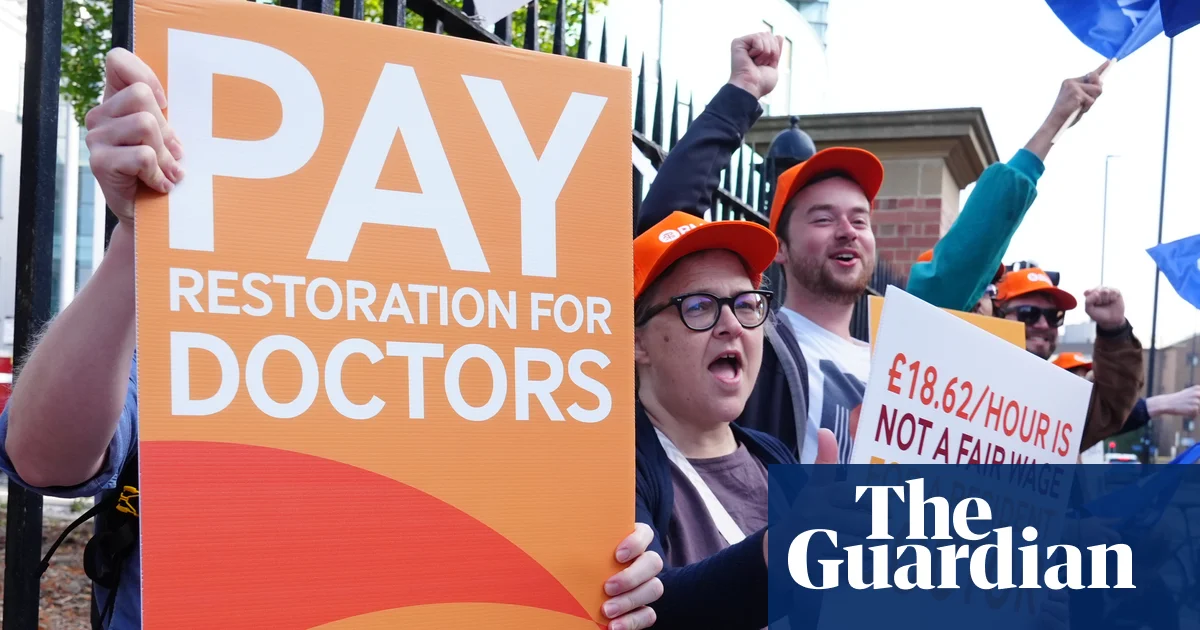
Polly Toynbee is right that it is time to stop the doctors’ strikes (Both doctors and the government are handling this strike badly – that’s why there is no end in sight, 10 April). She suggests that doctors are not feeling the pain of industrial action, but this is far from true. We are anxious about our patients and their cancelled appointments and procedures; we are exhausted covering work that we are not familiar with; and those being paid overtime for shifts they don’t want to do are uncomfortable about the financial impact on the NHS.
Many of us reluctantly supported industrial action at the beginning, with a government that wasn’t listening – wanting to support junior colleagues whose pay had fallen far behind contemporaries. Now we see how divided and conflicted resident doctors are too, and we long for a resolution. We recognise that the strikes are harmful. Communication and diplomacy are skills we pride ourselves on, and politicians have never needed them more than now. Diplomacy is the way to resolve this crisis for our NHS as well.
Dr Helen Holt
Consultant physician and chair of the medical staff committee, University Hospitals Dorset
As a member of the British Medical Association, I can’t support the latest strike. None of the resident doctors working now were working in 2008. That year was chosen by the BMA in its demands, as pay was at its highest point ever at that time. But working conditions were very different, and included long hours. Unlike then, many resident doctors are working less than 40 hours per week, in part because they are paid so well that they can afford to do so, including an annual bonus that incentivises working less than full time.
The fact is that not only are fewer resident doctors voting for strike action, fewer again are actually supporting these strikes. In my own area of practice, none of the resident doctors have been striking. They have even attended the educational sessions that we have continued to run during this latest strike. We have also not cancelled any clinical activity.
The veiled threat by Jim Mackey, the chief executive of NHS England, that resident doctors will be replaced is absolutely playing out as advanced practitioners take on more roles on a permanent basis, potentially providing a more consistent and better service for patients than resident doctors, who rotate through different posts every few months.
Dr Peter Davis
Bristol
Source: Read Full Article