










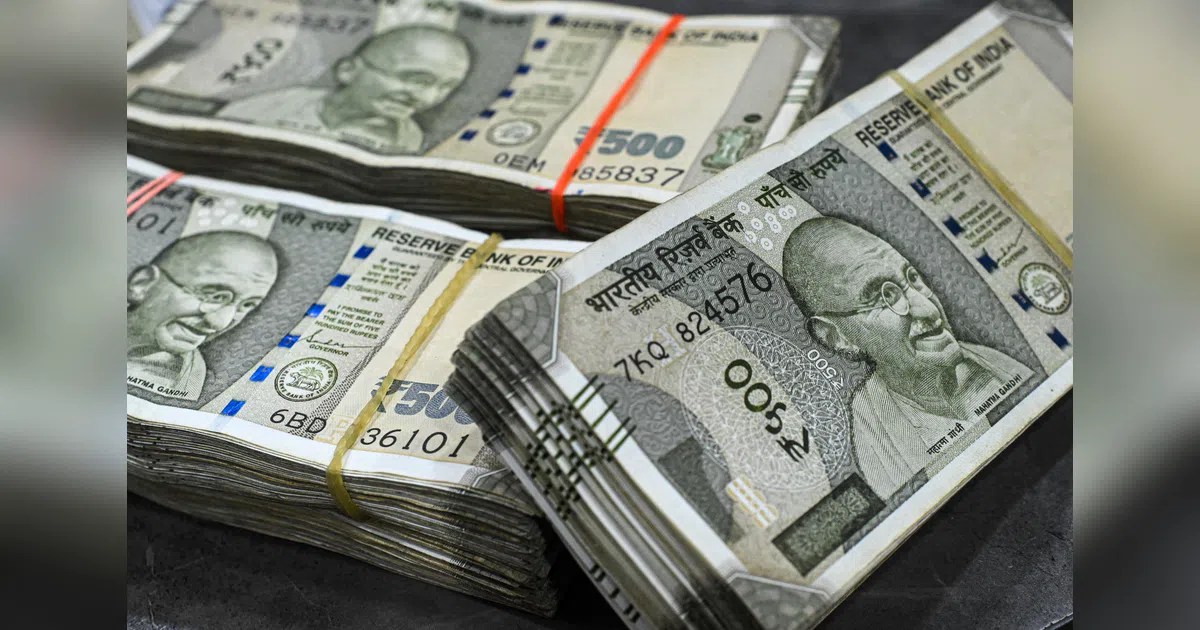
The rupee depreciated on Wednesday, tracking the rise in crude oil prices and selling in domestic equities, dealers said. The local currency settled at 92.04 per dollar against the previous close of 91.81 per dollar.
Intensifying geopolitical tensions in West Asia over the past two weeks have heightened risk aversion in global markets and pushed crude oil prices higher, putting sustained pressure on the rupee.
Brent crude oil prices rose to $99.06 per barrel against the previous day’s $98.63 per barrel.
Market participants said state-owned banks sold dollars, likely on behalf of the Reserve Bank of India (RBI), to cap further losses.
“The Indian rupee has depreciated against the US dollar, even as regional currencies show a mixed performance. While the central bank’s dollar supplies have helped limit losses, firm demand from importers continues to drag the currency lower,” said Dilip Parmar, senior research analyst, HDFC Securities. “In the near term, spot USDINR finds immediate support at 91.60 per dollar, with key resistance seen at 92.40 per dollar,” he added.
The currency has also been weighed down by tight dollar liquidity, partly due to capital outflows from domestic equity and debt markets.
While movement in Asian currencies was mixed, the dollar index firmed to 99.06 against the previous day’s 98.63. The dollar index measures the strength of the greenback against a basket of six major currencies.
“There was support from RBI, but the pressure is consistent on the rupee because of continuous selling by foreign portfolio investors (FPIs) in both equities and bonds,” said a dealer at a state-owned bank.
The dollar index rose on Wednesday as fighting between the US-Israel alliance and Iran intensified, with Israel targeting Iran overnight while Iran targeted bases involved in the aggression against it.
“The amount of dollar bids will keep the rupee on the downside and therefore it is prudent for importers to keep buying dollars on all dips and major dips. We were expecting some flows during March 2025 but that has not come through due to various factors, the most recent one being the Iran war,” said Anil Kumar Bhansali, head of treasury and executive director, Finrex Treasury Advisors LLP.
Source: Read Full Article