









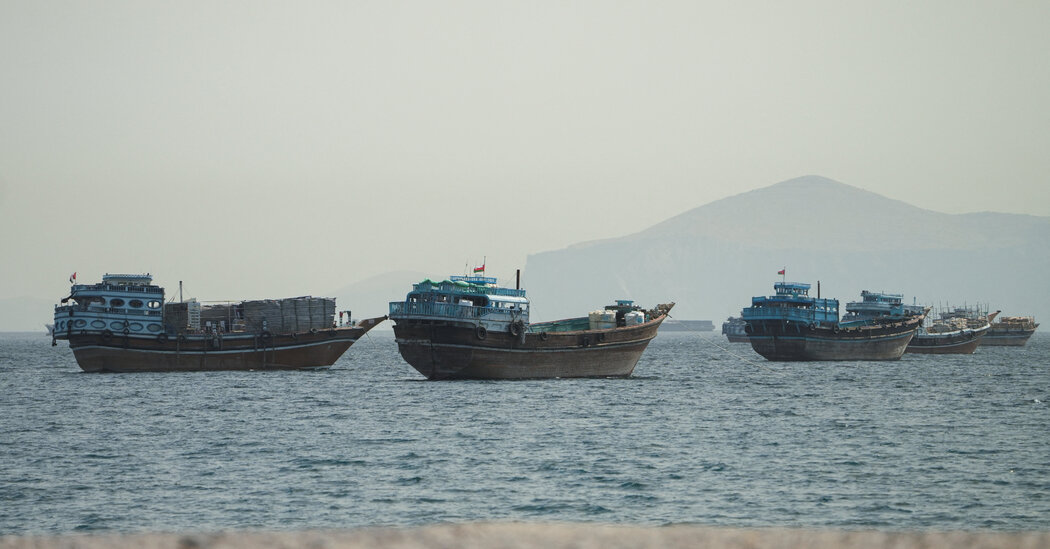
The United States and Iran have reached a deal in principle that calls for the reopening of the Strait of Hormuz, a U.S. official said on Sunday. But the announcement left many questions unanswered, starting with how soon normal shipping through the strait could resume and when oil prices would begin to come down.
The short answer is “nobody knows,” said Carl Weinberg, the chief economist of High Frequency Economics, a daily economics newsletter.
One thing is certain, Mr. Weinberg said: “Prices are not going to drop quickly.”
Before the start of the conflict on Feb. 28, about 20 percent of the world’s oil and natural gas supplies moved through the strait. Since then, the strait has been effectively closed.
With the details of an agreement still to be worked out, it was unclear what control — if any — that Iran would continue to exert over the strait, including whether it would be able to charge a fee for passage.
Adding to the uncertainty on Sunday, a military adviser to Iran’s supreme leader said that the country had a “legal right” to manage the strait, according to Iranian news agencies. The statement implied that Iran would use its newfound leverage over the strait to raise badly needed funds.
About 1,500 to 2,000 ships have been trapped in the Persian Gulf by the conflict. Even if the strait were to be officially reopened soon, there remain many variables to getting shipping back on track. The first question will be whether shippers will conclude that the peace agreement is durable and that it is safe to send tankers through the narrow waterway.
Then, there is the issue of how long will it take to clear the mines that Iran is believed to have planted in the strait.
The United States and other naval powers will need several weeks just to mobilize mine-sweeping ships and equipment in the area, the International Energy Agency said in a report this month. Until the strait is clear of explosives, insurers will probably demand that ships be escorted and take other safety measures that will cause delays and add to shipping company costs, the I.E.A. said.
“A minimum of two to three months will likely be required to re‑establish steady export operations,” the agency said.
Even when ships do make it through the strait, it will take several weeks for them to reach ports in Asia and Europe and begin to alleviate the shortage of oil and natural gas that has driven up fuel prices around the world. It has devastated poorer countries in Africa, for instance, where transport was already costly.
In the United States, the national average price was above $4.51 a gallon on Sunday, according to AAA Motor Club.
The global economy has already slowed in response to rising energy prices, but the long-term effect won’t become clear for several months. There will be unexpected side effects. The crisis has reminded governments, companies and consumers how vulnerable they are to disruptions in the oil supply. That could lead to changes in policy, for example prompting governments to promote solar energy and electric vehicles to reduce their dependence on oil.
“Even in the best case,” the International Monetary Fund said in a report last month, “there will be no neat and clean return to the way things were.”
Source: Read Full Article