









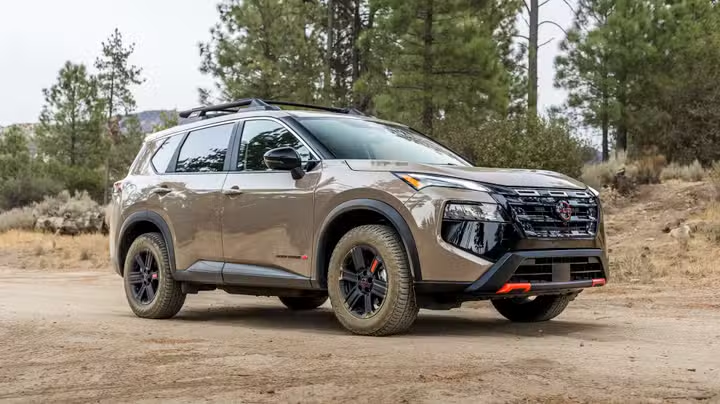
After weeks of teasing, Nissan has formally unveiled the U.S.-bound Rogue Hybrid e-POWER in a bid to unseat the current champions in the compact SUV market, the Honda CR-V and Toyota RAV4.
Where the 2026 Rogue is available as a plug-in hybrid, the 2027 model’s e-POWER system uses electric motors alone to turn the wheels. The gas engine is connected to a generator that powers the lithium-ion battery, not a transmission.
Nissan claims this provides the “spirited” driving feel of an EV (namely, the instant torque) while maintaining the high efficiency of conventional hybrid systems like those used by the CR-V and RAV4.

- Base Trim Engine
-
VC-Turbo 1.5L ICE
- Base Trim Transmission
-
2-speed CVT
- Base Trim Drivetrain
-
Front-Wheel Drive
American market e-POWER will be different
Starting MSRP is forthcoming
e-POWER isn’t new and has been available globally for buyers. However, the American configuration will be more powerful and use dual motors as part of an all-wheel drive setup. Nissan hasn’t said which gas engine the 2027 Rogue Hybrid e-POWER will use.
The automaker hasn’t outlined a U.S. release date or price for the Rogue Hybrid e-POWER either, although it should arrive by the end of 2026. Honda’s CR-V hybrid models start at $35,630, while the Toyota RAV4 Hybrid begins at $31,900.
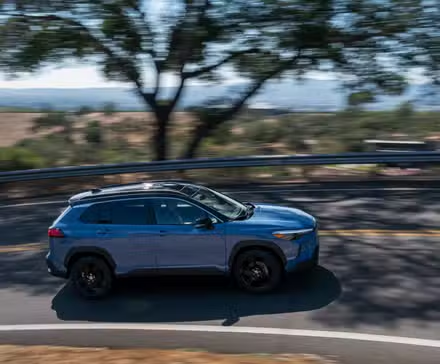
10 hybrid SUVs that deliver the best fuel economy in 2026
Maximum miles, minimal fuel stops — these SUVs deliver.
Necessary shift for Nissan’s electrified car strategy
EVs are faring poorly at American dealerships
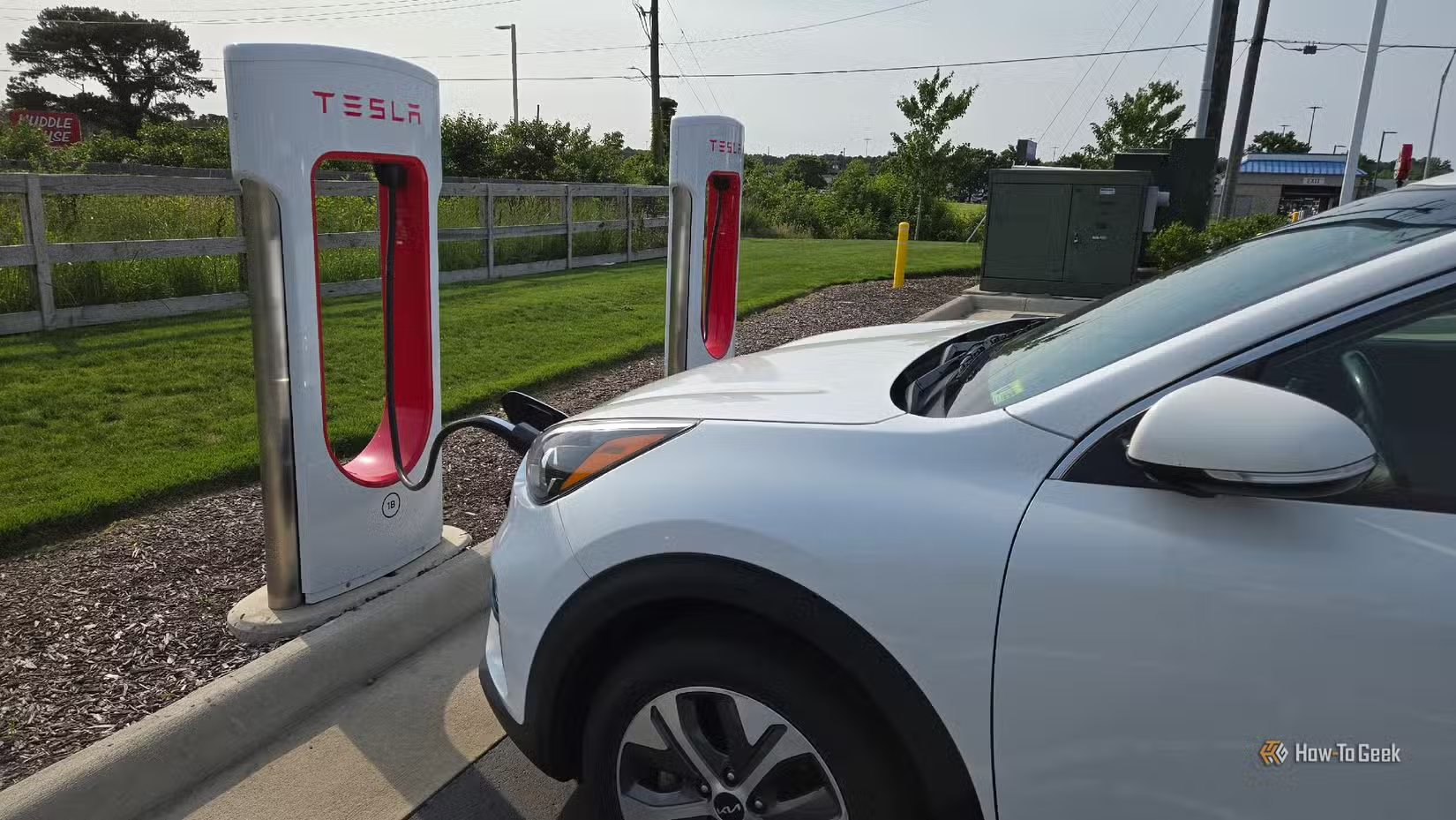
Nissan is already facing financial challenges amid fierce competition, but it’s also dealing with a difficult American EV market where the end to the $7,500 federal tax credit has hurt sales for many brands.
For Nissan, first quarter 2026 EV sales plunged nearly 89 percent to just 724 cars, including the redesigned Leaf.
Hybrids are typically less expensive to make than EVs and plug-in hybrids due to their smaller batteries and motors. They also help overcome concerns about range, as you get some of the efficiency benefits of electrification without having to find charging stations.
Tough competition ahead
The 2027 Rogue Hybrid e-POWER could be more affordable than its 2026 plug-in counterpart, which starts at $45,990. That could help Nissan fend off Honda and Toyota. The SUV also won’t rely on chargers to live up to its full potential, so it may draw more buyers to electrified cars without asking them to install equipment or find stations.
Source: Nissan.
Source: Read Full Article