








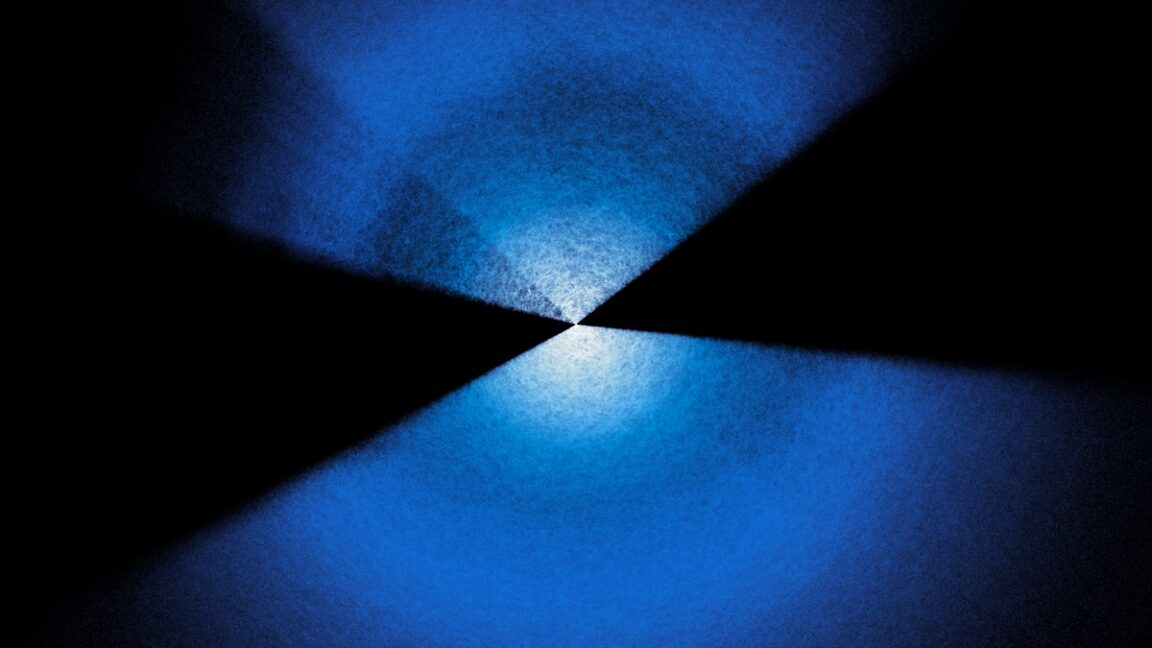
“When the original DESI survey began, we had ‘dark’ tiles over many different parts of the sky, so we weren’t as limited by conditions,” Myers told Ars. “But for the final dark tile, we had to thread the needle more, which made it seem like ‘weather’ was more of a problem. A lot of the time we were waiting to complete the final dark tile from the original program; we’d been observing plenty of ‘bright’ and ‘backup’ tiles, as well as even some tiles from newer dark programs, which span more of the sky.”
Gearing up for DESI-II
DESI’s operation has been extended until 2028 to get a deeper look at more distant and faint “luminous red” galaxies, as well as nearby dwarf galaxies and stellar streams. Plans are already underway for DESI-II, which will require a small instrument upgrade. As for further tests of the Lambda CDM model, future analysis will be able to incorporate observational data from the Vera Rubin Telescope’s sky survey as well as the Euclid Space Telescope. “We’re going to need a lot of datasets and mix them in different ways to try to figure out what the Universe is trying to tell us,” said Leauthaud.
The big question mark is whether there will be future funding for DESI and DESI-II, given the precarious state of science funding in the US. Honscheid acknowledged the uncertainty but is cautiously optimistic, in part because of the project’s success to date, and because DESI-II’s upgrade is a relatively small-ticket item.
“I’m optimistic for DESI-II, but I’m also gravely concerned more broadly by the funding landscape and the attack on science,” said Leauthaud. “Even though we may be lucky, I’m still extremely concerned for my colleagues in astronomy who have lost funding, students whose careers have been jeopardized, postdocs who have had to leave. More broadly, beyond astronomy and astrophysics, I’ve been extremely concerned about the impact on climate science and NOAA. We rely on weather services to help with our observations.”
Source: Read Full Article