









For over a decade, I’ve written about Windows Phone (RIP), iPhone, and, my main squeeze, Android. But there’s one beloved operating system missing from that list: webOS. 17 years after the Palm Pre hit the market, I’m finally trying it for the first time.
I’ve been lucky to try many mobile OS’ in my day. Windows Phone 7 and 8, iOS 3, 4, and 10-26, every version of Android since 1.5 Eclair, but webOS has been a notable gap in my history. However, I’ve always been very curious to check it out. People who used webOS back in the day still speak of it like a loved one who passed away. Let’s see what the hype was all about.
Missed connection
We moved in different circles
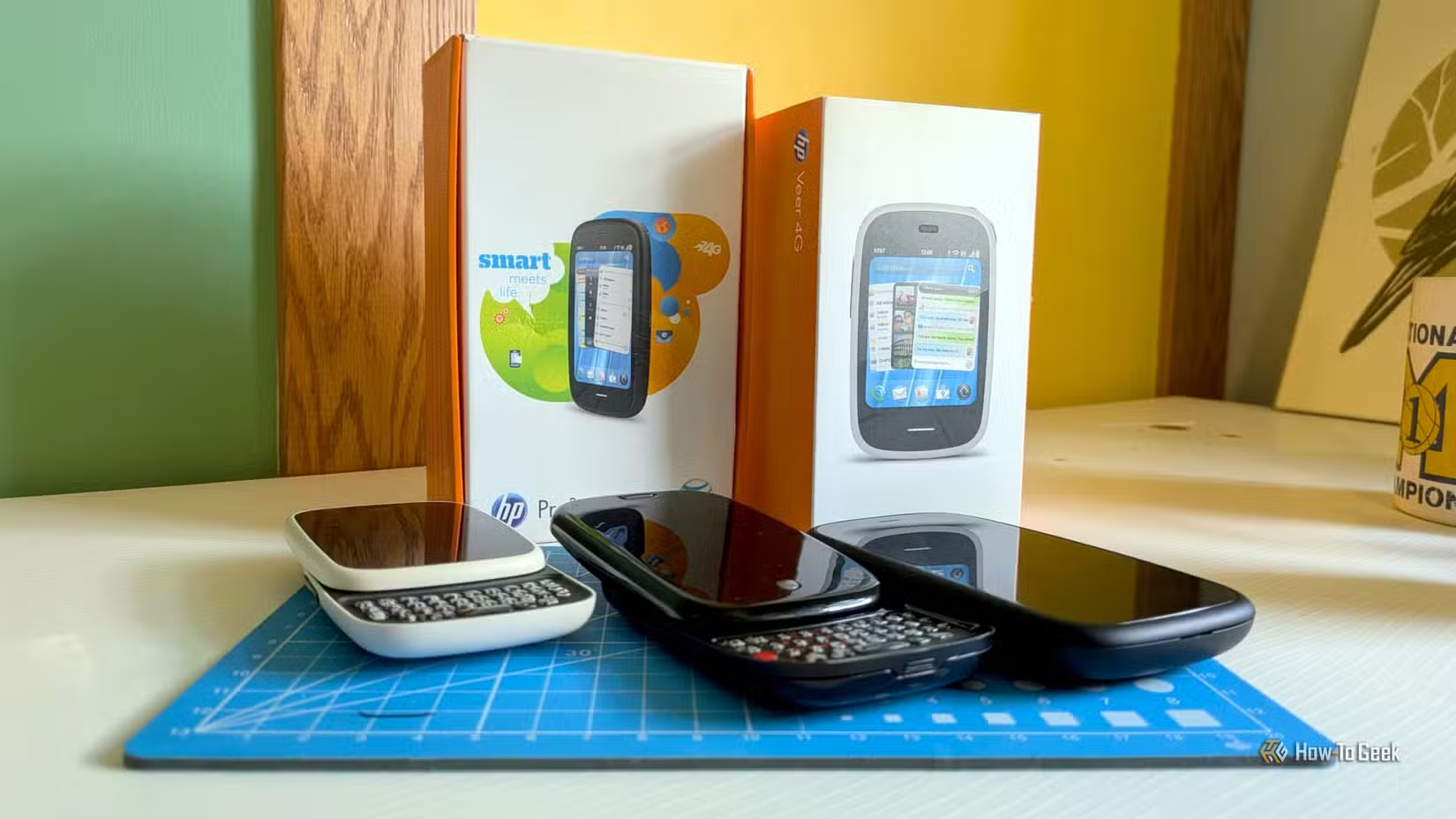
The Palm Pre was released on June 6, 2009. I remember reading about webOS and seeing the weird ads on TV. It looked very impressive, but it was only on Sprint, and I was stuck with Verizon. This is the same reason why I bought an iPod Touch 2nd Gen in 2009—the iPhone wasn’t available on Verizon, either.
If you’re familiar with smartphone history, you know webOS had a short life. The Palm Pixi launched five months after the Pre. “Plus” versions of the Pre and Pixel were added in January 2010, followed by the Pre 2 later that year. Then, HP acquired Palm, released the Veer, Pre 3, and TouchPad (a good story) in 2011, and that was it.
The last version of what could be considered Palm’s vision of webOS was released by HP in January 2012—exactly three years after its introduction. By the time the Pre became available on Verizon, I had already moved on to Android and later gave Windows Phone a shot for a couple of years. I missed my opportunity to use webOS in its heyday, but thanks to my colleague, Patrick Campanale, I have an old HP Veer to try out.
webOS’ influence on Android is easy to see
It’s more than just inspiration
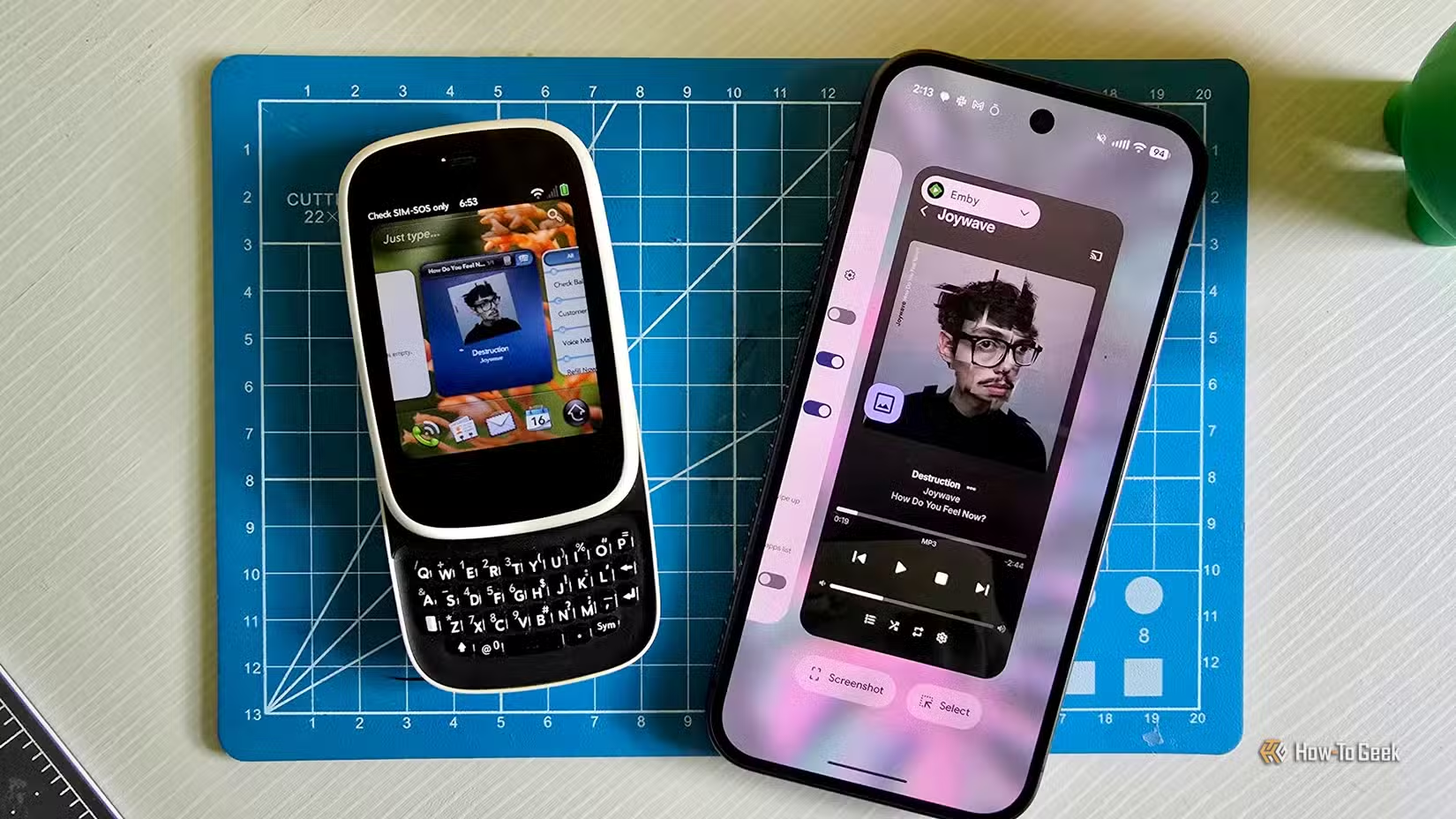
Upon first boot, I immediately noticed how natural webOS was to use. That’s a weird feeling to have when using a 16-year-old device, but it’s thanks to two things: gestures and multitasking. This was webOS’ bread and butter.
Rather than simple navigation buttons, the Pixi has a “Gesture Area” below the screen. If I tap or swipe up on the gesture area, it doesn’t take me to a home screen. Instead, I see my recent apps displayed as cards and five apps in a dock. To close an app, I simply swipe it up off the screen. This is essentially exactly how multitasking works on many Android phones today.
When using an app, the Gesture Area becomes even more useful. I can do a short swipe horizontally to go back to the previous screen. In the web browser, this gesture will go forward and backward between pages. If I do a long swipe horizontally in either direction, I’ll quickly be taken to the recent app from that side of the multitasking row. Any of this sound familiar? It should.
The funny thing is webOS gestures and multitasking are actually still better than Android. For example, when I swipe up on the Gesture Area from the multitasking view, the full app launcher opens. That’s handy, but it gets better. If I slowly slide my finger up on the Gesture Area, the dock of five icons appears in a cool, flowy animation. I can slide my finger over to an icon to launch it from anywhere.
There are plenty of other areas that feel like Android, too. The lock screen is a padlock icon that you drag up to unlock. Notifications appear as icons in a status bar, but it’s at the bottom of the screen instead of the top. They can be swiped away from the Dashboard view.
Far ahead of its time
Using webOS today, it’s very clear that this was a revolutionary operating system. It doesn’t feel outdated at all. The last version of webOS was released nearly 15 years ago, yet Android has more in common with it today than it did back then.
Of course, that wasn’t by accident. The original webOS design team was led by four people, including Matias Duarte, a well-known name to Android fans. In 2010, Duarte was hired by Google to be the Director of Android User Experience. He first worked on 3.0 Honeycomb, but it wasn’t until 5.0 Lollipop that his vision was fully realized. That’s when many of the webOS influences appeared.
Regardless, I now understand why people talk about webOS the way that they do. webOS essentially perfected multitasking on mobile devices 17 years ago. Android didn’t get proper gesture navigation until 2019. It’s rare to use something that was so far ahead of its time that it’s still being copied over a decade later. We owe a lot to Palm and webOS—I’m happy to have finally tried it for myself.
6 experimental Android features that were way ahead of their time
Being first doesn’t always mean you’re the best.
Source: Read Full Article