










Florida Gov. Ron DeSantis got his maps.
Subscribe to read this story ad-free
Get unlimited access to ad-free articles and exclusive content.

State lawmakers on Wednesday passed redrawn congressional lines that create an additional four GOP-leaning seats in Florida, making it the eighth state to complete mid-decade redistricting in the 2026 election cycle — and likely setting up a historic legal challenge in the state.
The proposal passed the Florida state House and Senate on largely partisan lines, even as some members of the Republican majorities have expressed skepticism about redrawing the congressional lines. Florida GOP lawmakers largely remained silent publicly as the state has become part of a Trump-backed mid-decade redistricting push designed to beef up Republicans’ slim U.S. House majority ahead of the midterms.
Several Democratic-controlled states retaliated, leading to something close to a stalemate nationally.
Much of the focus from opponents in the Legislature focused on how DeSantis is using his office’s proposed redraw of the state’s congressional lines as a vehicle to do away with anti-gerrymandering language in the state constitution, known as Fair Districts.
The amendment contains a ban on drawing new political districts that benefit a political party or incumbent, as well as protections built in for districts with large minority populations and for keeping districts compact.
DeSantis and Republicans have essentially acknowledged his map is out of line with the current state constitution, but they believe the state and U.S. Supreme Court rulings will eventually make the proposal constitutional.
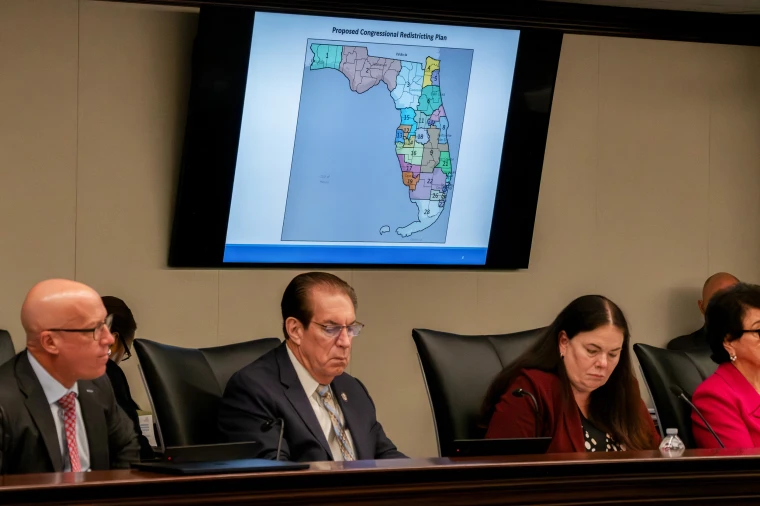
Florida state Rep. Jenna Persons-Mulicka, a Republican sponsoring the map, told members several times Wednesday that it does not align with Florida’s constitution — but is based on “viable legal theory” and that Florida has an “evolving legal landscape.”
DeSantis’ argument rests on the idea that the Fair Districts provisions protecting minority-performing districts are unconstitutional, even though no court has ruled that way yet.
“Properly understood, the Fourteenth Amendment forbids the government from divvying up the citizenry based in whole or in part upon race,” read a memo penned by DeSantis general counsel David Axelman.
During a Tuesday committee hearing, DeSantis administration map drawer Jason Parada acknowledged he used political performance data when creating his proposal, something Democrats argue is at odds with Fair Districts. But Parada said he did not consider at all racial data, which is in line with the governor’s direction.
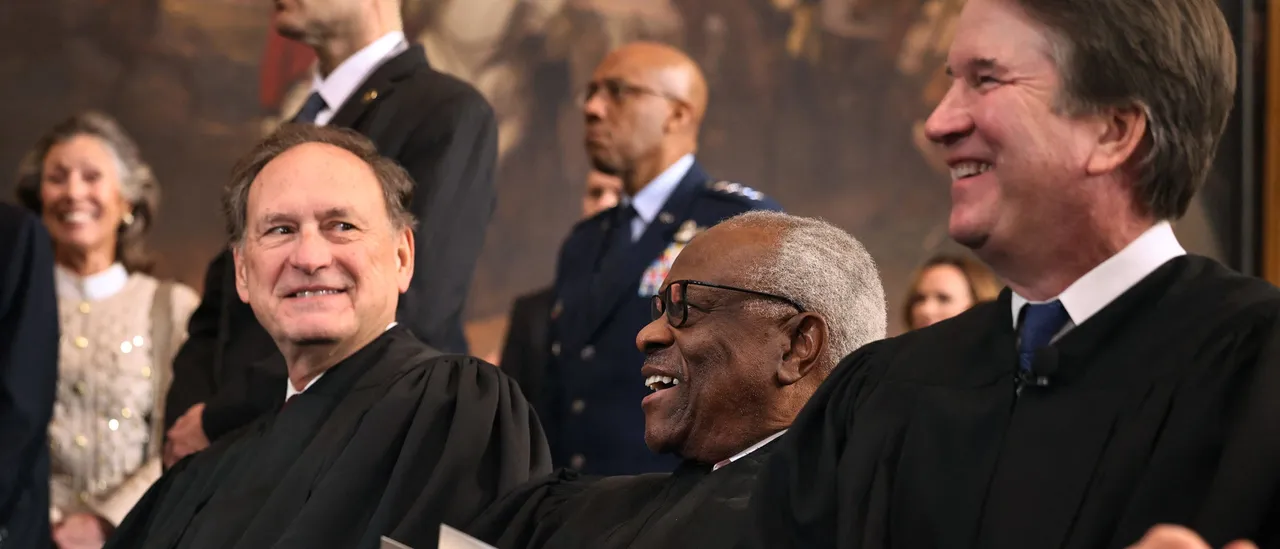
As lawmakers debated the maps Wednesday, the U.S. Supreme Court did hand DeSantis’ legal theory a partial victory.
In a 6-3 decision, the high court ruled in a long-awaited case that the Voting Rights Act did not require Louisiana to draw a second majority-minority congressional district. The ruling did not abolish Section 2 of the Voting Rights Act, which was enacted to protect minority voters who long faced discrimination in elections.
Though Section 2 remains intact, Republicans in Florida said the ruling is a win for their efforts to enact the maps drawn by DeSantis, who has long said the ruling would be key to Florida’s mid-decade redistricting process.
“Called this months ago,” DeSantis wrote on social media shortly after the ruling.
State House Democrats asked for a break from debate to review the ruling, but that move was blocked by the chamber’s Republican majorities. The Florida Senate did grant a break for members to review the ruling.
The issue, and underlying constitutionality of Fair Districts, is still almost certain to end up before the Florida Supreme Court. DeSantis has appointed six of the court’s seven current members.
Democrats also criticized legislative Republicans for ceding all authority over the maps to DeSantis, who released his proposal just one day before the start of the special legislative session.
Persons-Mulicka, the House sponsor, said during the floor session that she was unable to answer many questions about the plan because the Legislature was not involved.
“I can’t speak to the process or what happened when map drawers was drawing the map, all I can say I was not involved in drawing the map,” she said.
Democratic state Rep. Angie Nixon quickly shot back, “Why are you even sponsoring this bill?”
Few Republican members used the floor sessions to defend DeSantis’ proposal, instead often giving up their time allotted to debate the proposal as Democrats hammered the plan.
Democrats noted, among other things, that the sizable Puerto Rican population in the Orlando area would be carved up into several districts under the DeSantis plan, diluting its political power. Most are currently represented by Democratic Rep. Darren Soto, whose seat is abolished under the new plan.
“So many communities are losing representation,” said Democratic state Rep. Fentrice Driskell.
She noted that Tampa Bay is now also carved up into three separate districts, a move that also does away with the region’s only Democratic seat, which is currently held by Rep. Kathy Castor.
Under the new plans, seats held by Democrats Jared Moskowitz and Debbie Wasserman Schultz, both of South Florida, would also be transformed into Republican-leaning districts.
Source: Read Full Article