








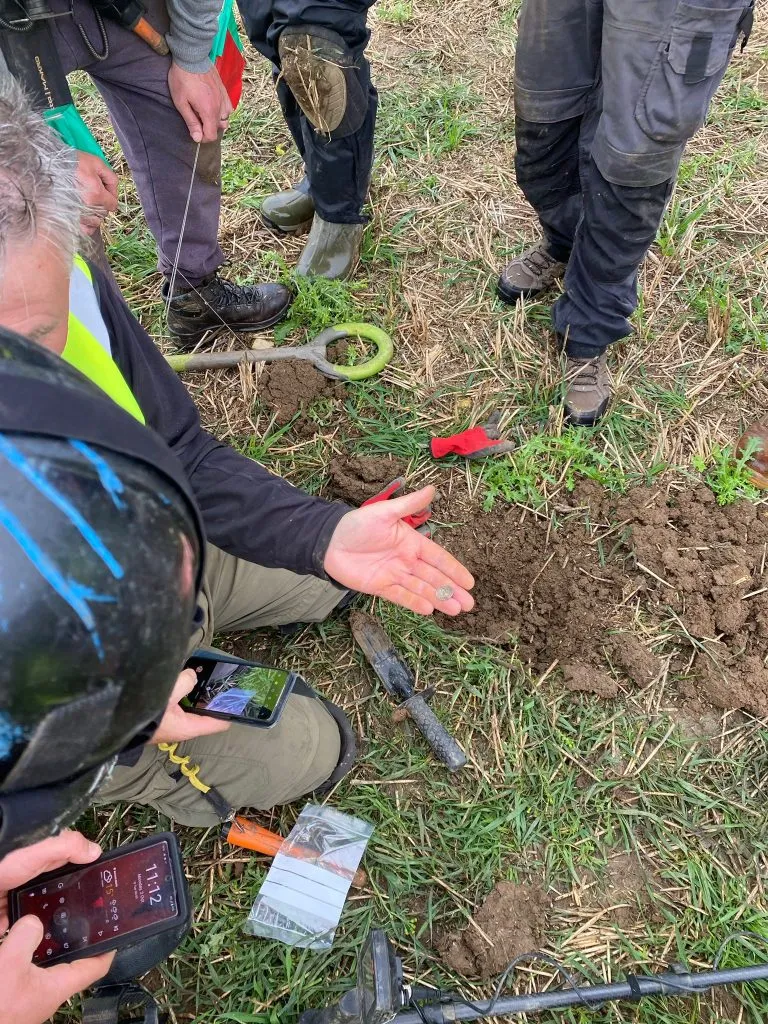
Metal detectorists discover rare, Anglo-Saxon coins likely hidden from Vikings

Get the Popular Science daily newsletter💡 Breakthroughs, discoveries, and DIY tips sent six days a week. In a classic example of lucky metal detectorists triggering an archaeological investigation, a group of metal detecting enthusiasts in England discovered a rare hoard of early medieval Anglo-Saxon coins in the parish of Bickmarsh, Worcestershire.  Members of Go Detecting…

Read More
Toxins plus climate harms likely cause of reduced fertility, study finds | Science

Toxins plus climate harms likely cause of reduced fertility, study finds | Science

Simultaneous exposure to toxic chemicals and climate change’s impacts likely generates an additive or synergistic effect that increases reproductive harm, and may contribute to the broad global drop in fertility, new peer-reviewed research finds. The review of scientific literature considers how endocrine-disrupting chemicals, often found in plastic, coupled with climate change’s effects, such as heat…

Read More
Australia is the world’s fourth-largest black truffle producer. Now scientists may have unearthed why | Farming

Australia is the world’s fourth-largest black truffle producer. Now scientists may have unearthed why | Farming

Black truffles aren’t native to Australia, but since the first oaks and hazelnuts were planted in the 1990s, the local industry has flourished, becoming the largest producer outside Europe. Now, scientists have identified the environmental factors which appear to have contributed to that success. Many types of fungi produce truffles, a fruiting body that grows…

Read More

Deep under Antarctic ice, a long-predicted cosmic whisper finally breaks through in 13 strange bursts

A detector buried deep in Antarctic ice has captured the first experimental evidence of a predicted but never-before-seen phenomenon: radio pulses generated when high-energy cosmic rays slam into the ice sheet and trigger particle cascades inside it. Through results published in Physical Review Letters, astronomers of the Askaryan Radio Array (ARA) Collaboration have validated a…

Read More

Why did Clovis toolmakers choose difficult quartz crystal? New study offers clues

Quartz crystals are difficult to knap due to size, hardness, and crystalline structure, making them a “low-quality” raw material. However, the Clovis people of North America sometimes made points and other tools from this material despite its drawbacks. To determine whether the quartz crystal points of the Clovis were functionally comparable to those made from…

Read More