









The Raspberry Pi Pico is a popular general-purpose microcontroller among hobbyists, but it isn’t the only RP2040 board out there. If you have a specific job in mind, it is worth checking out the alternatives—you may save yourself some work.
Here are five options to consider for your next DIY project.
The Seed Studio XIAO RP2040
When it needs to be tiny
The Seeed Studio XIAO RP2040 is a great board when you need something small. It’s much smaller than the Pico
This size lets you take on projects that would be difficult or impossible with a larger board. If you are building wearables, compact drones, tiny home sensors, or otherwise working with tight enclosures, you could use this board so that the footprint of the Pico doesn’t get in the way.
Due to the diminutive size, the XIAO RP2040 does make some concessions. For example, it can only fit 14 GPIO pins, or you can solder it directly into a finished product. On the plus side, it has a USB-C port instead of a micro USB port.
If your main constraint is physical space, this is a great option.
Adafruit Feather RP2040
Battery support out of the box
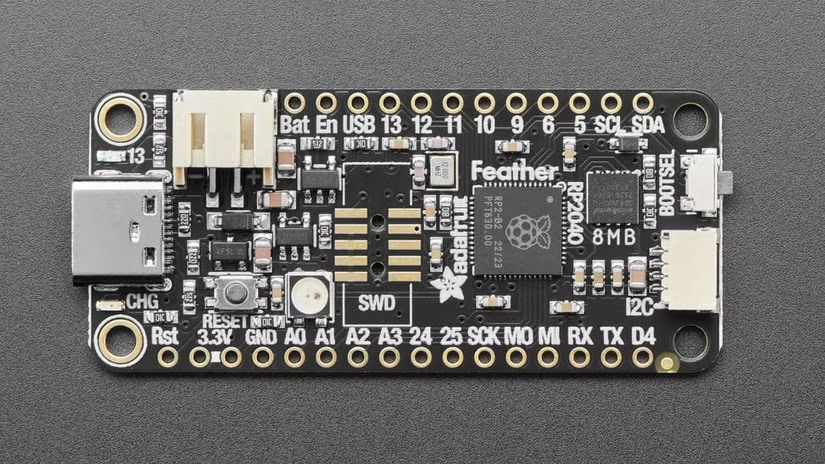
The Adafruit Feather RP2040 is designed to maximize the capabilities of the RP2040 out of the box.
The most interesting feature is the built-in battery charging. That removes one of the biggest—and most important—hurdles in microcontroller projects because you don’t have to design your own power circuit or hunt for external modules. You just plug in a battery and you’re good.
You also get access to Adafruit’s Feather ecosystem, which gives you convenient modularity that the Pico doesn’t normally have. By using FeatherWing add-ons, you can add displays, radios, and sensors without creating a rat’s nest of wires.
It isn’t the cheapest or smallest option, but if you value your time over hardware costs (especially for portable IoT prototypes), Adafruit’s Feather RP2040 is a great option.

Pimoroni Tiny
A tiny board with more flash
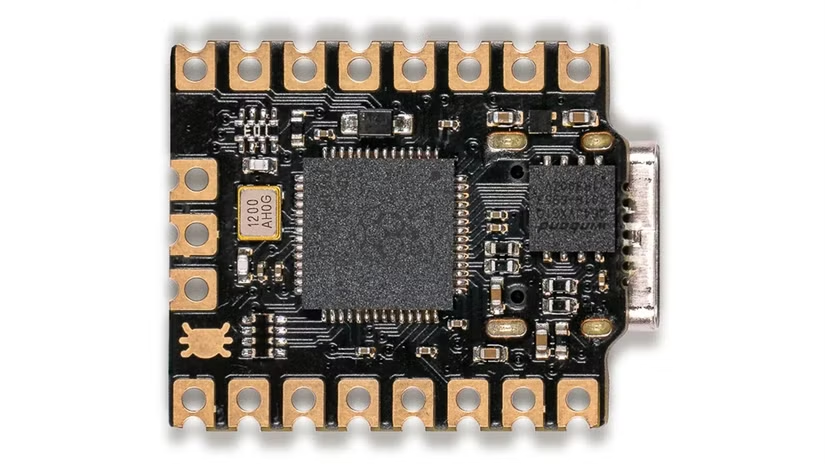
The Pimoroni Tiny 2040 sits in a sweet spot between refinement and practicality. It’s small, but not so small that it becomes a pain to work with.
The most meaningful upgrade is the flash storage. One Tiny 2040 variant gives you 8MB of flash memory while the Pico is limited to 2MB, which means you have more room for your code, assets, and data. It’d be especially useful if you’re working on projects involving “complex” graphics (by RP2040 standards) or complex firmware that would normally be too much for a standard Pico.
It also includes quality-of-life improvements like USB-C, a proper reset button, and a tiny footprint.
Arduino Nano RP2040 Connect
Out of the box sensors and wireless
The Arduino Nano RP2040 Connect dramatically expands what the RP2040 can actually do.
It integrates Wi-Fi, Bluetooth, an IMU (a motion sensor), and a microphone. Instead of spending time wiring up external modules, you start with everything already on the board. That is a massive advantage because it keeps your design clean and saves you the trouble of integrating them yourself.
You also get the benefit of the Arduino ecosystem, which can make getting started easier thanks to their libraries. The downside is that you’re paying more—$21—for features you might not always use. However, if your project requires connectivity or onboard sensors, this board is a good option.
RP2040 Zero
When the Raspberry Pi Pico is too much
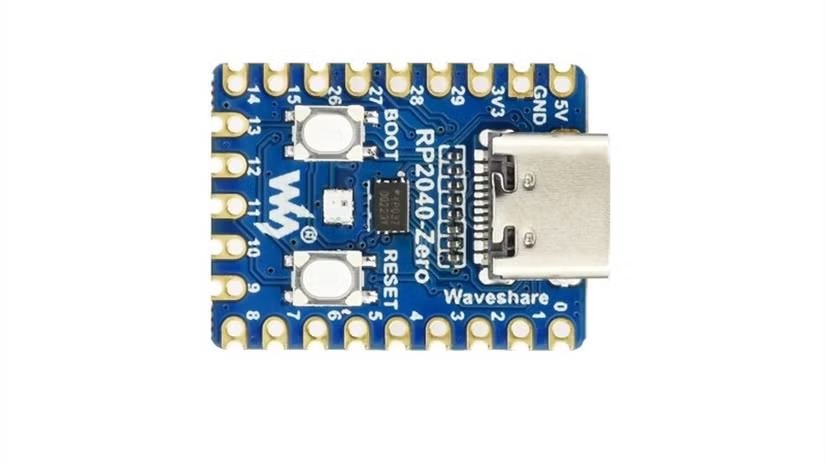
The RP2040 Zero is one of the most stripped-down RP2040 boards available.
It’s smaller and cheaper than the Pico, and it’s designed specifically to be embedded into other hardware. Because it has castellated edges, you can solder it directly onto a custom PCB, turning the board into a component rather than a standalone tool.
This makes it the ideal choice for ultra-compact DIY builds where space and cost are at a premium, and there is a version with pre-soldered headers to make prototyping easier.
The stock Pico is great too
Of course, not every project calls for a specialized board using the Pi Pico. If you’re just starting out with a project, the Pi Pico remains a great option for early prototypes, even if you wind up using a different board in the final version.
- Brand
-
Raspberry Pi
- CPU
-
RP2040
- Memory
-
2MB
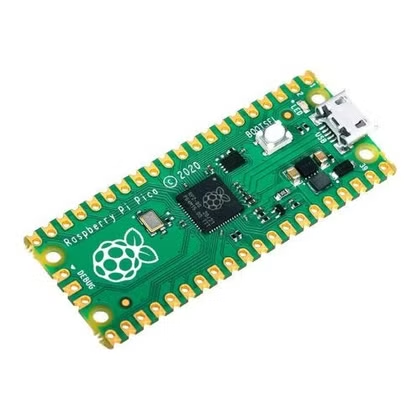
The Raspberry Pi Pico offers a custom-built dual-core RP2040 processor, making it the ideal affordable microcontroller for a wide range of projects. It features UART, SPI, I2C, I2S, and much more, making it a solid option when you need more power and capabilities than a traditional Arduino.
Source: Read Full Article