









Home theater setups can be as cheap or expensive as you want them to be. A basic setup might include a soundbar and some surround speakers, while a more expensive setup could have a dedicated projector, surround speakers, ceiling speakers, and multiple subwoofers. If I had an unlimited budget and the right space, these are the components I’d add.
A quad subwoofer setup
Multiple subs matter more than one big one
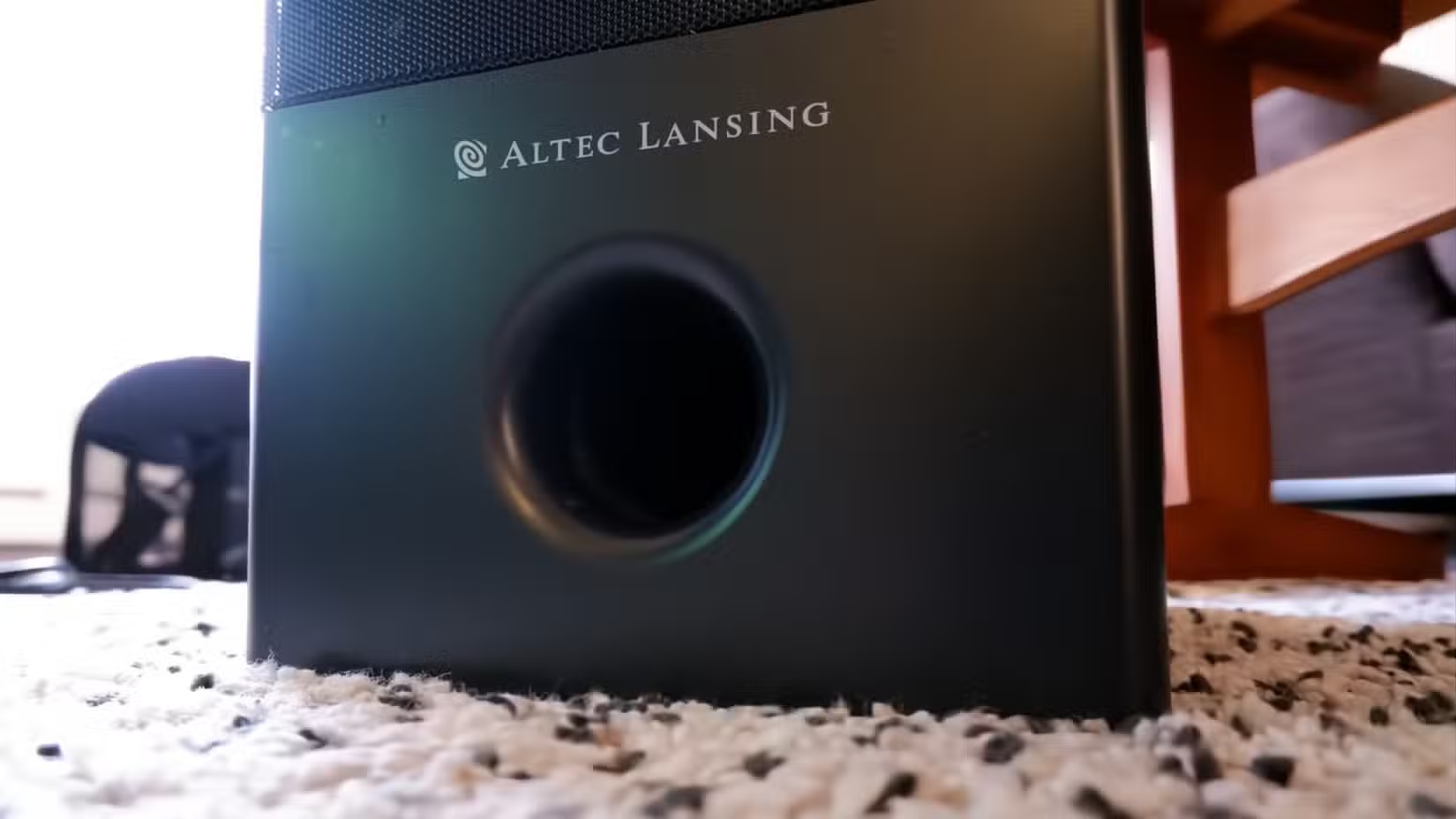
If you’ve spent any time reading audio enthusiast forms, you’ve undoubtedly come across debates about subwoofer placement.
Most people set up one subwoofer in the best position they can manage. Because bass tends to be less directional than high-frequency sounds, that is often fine. However, depending on your room shape, you could wind up with dead zones where the bass is noticeably quieter than you’d expect.
If you have the money—and the space—you can add additional subwoofers to get better coverage. I’d probably opt to build four “Full-Marty” speakers, which are popular in the DIY subwoofer community for offering a good mix of performance and cost-effectiveness.
With four of them humming away, you’d have deep, uniform bass in almost any room that could be loud enough to annoy every neighbor within a one-mile radius.
In-ceiling Dolby Atmos everywhere
Placement matters more than count for 3D sound
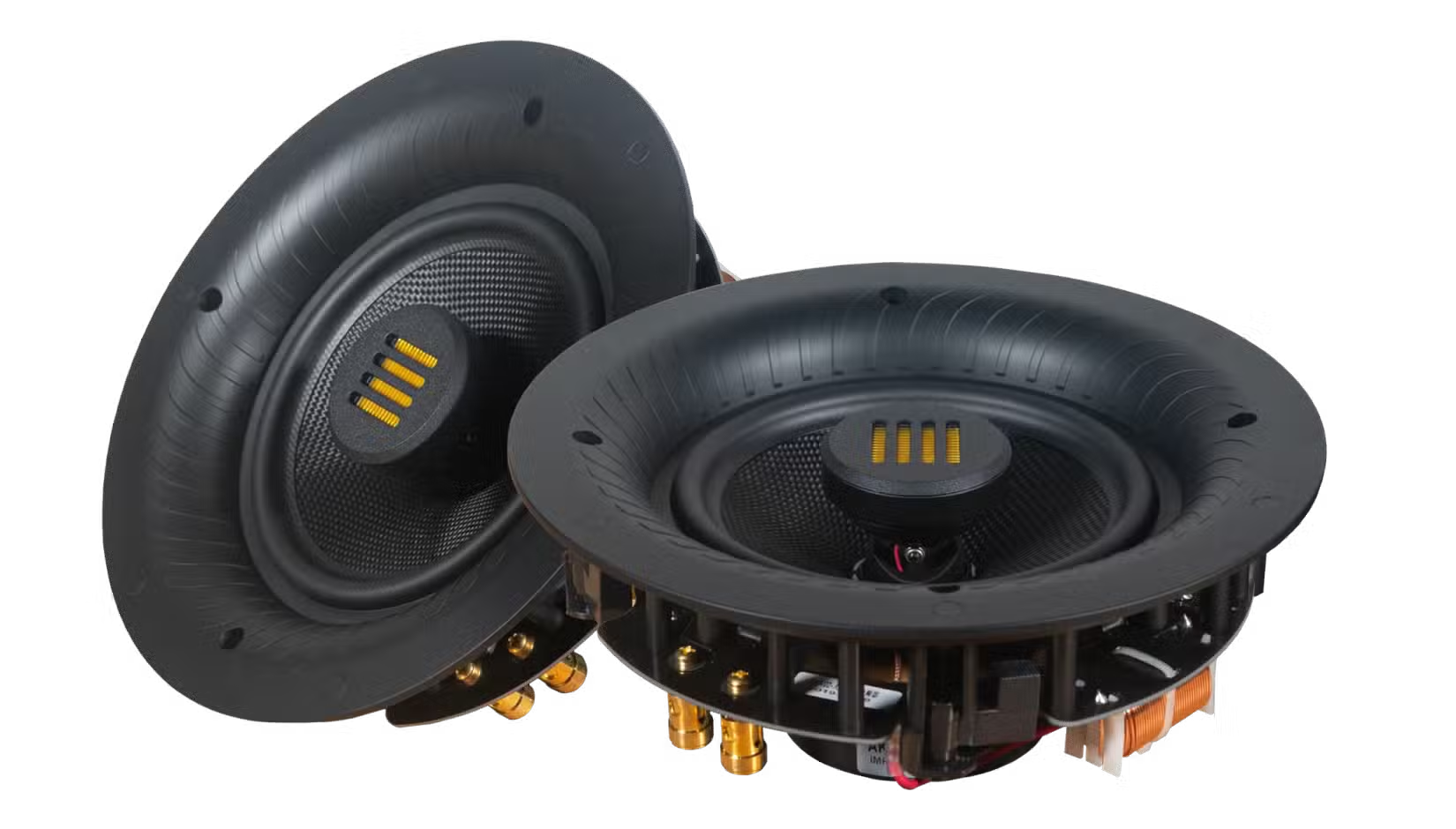
Traditional surround sound, like you get with most all-in-one soundbar setups, works by positioning speakers in front of you, to the sides, and behind you.
Atmos takes that a step further and adds speakers above you too. If I had the money and space, I’d set it up in a heartbeat.
With speakers above you, you’ll find that sound no longer just arrives from the sides or behind. It literally comes from above. When you’re watching a scene where a helicopter flies overhead or there is a thunderstorm, the difference is immediately noticeable.
If you want to maximize that effect, look for in- or on-ceiling speakers rather than speakers that just bounce sound off the ceiling. Four speakers are ideal, but it isn’t strictly necessary.
After listening to Atmos setups in the past, positioning seems more important than the raw number of speakers. If the speakers aren’t positioned and calibrated correctly relative to your listening spot, the immersive effect disappears almost completely.
When you get it right, a full in-ceiling Atmos setup is extremely impressive. It’s one of those upgrades that makes me rewatch movies just to hear them again.
A rotary woofer
An unconventional sub for the deepest bass

Conventional subwoofers can only go so low before it becomes practically impossible for them to produce sound. If you want even lower frequency sounds, you need a rotary subwoofer instead.
Rotary subwoofers work on a completely different principle from regular speakers. Instead of a conventional speaker cone, it spins metal blades—much like a fan—to move air directly and generate bass. Rotary subs can reach frequencies well below what ordinary subwoofers handle, into the single hertz—a range you can’t hear, but you can definitely feel.
Unfortunately, they have some serious drawbacks. They’re large, costly, and far from plug-and-play. You’ll need a lot of free space, careful installation, and neighbors willing to tolerate the sound. For most homes, those constraints make rotary subs impractical.
However, if I had the space and the budget, I’d build one in a heartbeat.
Acoustically transparent screen with hidden speakers
The real cinema experience
When you walk into most commercial movie theaters, you’ll find that most of the speakers in the front aren’t visible.
In a professional theater, the front-left, center, and right channels are mounted just behind an acoustically transparent screen, which is made out of special materials that don’t affect the sound quality. As a result, the dialogue comes from the same point in the image you see on the screen, so the audio and picture line up perfectly.
Most living room setups mount the center speaker under or over the TV. That works, but it’s not ideal. If you’ve ever listened to a TV that is mounted significantly higher than the soundbar or center channel, you’ve probably noticed the unpleasant disconnect between where your eyes tell you the sound should be coming from and where your ears are telling you the sound is coming from.
Stop struggling with quiet streaming dialogue and just buy a soundbar
Can’t hear your favorite TV show? There is an easy fix.
An acoustically transparent screen fixes that problem and lets you place the speakers exactly where they belong: right behind the image. It also opens up the possibility of using larger, more capable speakers that normally wouldn’t fit in a regular living room setup. The whole system can be hidden behind the screen.
Great doesn’t have to be expensive
Once you start looking into ultra-large subwoofers, unique designs, and full home theater rooms, DIY starts to become more cost-effective than you might think.
The home theater world is loaded with boutique companies that produce good products but at a considerable markup because they’re specialty goods. If you have the tools and the patience to develop the know-how, you can often do it cheaper yourself.
Source: Read Full Article