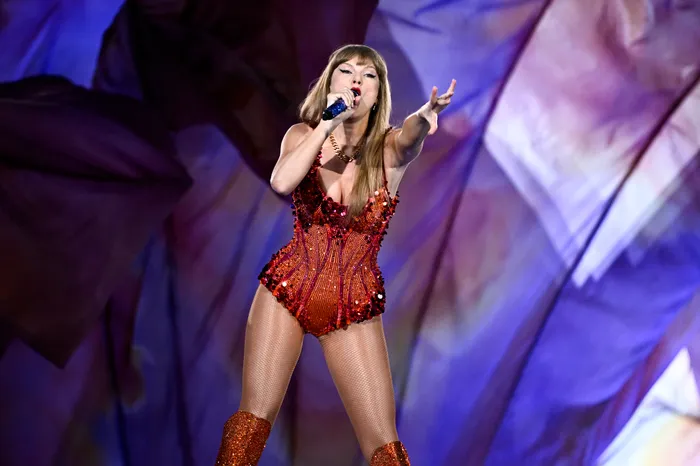











Lyle Lovett performed Friday evening in Stagecoach’s Palomino tent with the group of killers he calls his Large Band. After the show, I sat with the singer and actor in the front seats of what I’ll call his Large SUV. “It’s a rental,” he said.
We’re in here because you want to protect your voice?
You know, I don’t smoke marijuana.
Anymore, or period?
Period. I have no moral judgment for other people, but I don’t think it’s good for me. When I smell it, I get concerned that it’s going into my body, and so I just try to stay away from it. In the artist tent, there were plumes everywhere. In fact, at our set, two songs in, I called over our assistant tour manager and I said, “Can you put some fans blowing back out into the audience?”
To send the weed back from whence it came.
Well, I don’t want people to waste it either — they paid good money for it. Jackson Browne asked me once in the parking lot of Conway [Recording Studios] — we were doing “The Road to Ensenada,” and he said, “Is it true you’re not cool with weed?” I said, “You know, I’m not.”
Where do you live these days?
In a couple of places, but in Austin, mainly.
People from Texas have strong opinions about the hierarchy of its cities. What’s the best city in Texas?
I can’t answer that.
You wouldn’t deign to.
It’s your thought, not my thought. The cities in Texas are distinct — wildly different from one another. Houston is one of the most international cities in the world. Austin is the most liberal city in Texas but it’s also being transformed by tech money. What’s going on there is analogous to what the oil business did in Houston and Dallas. San Antonio is the gateway to South Texas — it’s like 85% Hispanic. You feel the difference in culture there, and that’s wonderful. That’s my answer.
Did you ever have a move-to-L.A. moment?
I leased houses three different times. The first album I made in Los Angeles was “Joshua Judges Ruth,” in 1991, and the house belonged to a college professor who took a job at New Mexico State. It was on a street called Multiview, one switchback down from Mulholland — between Laurel and Nichols Canyon on the Valley side. I had a beautiful view of Universal City and the 101 as it came in. I remember this professor, when he was showing me the house, he called it “the river of lights.” So I lived there and then later rented the same house two different times, years apart, on a street called Torreyson, right below the Lautner [Chemosphere].
You’re set to get a star this year on the Hollywood Walk of Fame.
I don’t know if that’s true. I think I’m eligible.
It’s true — I checked.
We’ll see.
Let’s say it happens, which it will. How’s that strike you?
I think it’s always an honor to be recognized by any official organization. But that sort of stuff seems completely separate from the work I’m concerned with. What’s important is the work and how you get to do it.
Which of your albums would you say is your best?
It’s impossible to say. I’m proud of the Nashville records — the budgets were smaller and I had to record those records more quickly. But when I went to Los Angeles and spent too much money recording “Joshua Judges Ruth,” that was one of the most expansive creative experiences I ever had.
Define “too much,” right?
It was too much. Instead of recording three or four songs a day, we recorded two songs. Two weeks later, you didn’t love the take, let’s record it again. There was time to search for ideas, not just document ideas — that was the biggest difference for me. The natural way of doing things — just knocking it out — is absolutely valid. But from my point of view, I was more comfortable spending more money [laughs].
Where’d you like to eat when you were working in L.A.?
When we worked at Conway, we’d have lunch every day at Lucy’s El Adobe to the point that I gave them a credit on the albums.
Source: Read Full Article