










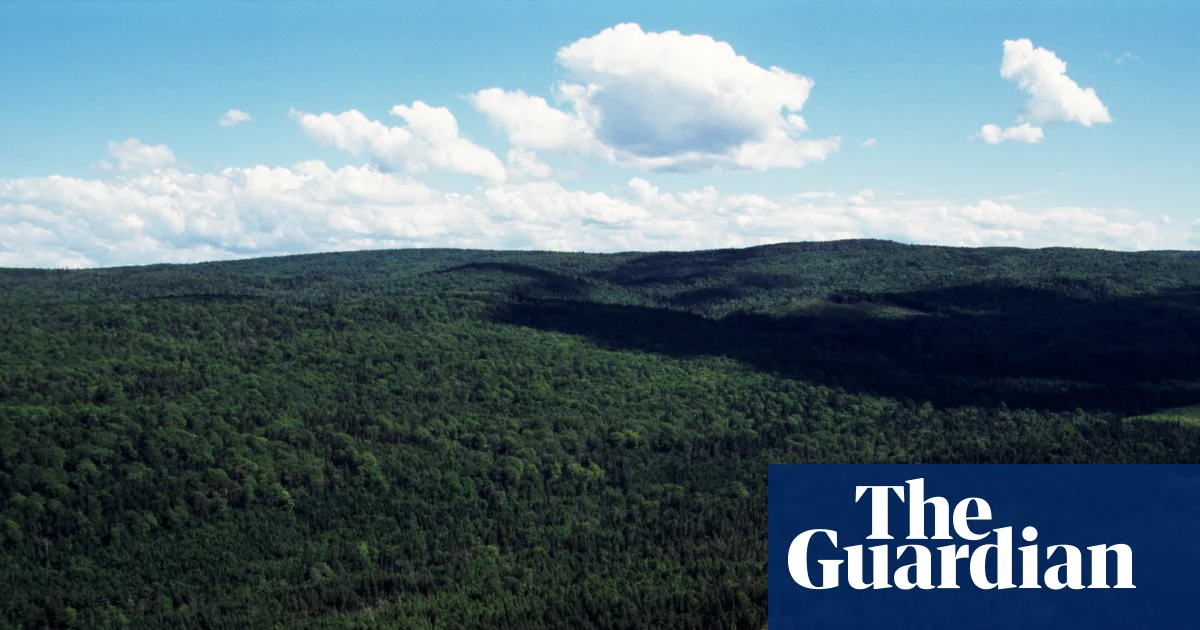
As wildfires raged across Nova Scotia last summer, the Canadian province made a simple plea to residents: stay away from the woods.
As the situation deteriorated, authorities turned the request into a prohibition: anyone caught hiking under the shade of the forest canopy faced a C$25,000 fine – a figure more than half the average worker’s yearly salary.
But exactly the emergency rules considered to be “the woods” was a challenge better suited to a philosopher than a confused hiker in a parking lot. Rock barrens, scrubland or marshes were all considered “woods”. So too was forest – but the presence of actual trees wasn’t necessary, just evidence they had once been there. Residents could still travel as long as it wasn’t “any great distance” through the woods.
“Someone who wanted to stay out of the woods had to put in some interpretive effort,” a judge recently declared. “The government just wanted people to use common sense. But the ban seemed to defy commonsense definitions.”
Last week, that same judge found the controversial ban wasn’t just confounding, it also violated Canada’s charter of rights and freedoms. And while the Nova Scotia supreme court acknowledged the urgency of the wildfire crisis, it warned that if individual rights aren’t protected, “they can be eroded in a way that eventually affects everyone”.
The chain of events, which ended in a scathing critique of government overreach, began last summer when the province was engulfed in flames. In July, Tim Houston, a stone-faced provincial premier, told the public that the ban on walking in the woods was “inconvenient” but essential to avoid a repeat of the disastrous 2023 wildfire season.
Most people adhered to the order. But not Jeffrey Evely, an army veteran who saw an opportunity to challenge the ban. After letting bylaw officers know of his plans, he ventured into the forest in Cape Breton – and was promptly handed a C$28,872.50 fine.
Aided by the Justice Centre for Constitutional Freedoms (JCCF) – a libertarian-leaning group that has taken on controversial cases, including an active role in the self-described Freedom Convoy that besieged Toronto in 2022 – Evely and his supporters challenged the fine in court, and won.
On 17 April, justice Jamie Campbell found the government had violated the mobility rights of Nova Scotians, and failed to weigh the cost of that breach against an attempt to stop the fires. Mobility is a protected right and has previously been called “the heart of what it means to be a free person” by courts. While governments can infringe or limit that right, courts have long demanded those efforts be taken with “reasonable” consideration of the effects.
But Campbell found this wasn’t the case.
At the same time, the province seemed keen to placate the concerns of industry groups such as forest operators, utilities and telecom companies, issuing permits for them to keep using the woods.
“Those responsible for safeguarding … had to do something. They had to do it quickly and their options were limited,” he wrote. But he nonetheless also warned of the need to protect the rights of individuals.
Campbell also found the order was “so vague as to be incapable of being interpreted at all”.
“Being told to stay out of the ‘woods’ made some sense to people who thought they knew what the woods are,” he wrote.
Nova Scotia’s premier defended his government’s actions during a fast-moving crisis.
“I did what I thought was necessary as premier to support our firefighters, to keep people safe, to keep property safe, and that was the woods ban,” Houston said this week. “That was completely appropriate in those circumstances, in that moment, based on the information I had.”
Marty Moore, the legal counsel for the JCCF, said the decision, which was “egg on the face of the government”, would probably deter others from pursuing similar measures. The JCCF takes on cases it believes are government overreach against free expression, religious freedom and individual liberty. It has also taken on controversial cases that centre on culture-war debates over gender identity and human rights law.
For Moore, the case echoed themes of pandemic restrictions his organization actively fought. But he said the case also had deep roots – “all the way to the Magna Carta in England and the Charter of the Forest from 1271”- which granted rights to common people to use the forests.
“Unless you’ve been to Nova Scotia and touched the forest there, it’s hard to understand the impact of what the travel ban looks like,” he said. “Nova Scotia is the woods.”
Source: Read Full Article