






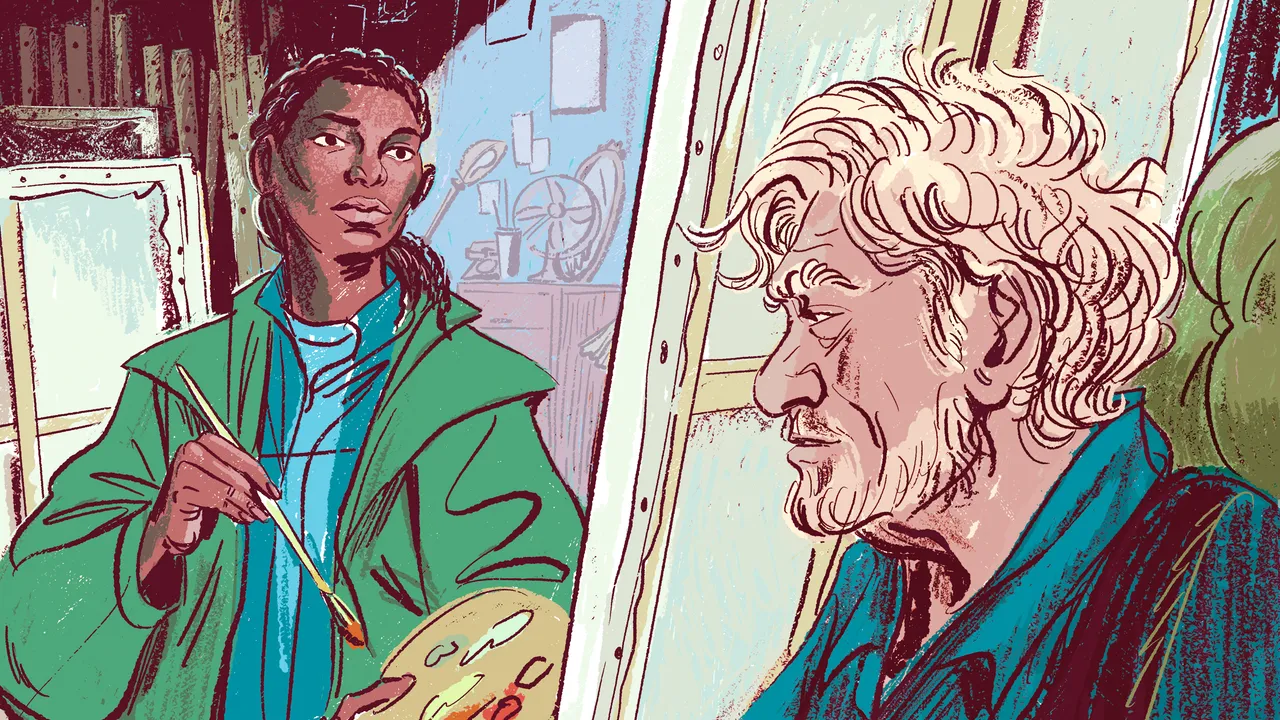
Once Lori enters Julian’s home, the film springs to life. So does Soderbergh’s camera, which begins sniffing and roving about the space like a dog unleashed. Our curiosity is awakened by the meticulous clutter of Antonia Lowe’s production design—walls covered with framed portraits and newspapers, shelves of knickknacks, spatters of paint everywhere—and, most of all, by Julian himself. We find him in his studio, seated before a laptop rather than an easel; Julian, who hasn’t painted anything of note in three decades, now makes money recording personalized video messages for his fans. Solomon’s script shrewdly places both the artist and the con artist on commensurate footing: Lori, who operates a Chinese-takeout stand, is as dependent as Julian on an alternate source of income.
Not that Julian sees much kinship, initially, with his new assistant. Their first conversation is comically lopsided, and McKellen, purring his way through what is effectively a monologue, lays the groundwork for his most vividly inhabited and hilariously irascible performance in years. Physically frail, yet in full verbal command, Julian doesn’t talk to Lori so much as at her, pausing only to fire off questions that harden, in midair, into assumptions. He urges her not to blather about her artistic aspirations, if she has any, or to assail him with excessive compliments. (“I like my flattery. I just need to believe it,” he insists.) Lori listens in dumbfounded silence, keeping her eyes on the prize, and trying not to roll them when Julian makes a comment about the dearth of great women artists—the kind of remark that earned him a close brush with cancellation in the past. The next day, he greets Lori on the stairs, his bare torso jutting out of an open robe. When she asks him to cover up, he makes a crack about Harvey Weinstein, who “ruined the robe for the rest of us.”
McKellen has mentioned the robe-ruiner before. In 2017, after investigations into Weinstein’s history of sexual harassment and assault ran in this magazine and the Times, the actor told an audience that “nothing but good can come out of these revelations”—though he drew criticism for stating, in the same sentence, that “some people, of course, get wrongly accused.” A Julian Sklar faux pas, avant la lettre? On a more recent, less anger-stirring note, McKellen has said that Weinstein had once apologized to him for his aggressive awards campaign on behalf of Roberto Benigni, which secured him the Best Actor Oscar for “Life Is Beautiful” (1998)—an honor that rightly should have gone to McKellen for his sublime performance, as the director James Whale, in “Gods and Monsters.”
Julian is, like McKellen’s version of Whale, a queer artist in the twilight of a major career, contemplating his legacy, mourning a lost lover, and striking up an unexpected cross-generational friendship. Whale lusts after a hunky gardener (Brendan Fraser) and persuades him to pose for a few sketches; Julian, though bisexual, expresses no such interest in Lori, and any art-making turns out to be a gratifyingly mutual endeavor. There are, naturally, layers of deception to scrape away first. Lori’s pauses reveal more about herself than she is aware, and her boss, for all his bloviating, turns out to be a surprisingly sharp listener.
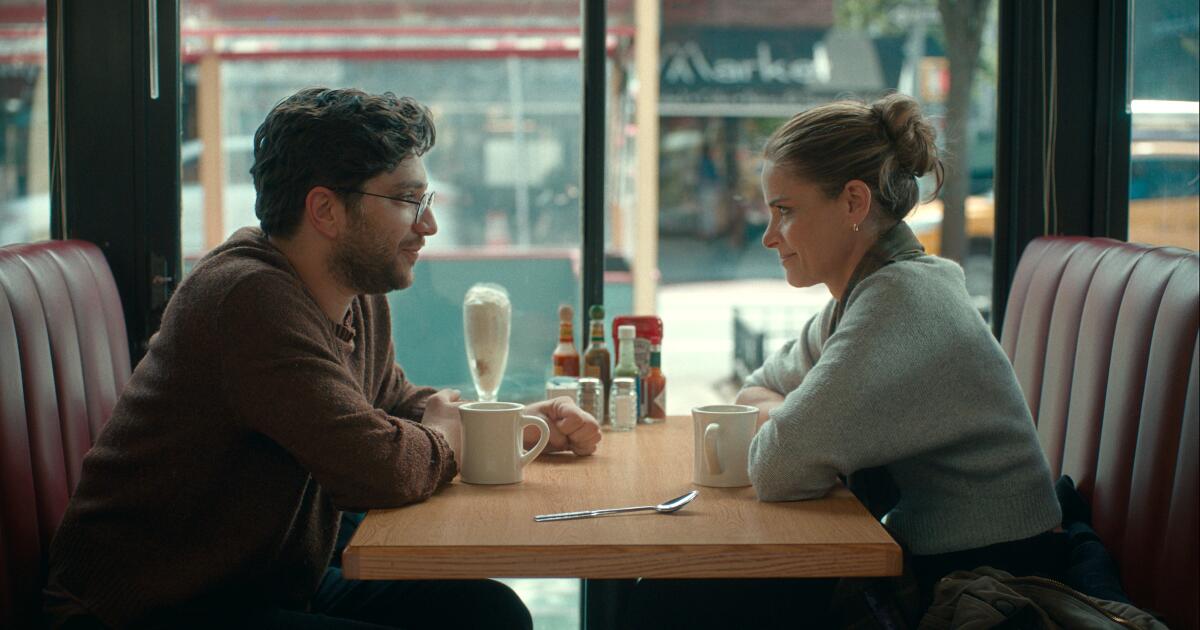
Soderbergh extracts some fun from the ensuing cat-and-mouse logistics, from Lori’s meticulous duplication of the Christophers to Julian’s efforts to bluff her into admitting her true intentions. But the two are, inevitably and marvellously, kindred spirits, and it’s delightful when the tense, combative rhythm of McKellen and Coel’s dialogue suddenly takes a warmly contrapuntal turn. By the time Julian realizes what’s going on, he’s more impressed than outraged by Lori’s lies—and, if he chafes at the notion that she (or anyone) could so easily reproduce his painting style, his ego is disarmed by the pleasure of encountering, for the first time in years, an artistic and intellectual near-equal. Solomon gives Coel a bravura speech in which Lori precisely and unsparingly deconstructs the long arc of the Christophers project, treating Julian’s techniques and materials as a direct window into his ever-evolving emotions—even the ones he faked. Commenting on an ostensibly buoyant period, Lori declares, with devastating accuracy, “The lightness was forced, and the joy was a lie.”
Source: Read Full Article