








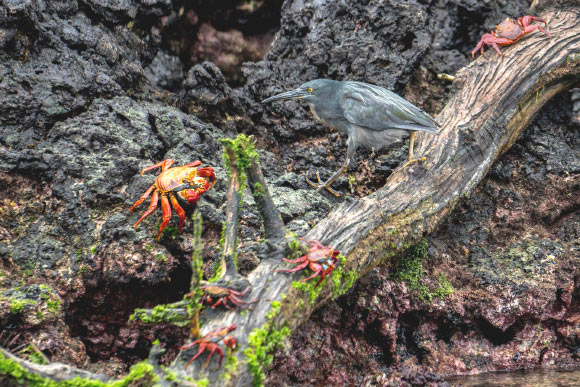
The Galápagos lava heron, a small heron that stalks the lava-strewn shores of the Galápagos Islands, Ecuador, may finally have secured its place as a distinct species.
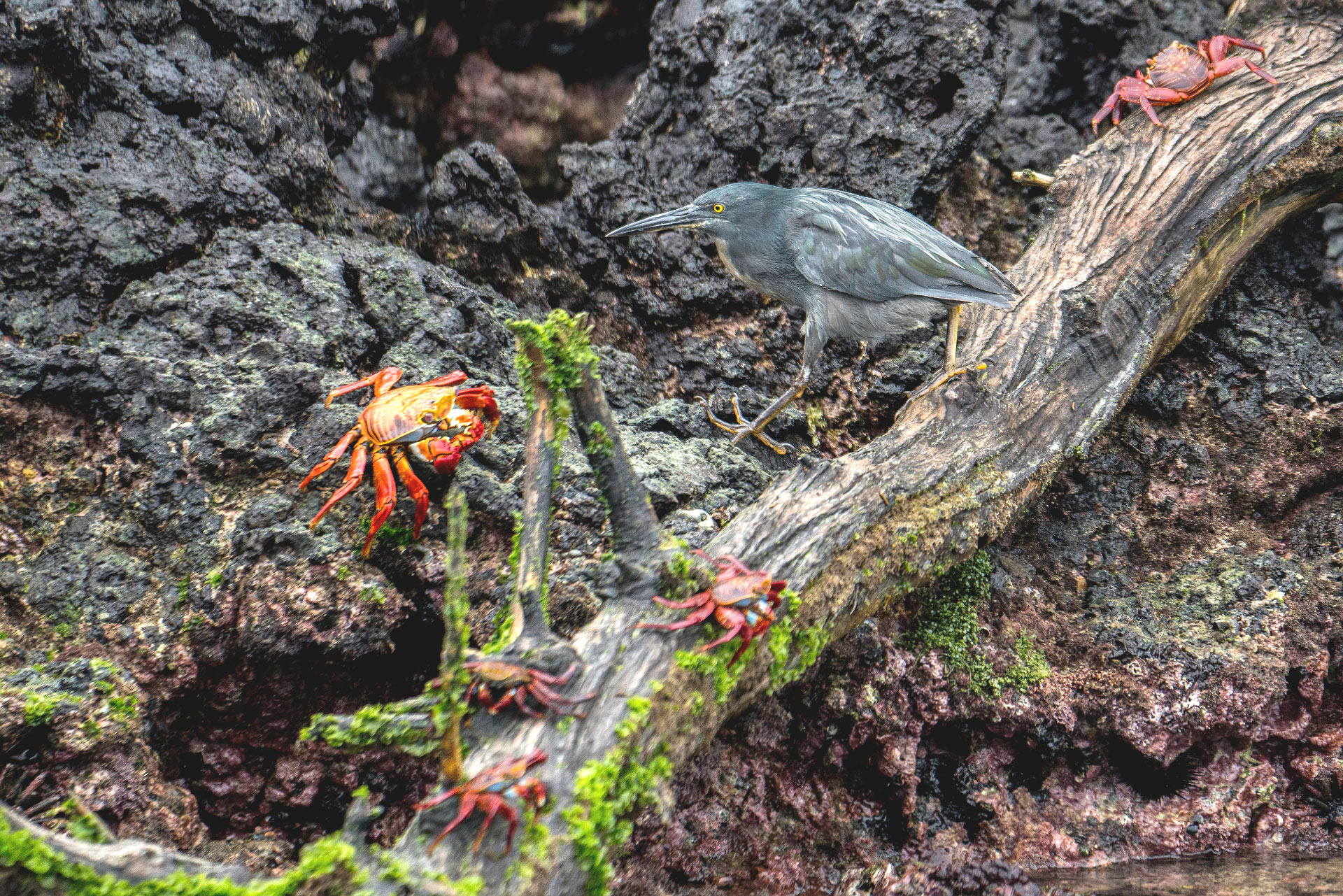
The Galápagos lava heron (Butorides sundevalli). Image credit: Casey Klebba / CC BY-SA 4.0.
The Galápagos lava heron, a slate-gray to black heron endemic to the Galápagos Islands, has long puzzled ornithologists.
Some classified it as a subspecies of the widespread striated heron (Butorides striata), Butorides striata sundevalli, while others argued it deserved recognition as its own species, Butorides sundevalli.
Now, a DNA analysis led by San Francisco State University and California Academy of Sciences suggests the latter may be correct.
“There was always this bird that shows a lot of variation in its plumage, and for a long time there was questions of whether this was a separate species or a subspecies of a bird that lives on the mainland,” said San Francisco State University’s Dr. Jaime Chaves, senior author of the study.
Drawing on thousands of genetic markers and hundreds of museum specimens, the researchers found that the Galápagos lava heron forms a unique evolutionary lineage, separate from its supposed relative.
Rather than being most closely related to the striated heron, the lava heron appears to share a more recent common ancestor with the green heron (Butorides virescens) of North and Central America.
The ancestors of the Galápagos lava heron may have reached the islands after straying far from their usual migratory routes, eventually evolving in isolation.
“For any biologist, it’s a dream to be able to go to the Galapagos,” said San Francisco State University graduate Ezra Mendales, first author of the study.
“We are still learning things about some of the most investigated systems. There’s always going to be mysteries to solve.”
Beyond resolving the identity of a single bird, the study reshapes the broader family tree of these small herons.
The scientists propose that what was once considered a single, globally distributed species should instead be split into several, including separate lineages in the Americas, Africa and Australasia.
“Our ultraconserved element (UCE) phylogenetic results indicate that the major divergence within Butorides occurs between Old World and New World populations,” the authors said.
“The UCE-based phylogeny provides strong support for the monophyly of New World herons, including South American striated herons, green herons, and the Galápagos lava heron.”
The findings were published this month in the journal Molecular Phylogenetics and Evolution.
_____
Ezra Z. Mendales et al. 2026. Global phylogenetic relationships of Butorides herons (Aves: Ardeidae) reveal the evolutionary history and taxonomic status of the Galápagos Lava Heron. Molecular Phylogenetics and Evolution 220: 108600; doi: 10.1016/j.ympev.2026.108600
Source: Read Full Article