








Deep-sea natural compound targets cancer cells through a dual mechanism

A collaborative research team has uncovered a previously unknown mechanism of action of yaku’amide B, a structurally complex peptidic natural product derived from deep-sea sponge found in the waters near Yakushima Island, Japan. Natural products often exhibit multifaceted biological activities due to their structural complexity, interacting transiently with multiple biomolecules. Yaku’amide B was previously shown…

Read More

Next-gen interferometric diffusing wave spectroscopy achieves 20x signal boost in cerebral blood flow monitoring

Cerebral blood flow is essential for normal brain function and often perturbed in neurological disease. If one shines a source of coherent light on perfused tissue, the detected speckles, or “grains” of light fluctuate, or “dance,” at a rate proportional to blood flow in the volume sampled by the light. In brain tissue, this concept…

Read More

7 Kindle settings you should change

Get the Popular Science daily newsletter💡 Breakthroughs, discoveries, and DIY tips sent six days a week. All of the Amazon Kindle models are intentionally designed to be straightforward to use. Grab your Kindle, tap the power button, and you’re back reading from the place you left off (it’s almost as simple as opening a real…

Read More
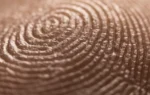
How did I get my own unique set of fingerprints?

How did I get my own unique set of fingerprints?

Curious Kids is a series for children of all ages. If you have a question you’d like an expert to answer, send it to CuriousKidsUS@theconversation.com. How do we get the fingerprints we have? – Oscar V., age 8, Somerville, Massachusetts Fingerprints are those little ridges on the tips of your fingers. They’re essentially folds of…

Read More