









“Why haven’t they scheduled your dad for his feeding tube placement? They just want another family conference.”
I sighed and told my mother we may have to fight. The physicians caring for my father seemed ready to overrule her decision, even though she held his medical power of attorney. When I spoke with an intern, I explained that our family had not changed its mind about the course of treatment. We simply wanted to know when the feeding tube would be placed.
Her response stunned me. “We refuse to place it,” she said. “And we have the right to refuse anything.”
Calmly, I explained that, as a physician myself, I know that doctors may decline to perform a procedure for ethical or professional reasons, but they are also obligated to transfer care or find someone willing to provide it. The ultimate decision about my father’s treatment rested with our family — specifically my mother.
What should have been a conversation about care became a confrontation about authority. Increasingly, families are finding that “shared decision-making” in medicine is giving way to something else: physicians overriding patient and family wishes in the name of “knowing what is best.” Hospitals often promote “shared decision-making” as the ideal model of care. Yet, as debates about end-of-life treatment intensify, many families are discovering that the reality can feel very different.
Disagreements between families and medical teams are common, especially near the end of life. Physicians and families often face heartbreaking situations in which aggressive treatment may prolong suffering rather than improve quality of life. These are complex decisions, and families depend on clinicians for honest guidance and expertise.
But guidance is not the same as control.
Ideally, treatment decisions using shared decision-making emerge from mutual respect and open dialogue. In practice, however, the language of shared decision-making sometimes masks a different reality: families feel pressured to accept what clinicians believe is the correct decision.
Patients are routinely reminded that they have the right to refuse aggressive treatment. But what happens when a patient or family chooses the opposite — to continue treatment despite a grim prognosis? Too often, autonomy seems to disappear when a patient or family chooses care that physicians would not choose themselves. I knew conversations were happening in the background in an effort to sway our decision.
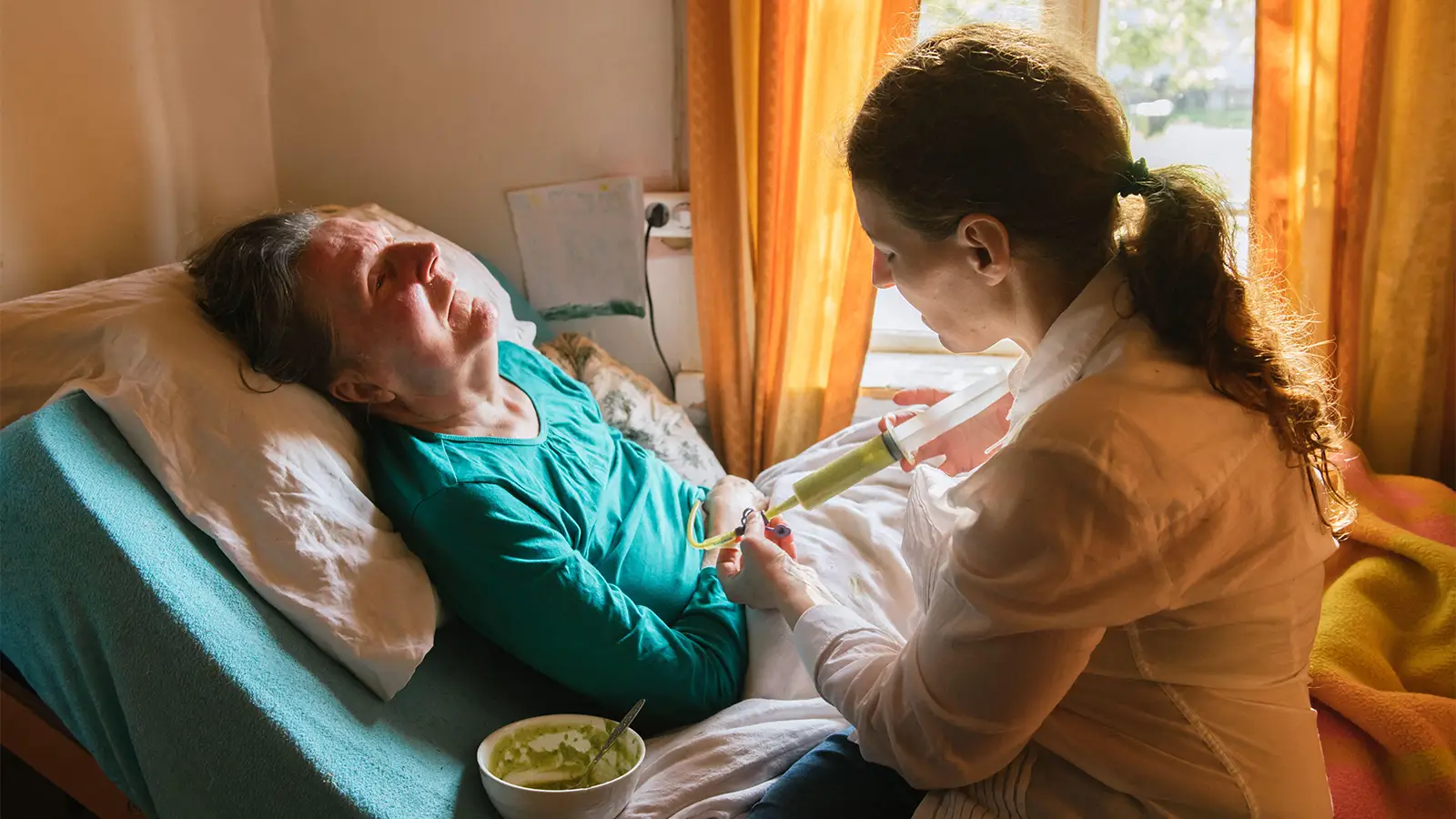
Decisions about feeding tubes in patients with advanced dementia are among the most ethically complex choices families and physicians face. Studies suggest feeding tubes rarely improve survival or quality of life in these patients, which is why clinicians often hesitate to recommend them. But difficult medical evidence does not eliminate the need for respectful dialogue. Families may consider the same information and reach different conclusions based on personal, cultural, or religious values. The options presented to my family were not presented in a neutral fashion, which is what I aim to do in my practice.
This wasn’t the first time our family encountered this attitude.
On another occasion, my father developed a broken tooth that became infected and was causing him significant pain. My mother asked that it be extracted. Instead, the request triggered a family conference involving dentists, social workers, and medical residents. Ultimately, one dentist argued that the tooth should not be pulled and suggested allowing the infection to run its course given my father’s condition.
Experiences like these make families wonder whether their loved one’s values are truly being respected. I thought about residents I work with and their communication with families: do they do this? Having challenging discussions while being respectful and humble with regard to the family’s experience is a difficult skill to master and teach.
Families bring deeply held values — cultural, moral and religious — to decisions about care. Those beliefs should not automatically be dismissed as ignorance or denial. When families misunderstand the prognosis, physicians should provide clear and compassionate education. But not every disagreement reflects a lack of understanding. Sometimes it simply reflects different priorities.
These situations create genuine ethical dilemmas. Physicians must balance professional judgment with respect for patient autonomy. But when the balance tips too far toward paternalism, the consequences are profound.
Trust begins to erode. Trust is the foundation of the physician-patient relationship. Without it, even the most technically excellent care becomes difficult for families to accept.
In my father’s case, the feeding tube was ultimately placed after the hospital’s patient advocacy office became involved. The intern’s statement that the team could simply “refuse anything” raised more than a few eyebrows. The dentist involved in the earlier dispute was also removed from my father’s care team. Yet, the damage was done. My family no longer trusts the medical team caring for my father, and that trust cannot be rebuilt.
Not every interaction was negative. An anesthesia resident showed remarkable kindness and respect toward my mother as she struggled with one of the most difficult decisions of her life. That moment served as a reminder of what medicine can look like at its best.
DeAnna M. Pollock, MD, is an anesthesiologist and the associate program director of the Anesthesiology Residency Program at Common Spirit St. Joseph’s Medical Center in Stockton, California. She writes about medical ethics and patient advocacy.
Source: Read Full Article