








If you’ve ever considered buying a 3D printer, you’ve probably come across Prusa Research and its signature black and orange 3D printers. The brand has a fierce following among enthusiasts thanks to its open-source philosophy and unique manufacturing processes.
So what is it about this brand that leads some to refer to it as a cult?
Prusa’s origins can be traced back to the RepRap days
Prusa Research was founded in 2012 by Josef Průša, a Czech developer who started designing 3D printers when he was 19 and who was previously involved with the RepRap project. RepRap is short for “replicating rapid prototype,” a project founded in 2005 to create low-cost and open-source 3D printers that were capable of self-replication outside of a few components.
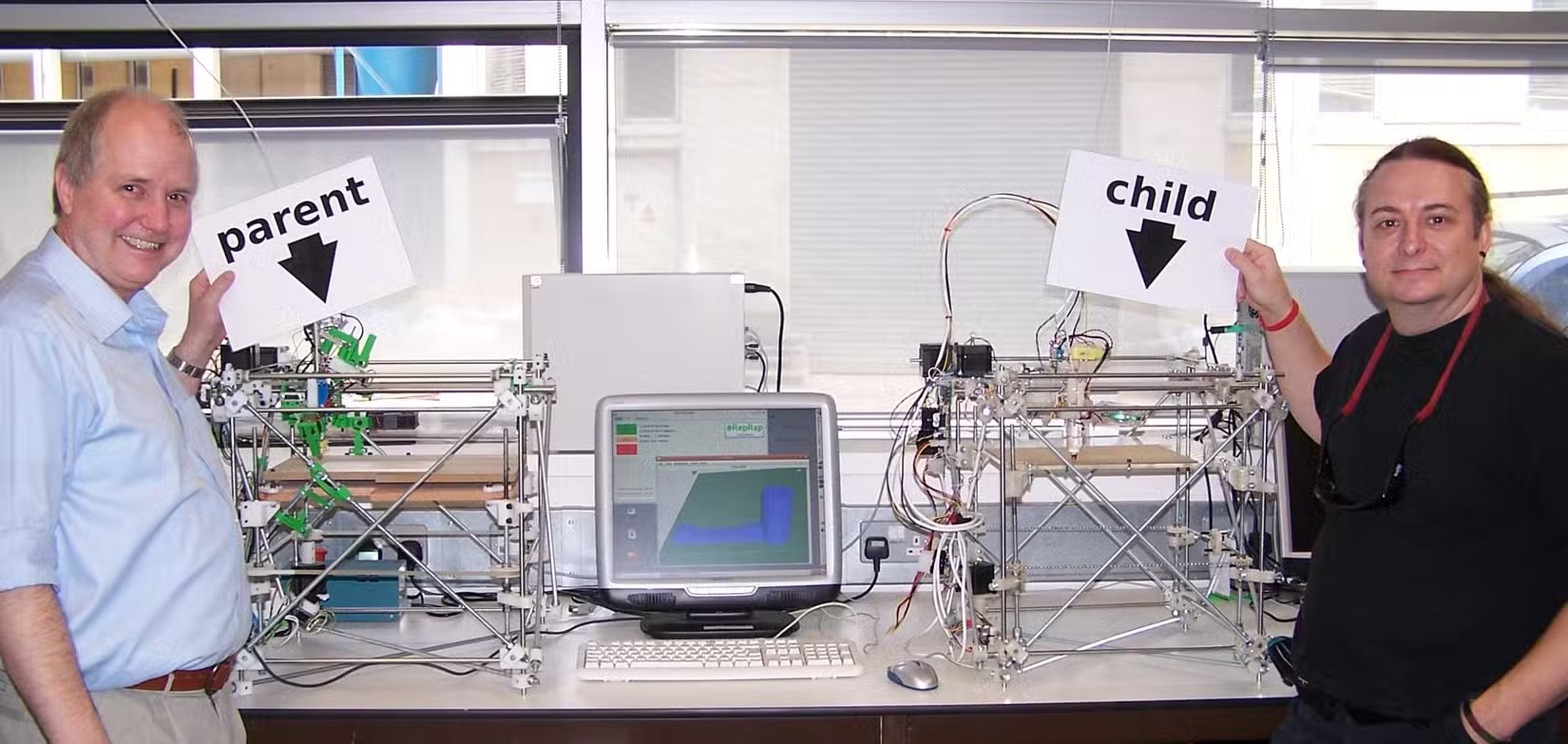
The company’s first printer, the Prusa i3, was based on RepRap prototypes but made some notable improvements, starting with a stronger aluminum chassis. This design has become something of a mainstay among the company’s “bedslinger” printers, with the Prusa MK4S (which is still for sale) being a heavily updated version of this original design.
The company has since introduced a smaller model in the form of the Prusa MINI (and updated MINI+ follow-up) and the SL1 line of resin stereolithography (SLA) printers. The current flagship offerings are the Prusa CORE One+ and CORE One L, which are larger enclosed Core XY printers. Unlike the old “bedslinger” designs, the print bed remains still on the horizontal axes, which allows for faster printing and better print quality.
Outside of the best-in-class signature look, there are a few things that make Prusa printers really stand out on first glance. The company uses its own printers to create as many of the parts that go into each model as possible, which is different from the approach taken by close rival Bambu Lab, which uses injection-molded parts.
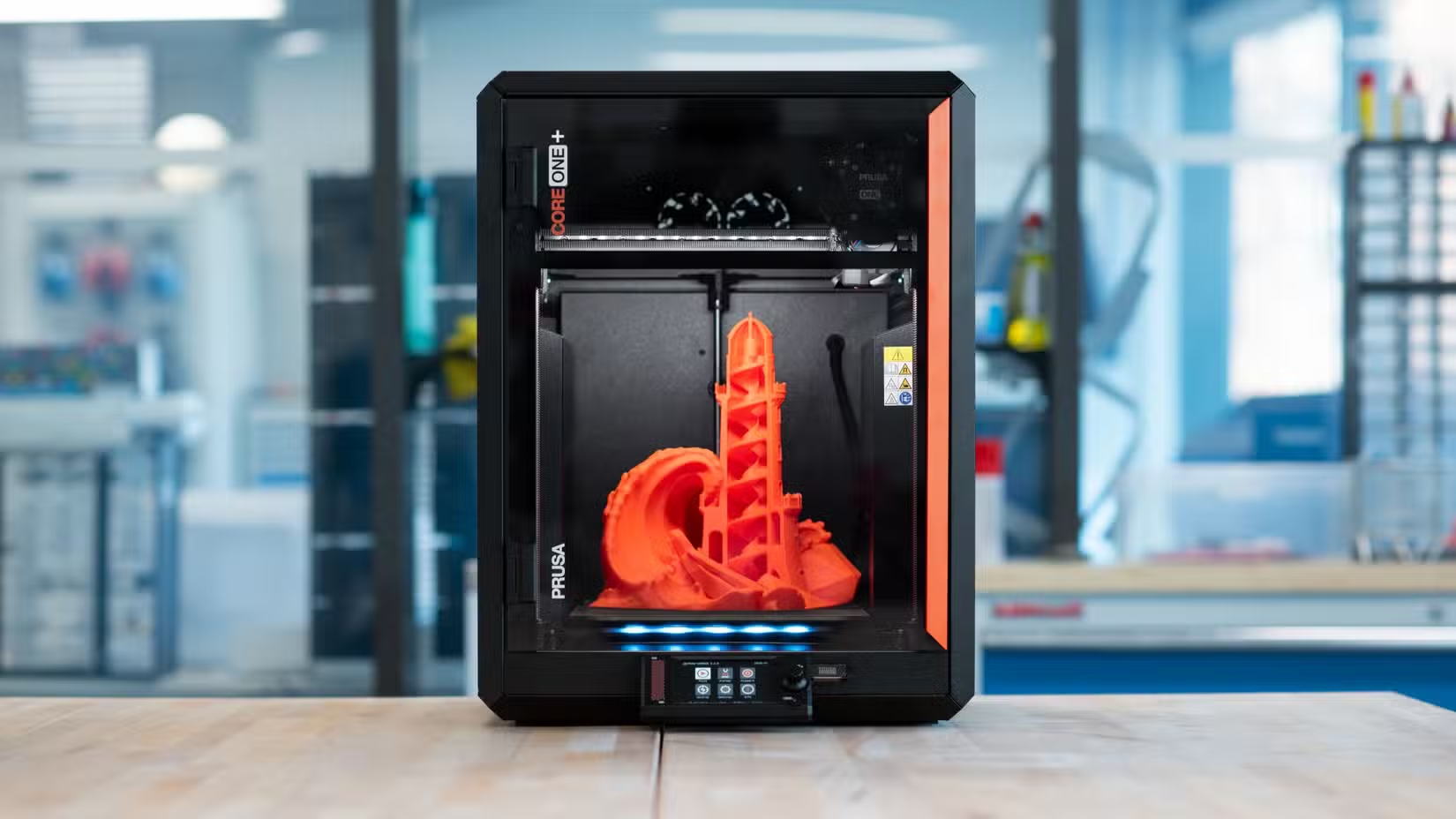
The company also sells most of its printers in kit or preassembled options, with kits costing less but requiring more time and expertise. This is ideal for owners who want to learn more about how the printer is built, switch out parts for upgraded components, and save money by taking on the labor themselves. The exception is the CORE One L, which relies on high-voltage AC power (rather than DC power in other models), which might explain why it’s presently only available preassembled.
A modern open-source approach to 3D printing
Prusa’s reputation as a 3D printer manufacturer that embraces the open-source philosophy stems from its RepRap roots. Prior to the introduction of the CORE One, all of its designs were made available for free. You could download plans, print and gather the parts, make changes to the design, and put together your own i3 or MINI.
Facing increased competition from the likes of Bambu Lab, Creality, and other rivals, the company decided against an open-source release to accompany its first Core XY design. In a tell-all blog post, Josef Průša outlined his position on the matter, citing problems with the GPL license, companies not honoring the principles of the open-source philosophy, and how the company remains committed to maintaining an open-source approach where possible.
Despite the community’s frustration, Prusa has continued to maintain its signature consumer-friendly approach in other areas like obsolescence. One of the reasons that Prusa printers are so popular is that they are upgradeable. You can buy kits from Prusa for less than the price of a new printer to upgrade the MK4S to the CORE One+, or the MK3S to the MK4S.
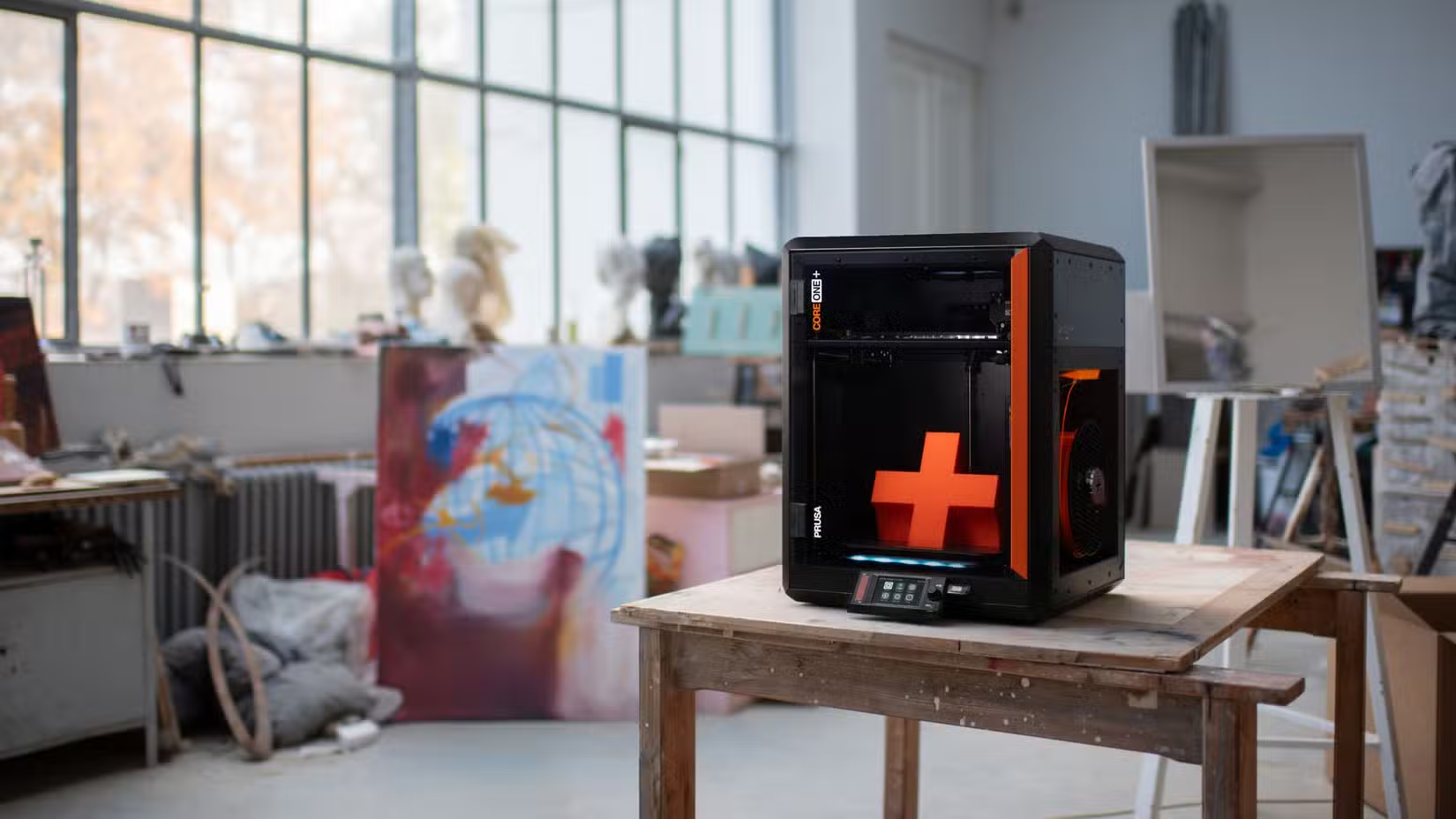
The company has also maintained openness through its software, not only by maintaining the open-source PrusaSlicer (which was adopted by Bambu Lab and rolled into Bambu Studio), but also in its firmware. While market-leader Bambu Lab has copped flak for its focus on cloud connectivity and decision to block non-Bambu slicers on newer printer firmware, Prusa has made no such moves (its community would likely implode if that were to happen).
3D printers for tinkerers and ideologues
Despite Prusa’s step back from a full open-source approach, the company continues to be popular. Its focus on upgradeability, repairability, and customization makes it a popular choice among those who are interested in having unhindered access to their printer’s inner workings and its firmware.
On top of this, the company manufactures its printers inside the EU and, more recently, the U.S., while continuing to make strides in 3D printer technology. The latest of these is a brand new INDX toolchanger that allows owners to connect up to 8 filaments to a single printer with minimal waste during multi-color and multi-material prints.
It’s true that companies like Bambu Lab have been something of a thorn in the side for Prusa since bursting onto the scene. Bambu’s focus on simplicity and ease of use has seen it take top spot in the 3D printing world. The company is often compared to Apple on account of its walled garden approach, while offering less in the way of resistance for those who want to “plug and print.”
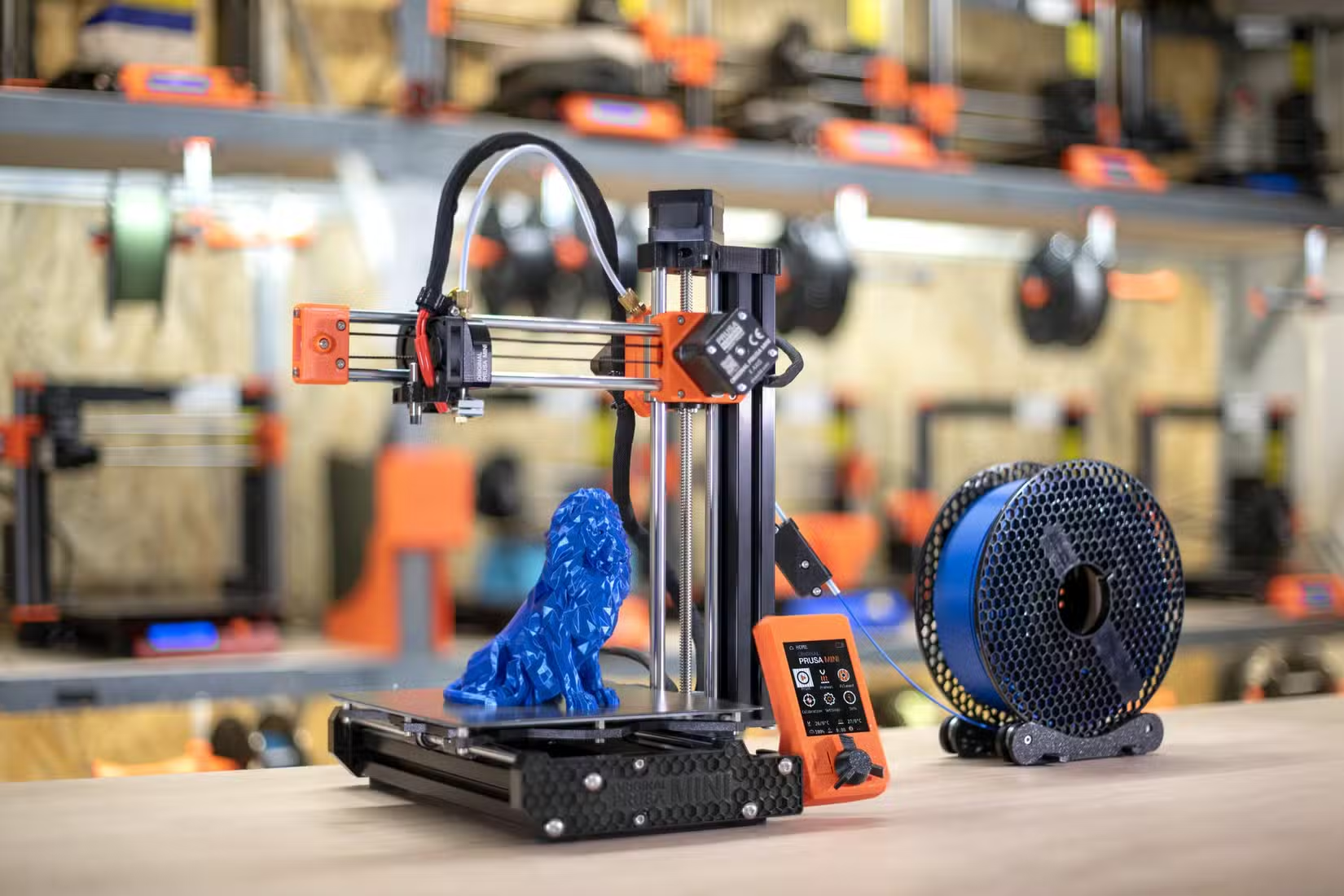
At the same time, Prusa cannot compete with many competitors on price. Prusa printers, spare parts, and even its filament comes at a premium. For the money, you won’t necessarily get better print quality, but Prusa’s customer support is typically cited as the best in the business, and its upgrade paths could save you money (or simply cause you to break even) if you stick with the hobby over multiple generations.
There are both ideological and practical reasons to pick Prusa over the next best thing, and I came close to doing so when shopping for my own 3D printer. In the end, the “just get a Bambu,” crowd won me over.
Source: Read Full Article