









We’ve all had that moment when we’re standing in the middle of the Home Depot aisle, looking at a glowing neon-green Ryobi tool at a great price and thinking, “I might as well buy one.” I have a growing selection of Ryobi tools and battery packs throughout my garage, and I’m a huge fan because they handle everything I need. However, among them is one that’s just sitting there collecting dust—literally.
A few years ago, I bought this Ryobi tool on sale for around $39 and figured I’d get plenty of use out of it, especially at that discounted price. It was an impulse buy, fueled by a low price and future DIY ideas, but in the end, it didn’t have the power or features I needed.
Here’s why I regret buying the Ryobi 18V Cordless Orbit Sander, and what I should have bought instead.
An Orbit Sander with lots of promise
More vibration than sanding power
Ryobi’s 18V 5-inch Random Orbit Sander (PCL406B) or the (P411) is a prime example of a cordless power tool that sounds great in theory but might not deliver in the garage. To be fair, that statement is probably true of any budget-friendly cordless sanding tool from the competition. You’re better off using a corded sander.
I originally bought this little 5-inch cordless orbit sander on sale because I knew I was getting ready to build a patio cover for my home. The plan was to build a durable patio, add some fixed louvered wood slats to the roof to let in natural light, and sand everything before painting.
However, the project ended up taking way longer than expected, but that’s mostly my fault. I chose a small 5-inch battery-powered sander for a pretty big job to save money, and I haven’t really used it much since. Here are a few reasons I regret buying this tool.
- Underpowered
- Way too much vibration
- Battery life wasn’t that great
- Using a bigger battery pack made it heavy, unbalanced, and vibrations worse
The sander is pretty compact, so you’ll likely want to stick to a smaller 2Ah battery pack to keep weight distribution in check. That’s especially true if you’re working vertically, rather than on a flat surface or the floor. After about 15 minutes, not only was the battery dead, but the tool vibrated so much that I thought my hand was about to fall off.
A larger sander has more space to soak up all those vibrations instead of sending them into your hand and up your arm, and it’ll also be way faster. The tool is rated at 10,000 RPM, but once you apply any force, it doesn’t have enough torque to keep spinning, and sanding grinds to a halt. Ryobi’s belt sander doesn’t have the best reviews either.
I ended up swapping in a 6Ah battery to get a longer runtime and hopefully fewer vibrations, but it wasn’t all that much better. I still had to swap hands or take breaks. That bigger battery also changed the weight, forcing me to adjust my angle and grip, which made it harder to achieve smooth, swirl-free surfaces.
Ryobi actually claims this newer model offers 40% reduced vibration (compared to previous models, I suppose), but it was still pretty aggressive. And don’t even get me started on the dust collector, which isn’t very useful. I also needed variable speeds, which this doesn’t offer.
Sure, if you’re doing small DIY projects like sanding and painting a couple of wood shelves, it’ll suffice. But for anything heavy-duty or larger tasks, I’d highly recommend something else.
Move up to a better sander for all your DIY tasks
Stick with corded or brushless models
As I said earlier, this was largely my fault as I chose the wrong tool. That said, I don’t really see any other genuine uses for this tool aside from tiny jobs. It’s just not capable enough.
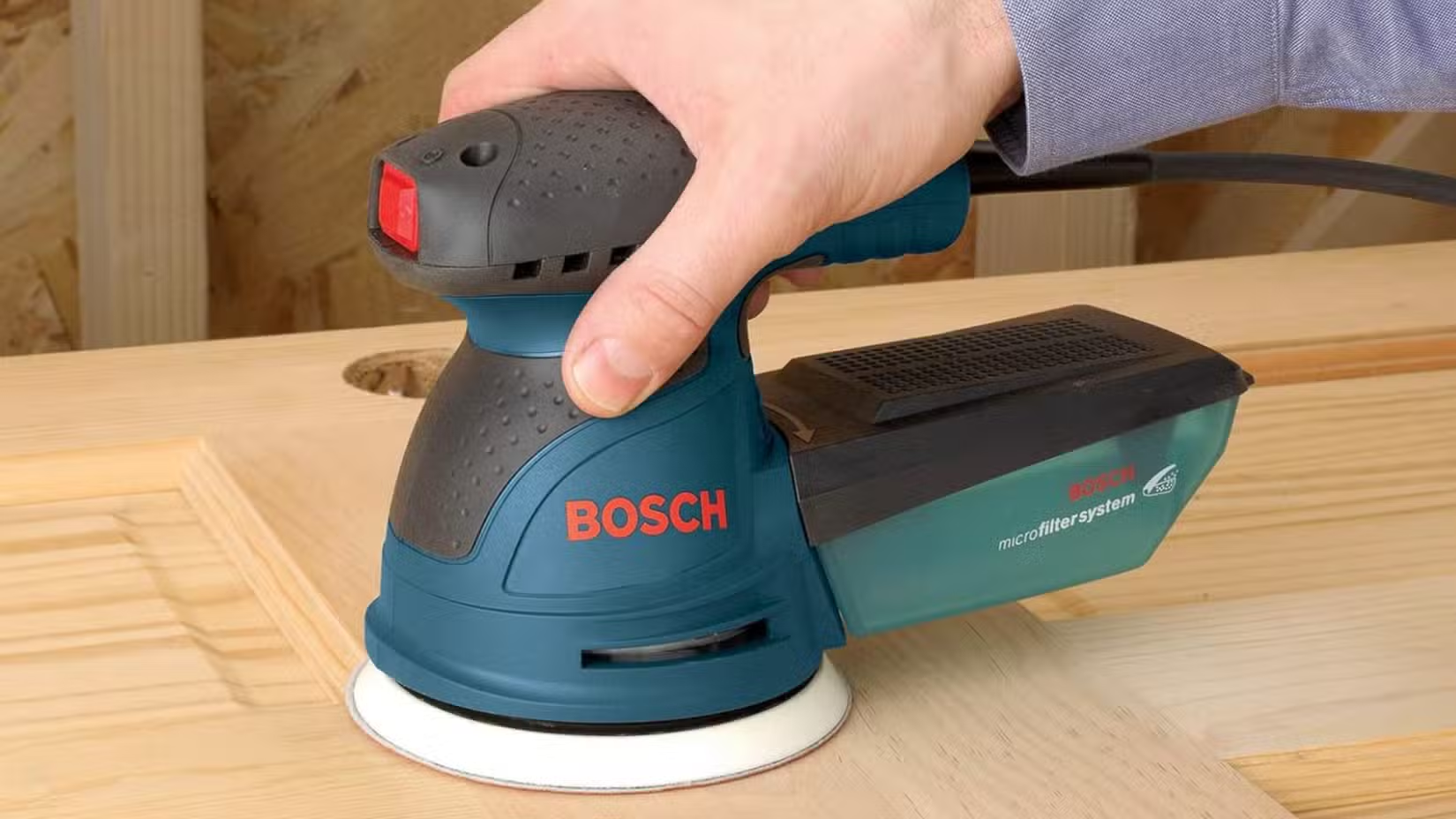
You’re better off choosing a corded orbit sander or spending a little more on a Ryobi Brushless model, which will be stronger, faster, and more versatile, with less vibration. I ended up heading back to Home Depot halfway through my patio job, bought the Bosch 2.5-amp corded model, and it was a far superior experience. It’s faster, more powerful, and has significantly less vibration. I’ve also heard great things about DeWALT’s corded sander.
Additionally, Bosch makes a larger 6-inch Random Orbit Sander/Polisher combo tool with an even better grip, improved dust collection, and a powerful 3.4-amp motor. If I were to do it again, I’d probably buy it instead.
The right tool for the job
You always hear people talking about the right tool for the job, and that’s because it makes a big difference. Don’t get me wrong, I’m a huge Ryobi fan, and I own over 20 tools from the company, but sometimes it’s good (if not necessary) to venture out and try something else.
The cordless sander ended up being my only real Ryobi tool regret thus far, and everything else has lived up to the job.

Ryobi for the yard, Milwaukee for the shop: The perfect setup
Why buying both power tool brands makes a lot of sense.
Source: Read Full Article