









Opening major new fields in the North Sea would make almost no difference to the UK’s reliance on gas imports, research has shown.
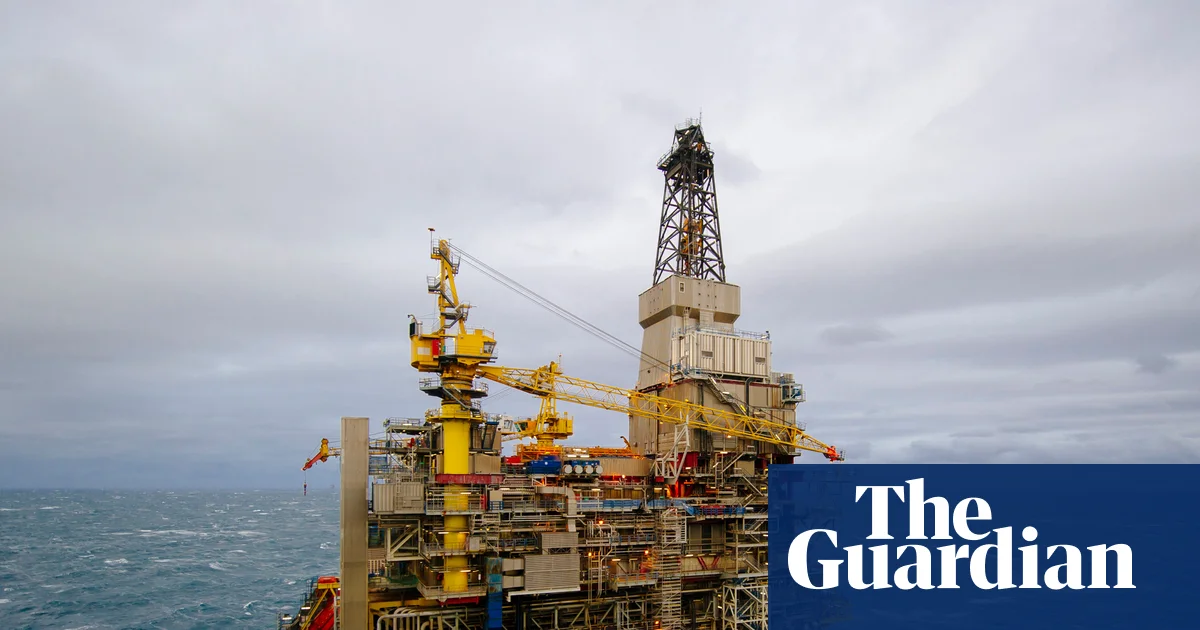
The Jackdaw field, one of the largest unexploited gasfields in the North Sea, would displace only 2% of the UK’s current imports of gas, which would leave the UK still almost entirely dependent on supplies from Norway and a few other sources.
The Rosebank field, also in Scottish waters but mainly containing oil, would displace only about 1% of the UK’s gas imports.
Tessa Khan, executive director of Uplift, the campaign group, which compiled the data from public sources, said: “New fields like Jackdaw and Rosebank would do vanishingly little to boost UK gas production. Even in the most optimistic scenario, and assuming none of its gas is exported, Jackdaw would provide just 2% of UK demand over its nine- to 12-year lifetime.”
It has already been shown, by authorities including the UK Energy Research Centre, that new drilling would not reduce oil and gas prices, or improve the UK’s energy security. It is also unlikely to produce durable jobs or major new tax revenues, as 90% of the UK’s North Sea oil and gas has already been burned, putting the industry in steep and irrecoverable decline. Companies are also demanding tax breaks to tap the new fields, which are harder to access than existing supplies.
But Ed Miliband, the secretary of state for energy security and net zero, is under pressure from the fossil fuel industry, Nigel Farage’s Reform UK party, some trade unions and the Conservatives to give a green light to Jackdaw and Rosebank, which are not covered by the ban on new licences for North Sea drilling because their applications were already in the system when Labour took office.
Rachel Reeves, the chancellor of the exchequer, has previously spoken in favour of drilling, though at the recent G7 energy meeting she emphasised renewable power as the solution to recurrent oil crises.
Miliband has not yet made a decision on either field, the Guardian understands, and is still mulling the potential impacts. The UK is likely to be among about 50 countries represented at a major climate conference later this month in Colombia, at which governments will make a start on plans to phase out fossil fuels.
The owner of the Jackdaw field, Adura Energy, has been asked by the North Sea regulator to respond to new questions related to the licence application, including on greenhouse gas emissions. That process could take weeks, if not longer, meaning no imminent decision is likely.
Any decision on the Rosebank field could be taken separately from that on Jackdaw. Khan said: “Rosebank is oil for profit, not our security. Its reserves – which, if burned, would see the UK breach its climate commitments – are predominantly oil for export. It has the potential to reduce the UK’s annual gas import dependency by just 1% on average.”
Philip Evans, a senior climate campaigner at Greenpeace UK, said: “Our fossil fuels are provided by a volatile global market which we cannot control, and is regularly upturned by reckless wars and blockades. The only path to real security is to leave fossil fuels behind as quickly as possible.”
A spokesperson for the Department for Energy Security and Net Zero told the Guardian: “Our priority is to deliver a fair, orderly and prosperous transition in the North Sea in line with our climate and legal obligations, which drives our clean energy future of energy security, lower bills, and good long-term jobs.”
Data from the End Fuel Poverty Coalition on Friday found oil and gas companies’ valuations had swelled as a result of the war in Iran. In just over a month since the start of the conflict, BP’s market capitalisation has increased by nearly a quarter, adding £17bn to the company’s value, while the global oil company Exxon Mobil has put on nearly a fifth, an increase of £87bn. Shell’s share price had risen by 15% by Friday, putting about £25bn on the company’s market capitalisation, while Chevron added about £45bn, an increase of 17%.
Simon Francis, coordinator of the End Fuel Poverty Coalition, said: “That is not a market working in the public interest, it is a market rewarding the companies whose products are driving up the bills that millions of households cannot afford to pay.”
Households were still reeling from the impact of energy bill rises linked to the last oil crisis, which started in 2022 when Russia invaded Ukraine, he added. “That left households saddled with huge levels of energy debt and struggling to make ends meet. It’s clear that we need long-term reform to stop history repeating itself and prevent the scourge of fuel poverty staying with us for decades,” he said.
Source: Read Full Article