







I will put it upfront that I do not like iPhones. Despite being a Mac and iPad devotee, my three-year dalliance with iPhones has come to an end and I could not be happier. Coming back to an Android phone (an S25 Ultra) feels like being unchained, but it’s not all fireworks and celebration.
You see, I now have a car that supports CarPlay and Android Auto, and going back to Android Auto (which seems barely any better than three years ago) has become my sole regret after making the switch back.
Android Auto sounds great—until you actually use it every day
It’s just a little flakey
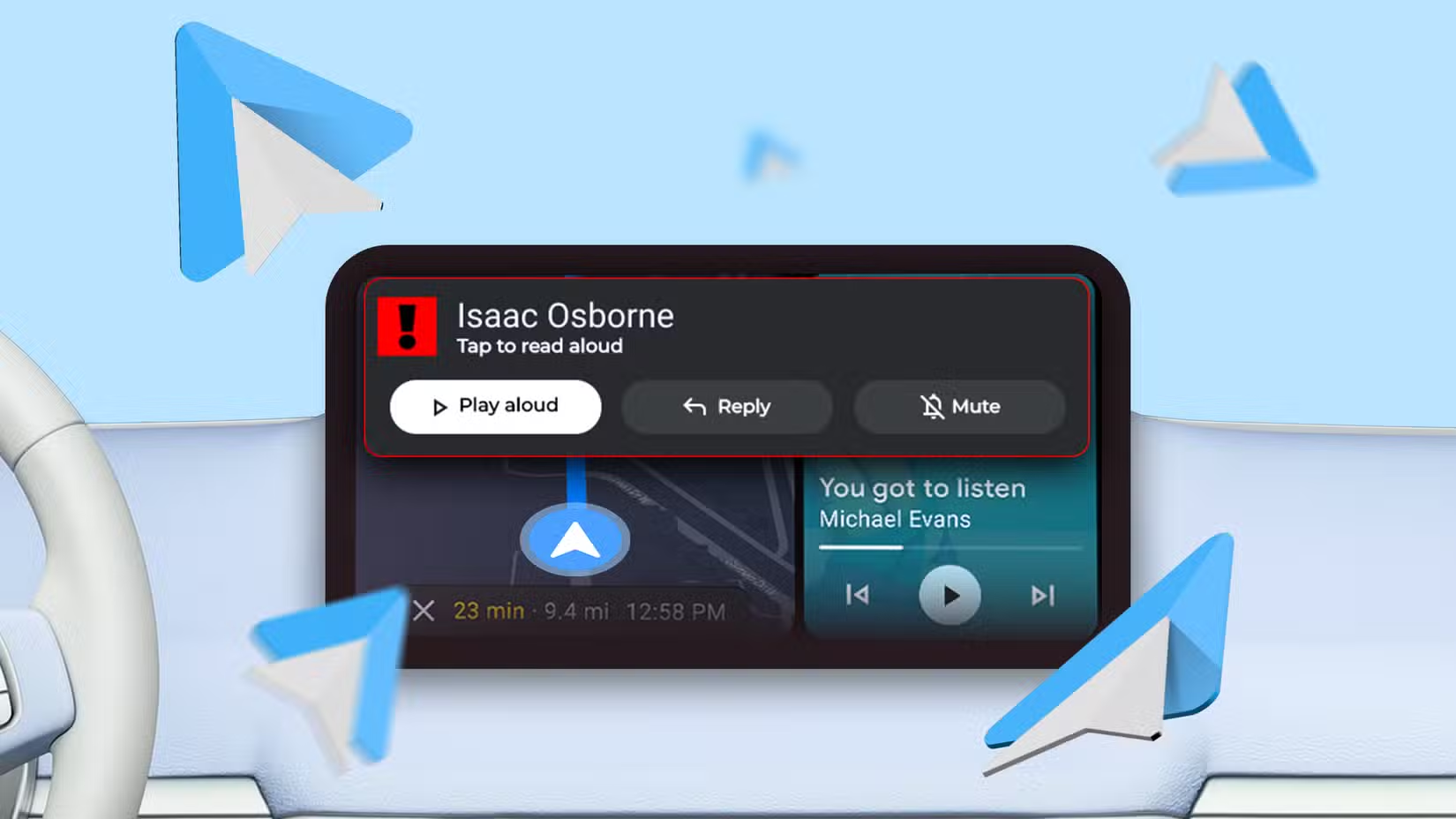
There is no doubt that like Android itself, Android Auto is by far the more flexible solution. Google Gemini is way better than Siri for hands-free operation. You have much more control over the look, feel, and layout of Android Auto, and it supports more apps than CarPlay.
Perhaps most importantly, if your’re a power user and are willing to brave developer mode, you can go beyond the confines of Android Auto and really make it your own.
These are wonderful options and a fine set of principles, but in practice I’ve found that even completely untouched by customization Android Auto is “fragile” for lack of a better word. It’s a level of fragility that I wouldn’t mind for normal phone use, but while driving I expect my phone to perform mission-critical jobs like navigation and hands-free communication flawlessly.
On both my own S25 Ultra and my wife’s Z-Flip 6, we’ve experienced random app crashed while using Android Auto, which would not be the end of the world, but for some reason the phones refuse to connect if the car is already running. So if my navigation fails and Android Auto disconnects, I need to park my car somewhere, turn it off, and turn it back on again.
Now, of course this is just anecdotal, and you might say that it’s my car that’s the common factor here. However, Android Auto used to work reliably on my 2020 KIA, and there have been no firmware updates for my infotainment system. This leads me to believe that whatever broke Android Auto for us must have happened on the Google side of the equation.
CarPlay just works (and that matters more than features)
Plug-and-play
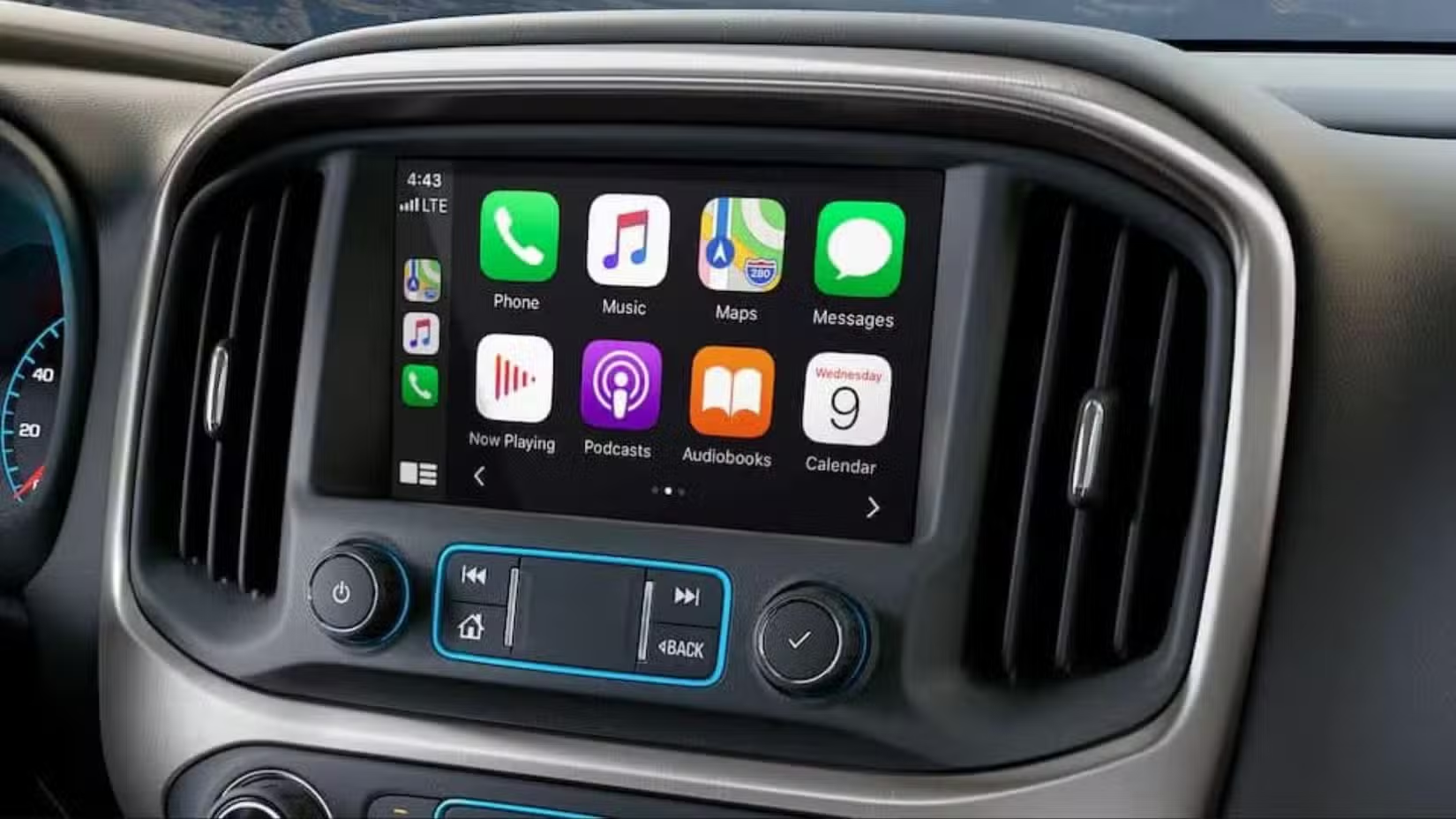
In the same car, using the same infotainment system, our iPhones with CarPlay just work. In the combined 5 years that we had iPhones between us CarPlay never failed in any of the ways that Android Auto has.
Why? Well I’m no software engineer, but as with all things iPhone I think a big part of it is that there simply isn’t much variation in hardware when it comes to iPhones. With Android there are millions of combinations of cable, phone, and Android version and distro that could be connected. We’re using some of the most mainstream Android phones, so I can only imagine that the problem is worse the more obscure the handset is.
Yes, Siri isn’t currently in the same league as Gemini, but honestly for the basic commands I need to issue while driving I’m pretty much covered. It’s not like I’m going to look up Wikipedia entries or have a nice long chat with an AI bot while driving.
Despite the relative lack of customization options and apps compared to Android Auto, I also never actually needed to change anything in CarPlay for all the years I used it. So ultimately switching to Android Auto has been a net negative for me.
Why Android Auto struggles (and why it’s hard to fix)
Too many moving parts
The fragmentation issue when it comes to Android Auto and Android as a whole is no laughing matter. It actually fills me with a mild sense of dread when know I have to take a trip somewhere. I actually feel like maybe car companies that insist on their own software solution might have had a point!
The worst part is that I have empathy for everyone involved. App developers, Google, phone makers, and car makers all need to somehow coordinate things so that it works when you plug your phone into your car or activate wireless Android Auto. Honestly, it’s actually a miracle it works as often as it does.
Switching platforms taught me this one thing
There’s no perfect solution
My car is going back for its annual service soon, and once again I’m going to ask the dealer if there’s been a firmware update, but I expect that the answer will be the same as the previous five years. I intend to keep my car for at least another ten years, so I’m hopeful that Android Auto will simply improve over time.
If not, well maybe I should consider getting a used iPhone that works but is otherwise in bad shape and install it as a permanent part of my infotainment system.
Source: Read Full Article