





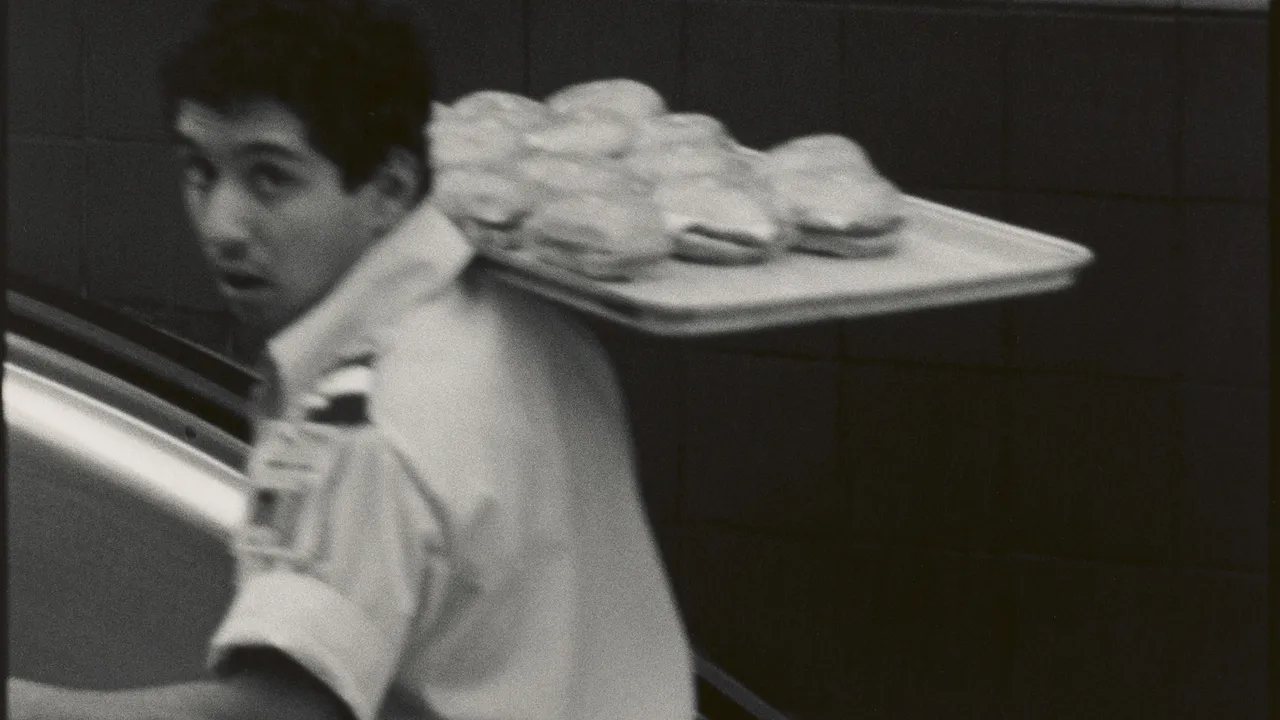
Rauschenberg returned to Black Mountain for the summer of 1951. By then, the photographers Aaron Siskind and Harry Callahan were teaching at the school, along with Hazel Larsen Archer, who had overlapped with Rauschenberg in 1949 and captured his love of movement and of grace in a photograph of her own. (Her picture shows Rauschenberg stripped to the waist, “doing” modern dance by striking a Martha Graham-like pose. It’s a wonderful picture of a moment, full of youth and freedom and the unself-conscious self-importance one has to have in order to make anything at all at that age.) Rauschenberg was presumably familiar with Siskind’s views on the inherently abstract nature of photography. Even if an image is shot straight on, Siskind argued, the camera often renders it “unrecognizable; for it has been removed from its usual context, disassociated from its customary neighbors and forced into new relationships.” Part of Rauschenberg’s genius was not to force the juxtapositions but to try out unexpected combinations—these trash bags with that diner sign, or the different angles from which New York can come at you, as in “New York City” (1981), which shows us the Twin Towers from the perspective of the Lower East Side. Before we focus in on the looming buildings, we see tenement fire escapes, a courthouse, a street lamp, traffic: all the things we live among but don’t necessarily look at.
Source: Read Full Article