









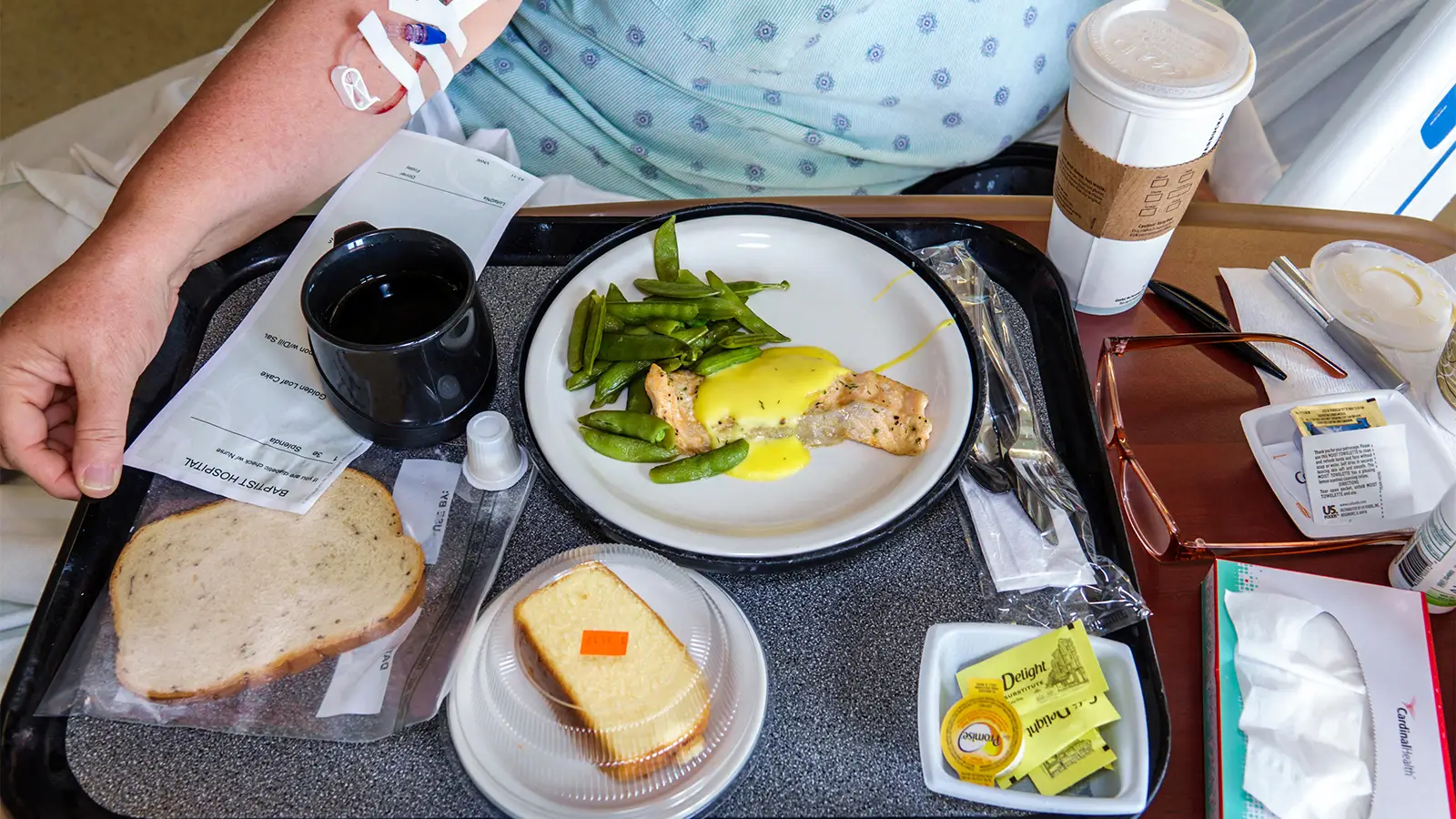
Hospitals that accept Medicare and Medicaid are obligated to meet their patients’ nutritional needs and limit their serving of ultraprocessed foods and sugary beverages to chronically ill patients, CMS said Monday in a special alert.
“It makes no sense that 90% of pediatric wards in America, which are treating children with prediabetes and obesity, have full-sugar soda machines,” Calley Means, senior advisor to HHS Secretary Robert F. Kennedy Jr., said Monday at a press conference in Miami. “[It] makes absolutely no sense that hospitals are serving sugary drinks and inflammatory processed food to their patients, 90% of whom are dealing with chronic conditions … This memorandum from CMS is saying hospitals treating patients with chronic diseases should not be serving sugary drinks, should not be serving refined carbohydrates, and should not be serving ultraprocessed food.”
“For too long, we have treated the food served in the hospitals as an afterthought,” CMS Administrator Mehmet Oz, MD, MBA, said at the press conference. “The food is bland, it’s poorly prepared, and it’s lacking nutrients of the nature that you actually need for a full recovery.” CMS’s alert memo addresses this issue, he said, adding that it requires menus and diets to meet patients’ specific nutritional needs.
The new dietary guidelines released in January by the Trump administration “place heightened emphasis on diet quality — including limiting ultraprocessed foods, sugar-sweetened beverages, refined carbohydrates, and added sugars, while prioritizing whole and minimally processed foods,” the alert said. “These updates reflect the latest federal nutrition policy and are encouraged to be used to inform patient nutrition services and related hospital protocols.”
Although the memo mandates hospitals to make these changes, it’s something they wanted to do anyway, said Kennedy, who also appeared at the press conference. “We have talked with them. They need the incentive, and the fact that it’s now essentially a federal mandate … This is going to help them with their procurement companies. And we want to do this very, very quickly.”
The memo specifies that hospital leadership and nutrition departments should also evaluate the following:
- Elimination of refined grains and replacing them with 100% whole grains
- Prioritizing minimally processed protein sources, including plant-based options
- Emphasizing vegetables, fruits, legumes, nuts, seeds, seafood, and healthy fats
- Ensuring baked, broiled, roasted, stir-fried, or grilled vegetables and proteins – and eliminating deep-fried cooking methods
- Eliminating processed meats and foods high in added sugars, sodium, and artificial additives
- Ensuring meals contain less than 10 grams of added sugar, unless clinically appropriate
“Prioritizing real foods which heal you will allow patient menus to adjust dramatically,” Oz added. He cited the menu redesign implemented by Tampa General Hospital through a partnership with Geoffrey Zakarian, a professional chef and winner of a “Next Iron Chef” competition. The menu offerings include items such as grilled snapper and falafel pita, and patients are served meals when it is convenient for them, rather than at specified mealtimes.
“The total cost of the products served to the patients is not changing meaningfully,” said Oz. “It’s about a 5% increase in cost, a trivial rounding error. And the reason is, the food is not being thrown away any more” because patients like it, which reduces wastage.
Most of the food at Tampa General is locally sourced, an idea also emphasized at the press conference. Kennedy announced that Nicklaus Children’s Hospital in Miami signed an agreement “to bring in locally produced food for this hospital — 5% a year, increasing by another 1% every year, it’s going to benefit local farmers and is going to give the children in this hospital nutrient-rich food.”
“As soon as you pick an orange or apple, it begins to lose vitamin C and the other nutrients,” said Kennedy. “The faster that you can get into the consumer, the more nutrient-dense it’s going to be. And so this day is a very exciting day.”
Source: Read Full Article