






Buying a 3D printer can change your life, but what if it could also change someone else’s? By making your printer, time, and materials available to others, you can! It’s all thanks to the MakeGood project, which helps kids with mobility issues develop strength, balance, and confidence.
Print Toddler Mobility Trainers for kids in need
The MakeGood project matches parents and children in need with makers who have printers, time, and materials to spare. Toddler Mobility Trainers, or TMTs for short, are specially-designed mobility devices for children aged between 1 and 8. Unlike a wheelchair, they’re geared towards purely indoor use to help develop strength, balance, independence, and confidence.
These devices have been designed for children with conditions like cerebral palsy, spina bifida, developmental delays, and other conditions that impair mobility. To quote the MakeGood website: “They encourage active movement while providing the support children need to explore their world safely.”
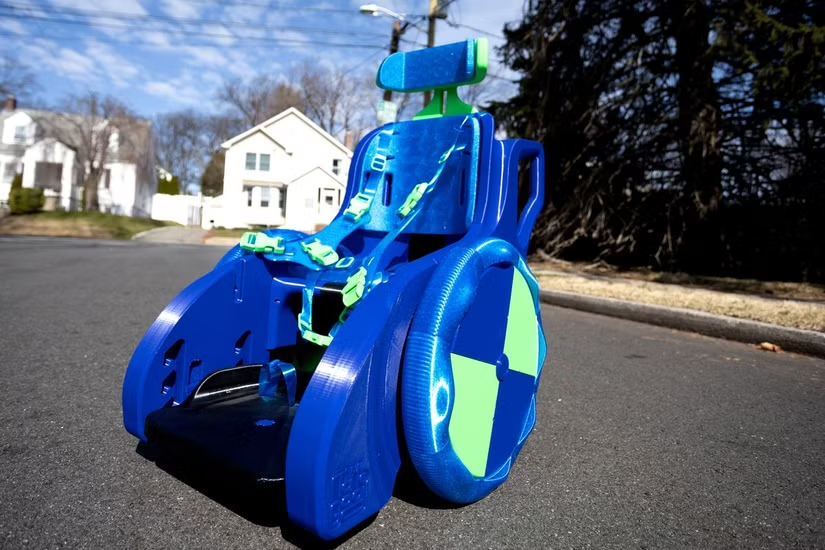
Each TMT requires around 200 to 250 hours of print time in the form of 24 plates’ worth of files or around 9KG of PETG and 2KG of TPU. Most of the design is 3D printed, though there are some casters, bolts, bearings, and other components used in the final assembly.
The finished product has an adjustable harness and footrest, allows for hand-powered movement, and is relatively lightweight and well-suited to indoor use. TMTs are durable, easy to clean, and highly stable, with the finished design having a weight capacity of 50 lb (just under 23KG).
The design itself was developed in consultation with pediatric therapists, with PETG and TPU chosen as material types for their durable and non-toxic properties.
How the MakeGood project works
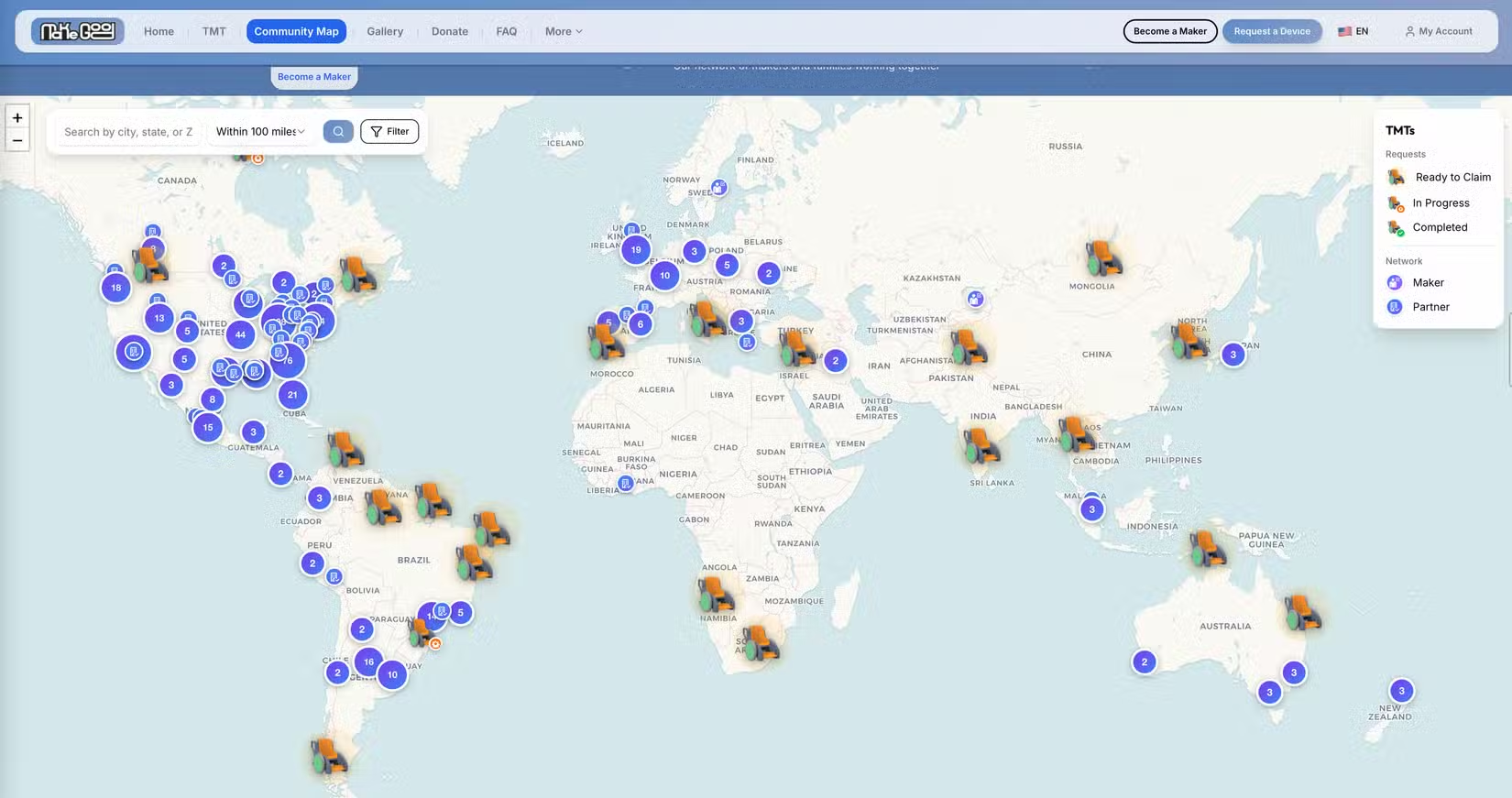
This is a worldwide initiative, aiming to match makers and those in need on a local level. The project has an interactive map that shows where makers are located, with around 270 makers around the world signed up at the time of writing.
These devices are free at the point of delivery to the families and children who need them. Though no referral is needed, the project recommends that families consult a healthcare professional to ensure that a TMT is the best choice for their child.
At this point, a request is submitted, and MakeGood will attempt to match the maker with the family. The project then keeps the two parties in communication until it’s time for delivery, which takes place in a safe public location like a school, library, or community center.
The project aims to match families with a device within four to eight weeks of a request being submitted. Sometimes, this is quicker if devices have already been printed and are ready to pick up (yes, you can start printing a TMT before you receive a request).
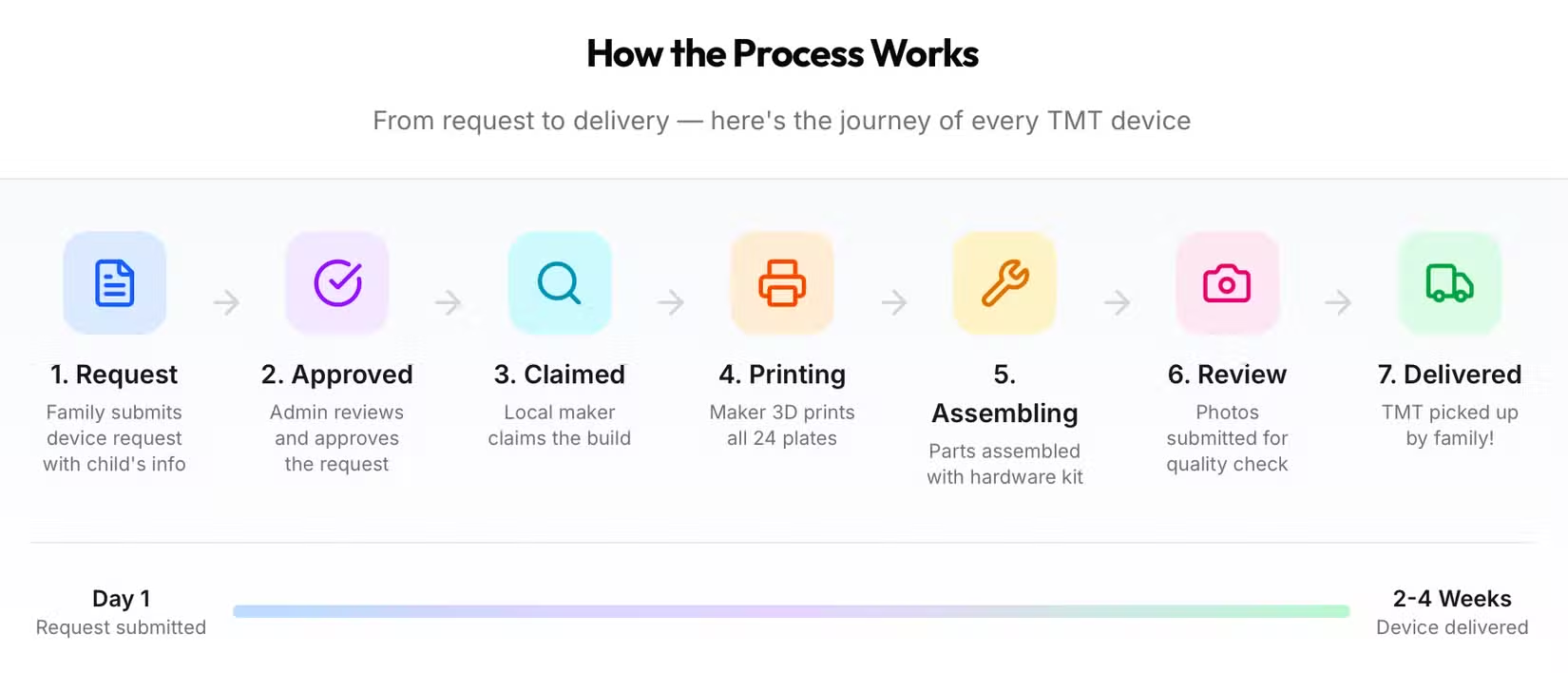
As a maker, you’ll need to volunteer your printer, time, and assembly skills at a minimum. The project also attracts sponsorships, where materials like filament and parts may be covered and sent directly to you. A full build kit costs around $100 which includes all filament and materials, and some families choose to fund the TMT themselves. These kits are available from Schoolhouse Spools, or filament can be sourced elsewhere and paired with a $25 parts kit.
There is no financial reimbursement offered; this is a strictly volunteer-led project with the aim of providing families with devices that are completely free and theirs to keep forever.
Want to help? Here’s how to begin
As a maker, you’ll need to meet a few basic requirements. You’ll need a filament deposition modeling (FDM) 3D printer with a build volume of 256x256x256mm at a minimum. There’s no limitation on brand or model, but the project notes that “the printer should be capable of reliable, long-duration prints.”
Since all makers are vetted, you’ll need to get the ball rolling by first filling out an application. Provide your contact details, level of experience, printer details, and availability. You can choose to partner with other makers, so you can share the load of producing a TMT with other volunteers.
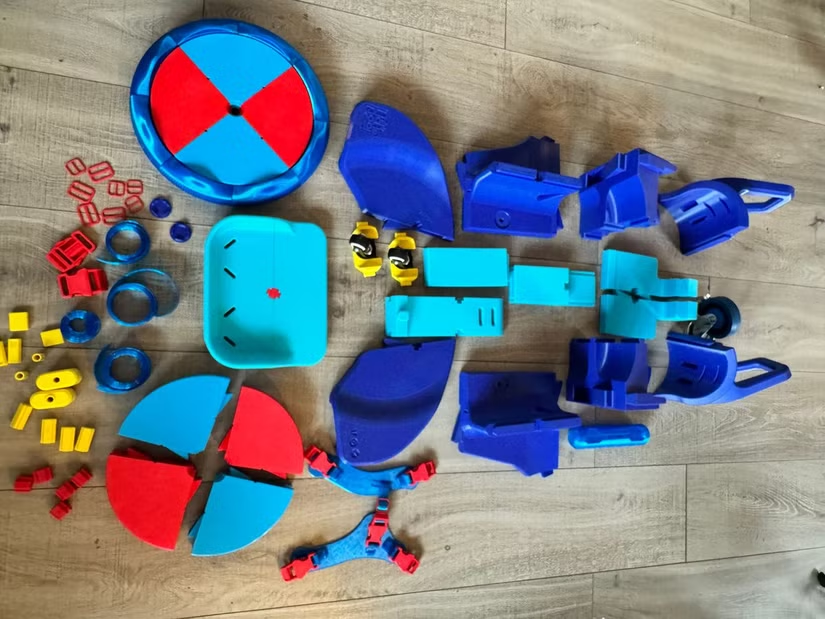
Following this, you’ll need to download some test files and print them, then take photos and submit them so that you can be approved to take part in the program. Assuming all goes well, you’ll then be considered a vetted maker and can start responding to requests and building TMTs.
If you want a bit more information about what’s involved in completing a TMT build, you can view the full build guide, which includes videos, tips, and an assembly overview. You can even download the build files and import them into your slicer to see what the designs look like.
The Make Good project turns your 3D printer into a life-changing tool. Make sure your printer is running smoothly before you undertake a build like this.
Source: Read Full Article