




An E. coli outbreak linked to cheddar cheese made from raw milk at a California farm has expanded to nine people in three states, the Food and Drug Administration said. More than half of the people sickened so far are children under age 5.
Three people had to be hospitalized after they contracted a dangerous strain of E. coli, O157:H7, which produces toxins in the body that cause severe, sometimes bloody, diarrhea and abdominal cramping. One person developed hemolytic uremic syndrome, a condition that can lead to kidney failure.
The FDA said that samples taken from people who became ill between September 2025 and February 2026 were all closely genetically linked to one another, meaning that they all likely got sick from the same source. Seven cases were reported in California. Florida and Texas each reported a case.
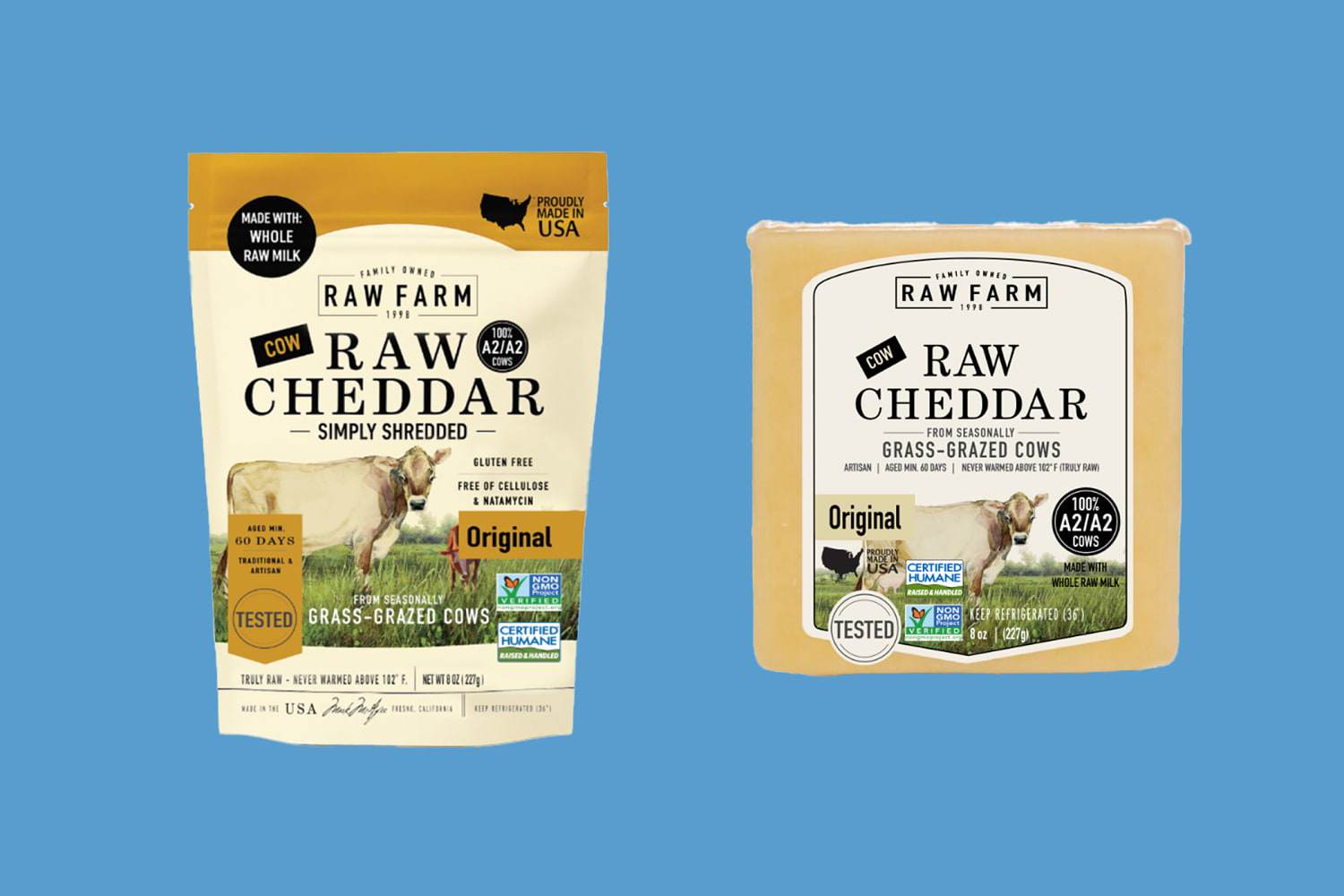
The FDA and Centers for Disease Control and Prevention say that Raw Farm, a Fresno, California-based company is the likely source of the outbreak. Interviews with seven of the patients revealed they’d consumed dairy products from Raw Farm. Five specifically remembered eating the farm’s raw cheddar cheese, according to alerts sent from the health agencies.
As of Friday, no Raw Farm products had been reported to test positive for E. coli. The FDA has not issued a mandatory recall of Raw Farm products, instead recommending that Raw Farm remove cheese products from store shelves on their own.
Raw Farm president Aaron McAfee is pushing back hard, telling NBC News that he won’t voluntarily recall any of his products unless there’s “direct proof” they’re making people sick. That is, a test result that shows E. coli from a Raw Farm product was found in patients.
“We’ve sampled 81 samples that we purchased off retail stores in California, where we continue to sell,” McAfee said, “and those were all negative.”
“If I had any concern, I would have issued a voluntary recall,” he said.
McAfee said that three investigators from the FDA have been at the facility testing products both at the company and at retailers for more than a week. He said that test results from federal investigators won’t be available until next week.
Raw cheese is made from dairy that hasn’t been pasteurized, a process that heats it enough to destroy bacteria. The CDC warns that drinking or eating products made with raw milk can expose people to a variety of germs, including listeria, salmonella and E. coli.
Prior to his appointment as Health and Human Services Secretary, Robert F. Kennedy Jr. was a proponent of raw milk. NBC News reported last year that McAfee had expected to advise Kennedy on ways to support raw milk, but those plans haven’t materialized.
With the new dietary guidelines, Kennedy has focused more on whole milk than raw dairy.
Milk from Raw Farm was tied to dozens of salmonella cases in 2024, and the company did issue a voluntary recall.
The FDA rarely orders recalls outright. Instead, when the agency identifies a potential safety issue — such as contamination or a labeling problem — it typically asks companies to voluntarily pull the products from the market.
If a company doesn’t comply, the FDA can step in more aggressively, including issuing public warnings, seizing products or going to court to force them off the market, often in coordination with state officials. In some cases, the agency can also order a recall if there is a “reasonable probability” the product is contaminated or poses a serious risk to the public, although that authority is used sparingly.
In a statement, an FDA spokesperson said the agency’s investigation into the outbreak is ongoing.
“FDA continues to work with state partners to collect and analyze samples, collaborate with CDC on known cases, and has issued an outbreak advisory to inform consumers, restaurants, and retailers of the current facts, and initiated an on-site inspection,” the spokesperson said. “As additional evidence and facts are developed, we will continue to update the public and evaluate all potential tools to further protect consumers.”
Symptoms of E. coli infections often start three to four days after eating contaminated food and can include severe stomach cramps, vomiting and bloody diarrhea, according to the CDC.
Most people recover on their own within a week, but some groups are more at risk for complications, including children under age 5, older adults, pregnant women and people with weakened immune systems.
Worrisome symptoms that warrant a call to a doctor include dizziness, ongoing diarrhea with a fever over 102 degrees and an inability to keep liquids down without vomiting.
The CDC is advising people to “consider not eating this cheese while the investigation continues” and to wash any items and surfaces — like box shredders, knives and countertops — that may have touched the cheese with hot, soapy water or run them through a dishwasher.
Source: Read Full Article