








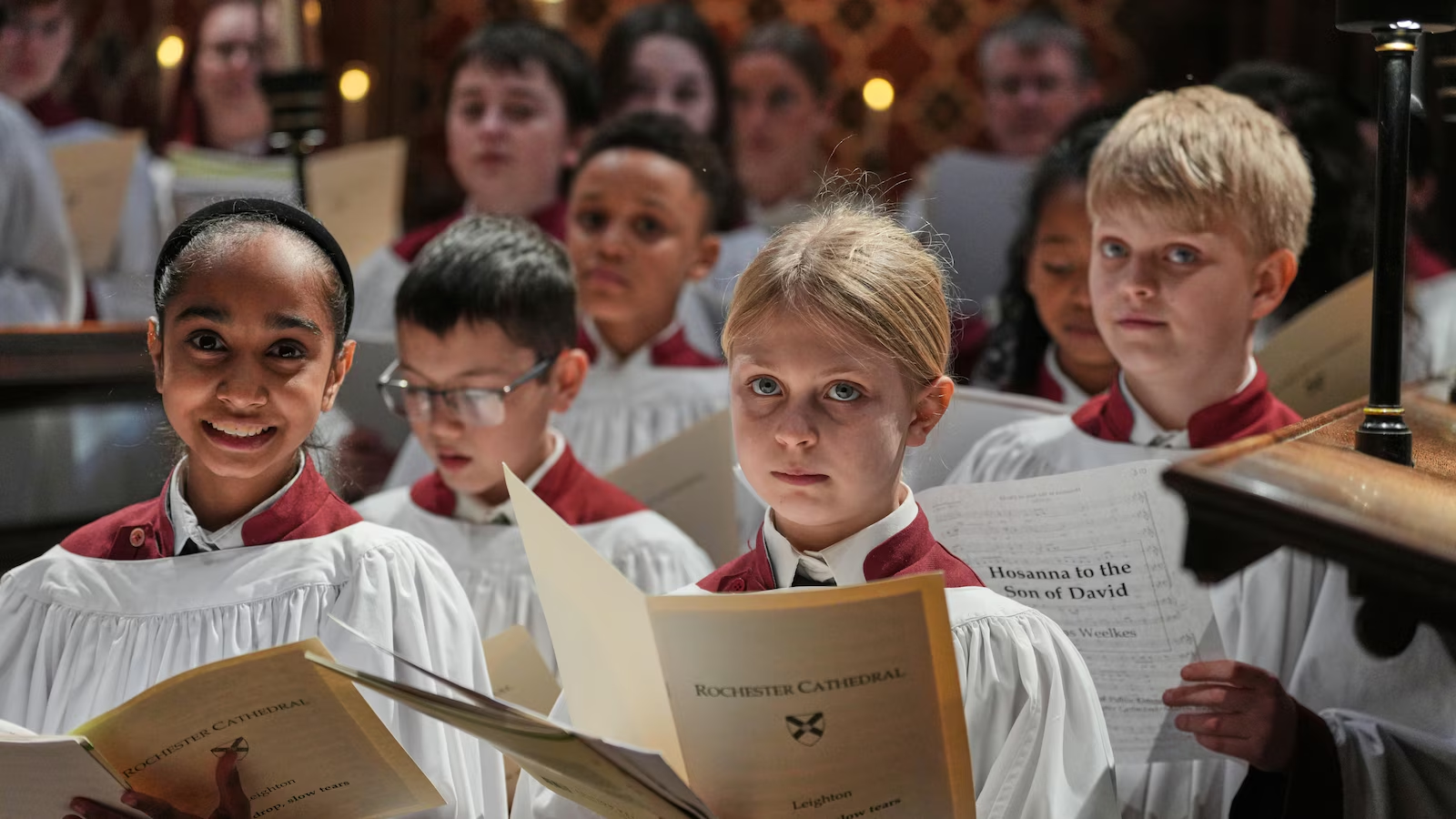
LONDON — On a gray afternoon in the days before Easter, a dozen or so schoolchildren straggled into a side building at Rochester Cathedral and began their transformation.
Off went the jackets and backpacks, on came burgundy cassocks and white surplices. Then they trooped into the cathedral, opened their mouths and sang as one. The youthful gaggle had become a choir, giving voice to a tradition of choral music in the Church of England that has survived largely unchanged for almost 500 years.
“I think for me, it’s one of the sounds of our country,’’ said Adrian Bawtree, the choir’s music director. “All of our cathedrals are beautiful, sacred spaces where you can come and just sit and be and you can be immersed, bathed, nourished, sent out back into the world transformed by an experience in 30 minutes.”
The epitome of that tradition is Choral Evensong, an evening service of hymns, psalms and prayers laid out by Archbishop Thomas Cranmer, the first Protestant archbishop of the Church of England, in 1549. The service is performed by the choir, with the congregation participating simply by listening.
But that tradition is under threat as the demands of modern life, declining church attendance and tight funding make it harder to find and train the next generation of choristers.
Enthusiasts are trying to reverse that, launching a campaign for the government to recognize English choral services as an important part of Britain’s culture under a U.N. program that seeks to protect “intangible cultural heritage,” as well as historic buildings and natural wonders.
The U.K. government is seeking nominations for a nationwide inventory of cultural traditions — from Morris dancing to the craft of building dry stone walls — that should be preserved. Protecting such traditions is crucial to strengthen community identity and bolster the U.K. economy as heritage tourism generates billions of pounds in annual spending, the government says.
While many people have been introduced to English choral services through the angelic voices of the choristers in flowing robes and Elizabethan ruffs who sing at royal weddings and carol services, choirs perform every day in much more humble settings.
And many are struggling, according to the Cathedral Music Trust, which was founded in 1956 to stem the decline of church music after World War II. Last year it gave 500,000 pounds ($661,000) to 28 cathedrals and churches around the country.
It can be a lot. Rochester, for example, spends about 250,000 pounds ($330,000) a year on music, a substantial outlay for a provincial cathedral but less than some.
The trust hopes recognition of the English choral tradition will bring attention and much-needed funding to choirs, which it says are an important training ground for the musicians of tomorrow, both religious and secular.
“Whilst it happens every day, it is actually quite fragile,” trust CEO Jonathan Mayes said. “It takes an awful lot of work and it takes a lot of funding to actually make it happen and that doesn’t come without effort.’’
Preserving Evensong is important historically because the service was instrumental in the development and spread of the modern English language, said Diarmaid MacCulloch, an expert on Christianity and an emeritus professor at the University of Oxford.
The service is based on the Book of Common Prayer, compiled by Cranmer to make English the language of the Church of England after it broke away from the Latin-dominated Catholic Church during the Protestant Reformation.
The idea was to create services everyone could be part of.
“It is very much a drama, and it is a drama which has been performed by the people of England from 1549 through to the present day,” MacCulloch said. “It’s far more a vehicle of public consciousness performance than any play of Shakespeare.’’
And while a growing number of choirs including Rochester now take girls as well as boys, in other respects it hasn’t changed much since then.
“The service would be really quite recognizable to Queen Elizabeth I as much as Queen Elizabeth II,” MacCulloch said. “And that’s quite remarkable.”
Bawtree, the music director at Rochester Cathedral, is one of those working to preserve the tradition as he oversees the youngest singers, aged 9-13, known as choristers, as well as a youth choir for older children. All are backed by professional adult singers.
Bawtree said he was captured by church music the first time he heard an organ play and a choir sing when he was about 9 years old. Now he wants people to know that services like Evensong make it possible for anyone to turn up and listen to beautiful choral music, regardless of their beliefs.
“When I heard it, it was like big octopus arms came and grabbed me and said, ‘You’ve got to be part of this.’ So I think I am trying to speak to that 9-year-old child and saying actually this is something that could speak to most people, if not everyone.
“And because I had that experience, I would like to share that with future generations and be passionate about that,” he said. “We talk in the world of mindfulness and the power of music to transform lives. This is an extraordinary arena where that can happen.”
___
Associated Press religion coverage receives support through the AP’s collaboration with The Conversation US, with funding from Lilly Endowment Inc. The AP is solely responsible for this content.
Source: Read Full Article