








NASA’s giant moon rocket, in photos

The gumdrop-shaped Orion spacecraft can carry up to four passengers. At 16.5 feet wide, it has a habitable volume of around 330 cubic feet. So the crew members have been training to sleep, eat, exercise, use the bathroom and communicate with ground controllers in very tight quarters. The Orion capsule includes a space toilet (with…

Read More

Why use living cells? Researchers are making chemicals with enzymes alone

Today’s nearly $70 billion U.S. biofuels economy is powered by two technology toolboxes. Biochemical technologies—used to produce around 17 billion gallons of ethanol annually—leverage microorganisms to convert plant biomass sugars into alcohols, other biofuels, or chemicals. Chemical technologies, the second toolbox, use catalysts to turn biomass and wastes into similar target products. Source: Read Full…

Read More

Japan’s Underwater Supervolcano Is Refilling With Magma — And It Could Change How We Predict Eruptions

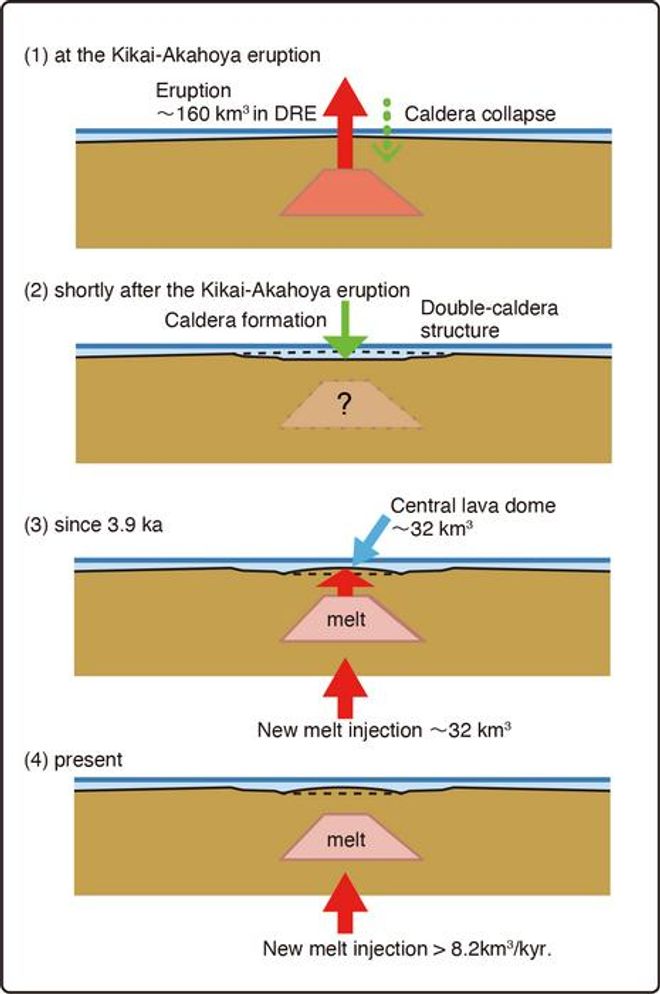
Supervolcanoes, like the one in Yellowstone National Park, don’t just erupt and go quiet — they slowly rebuild. And now, scientists say they’re finally getting a clearer picture of how that happens. Published in Communications Earth & Environment, the new research focused on Japan’s Kikai caldera, the site of the largest volcanic eruption of the…

Read More