







WWE star CM Punk called it “straight greed”. Illinois governor JB Pritzker called it a “slap in the face”. An overwhelming majority of fans say they will hold a grudge.
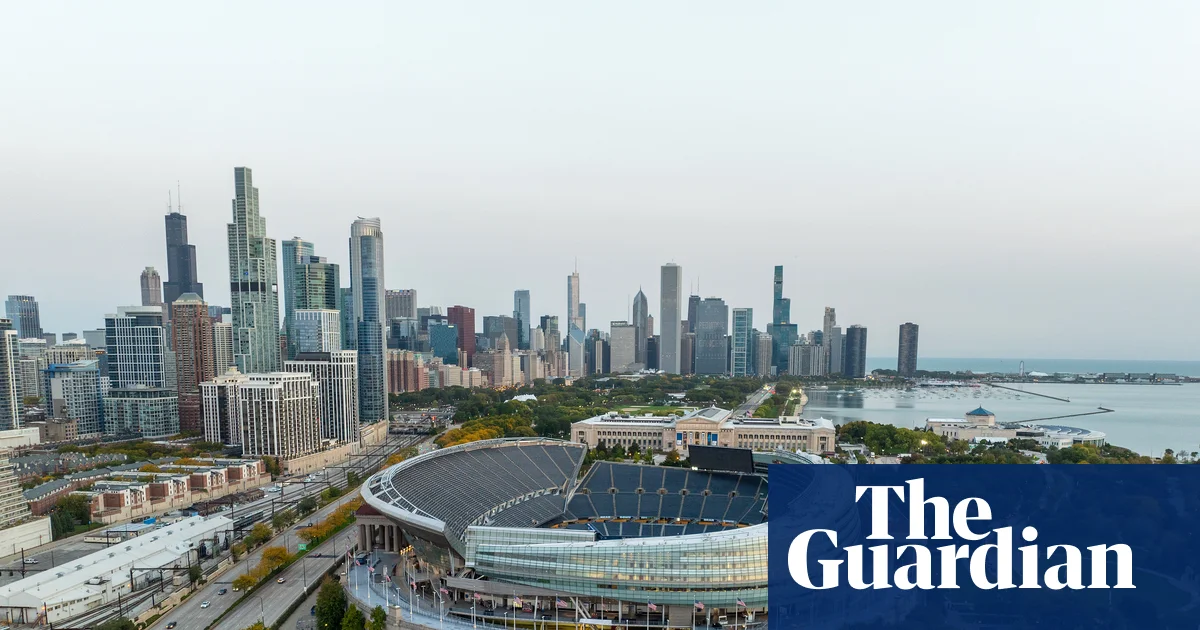
This cacophony of disgust has been prompted by the real possibility that the Chicago Bears could relocate to Hammond, Indiana. The Bears’ owners bought a site in Arlington Heights, Illinois, for a new stadium, but negotiations over property taxes have stalled construction. Meanwhile, Indiana has thrown its hat into the ring, passing a state bill on 26 February authorizing funding in Hammond. Chicago’s current home, Soldier Field, is a rental, open-air venue with the smallest seating capacity in the NFL. Still, it is not only in Illinois; it is in Chicago proper along Lake Michigan. Arlington Heights, while about 25 miles north of the city, is at least within state lines.
If US senators Bernie Sanders and Greg Casar have their way, the Bears’ ownership – or any major professional sports ownership group considering relocation – may think twice.
Last week, Casar and Sanders introduced the Home Team Act, which would require owners of professional sports teams to give local communities a one-year opportunity to buy the team before relocating it.
“Sports in America should be about more than just making billionaire owners even richer,” Casar said. “Far too many Americans know the pain of losing a team, and far too many communities have had to fork over billions in subsidies just to keep an already profitable team home. Our bill is about creating a level playing field so leagues work for fans and taxpayers, not just owners.”
One of those Americans is Sanders, a Brooklyn native and lifelong fan of the Brooklyn Dodgers. In 1957, the team announced it would move to Los Angeles.
“There was a joke in my Flatbush neighborhood that the three worst people in modern history were Adolf Hitler, Joseph Stalin and [Dodgers owner] Walter O’Malley, and not necessarily in that order,” he said on the Flagrant podcast earlier this year.
Though Sanders was just 16 at the time, the Dodgers’ move helped shape the anti-corporate politics for which he later became known.
The Home Team Act would aim to protect fans from losing teams and taxpayers from being pressured into funding large subsidies by requiring franchise owners to provide a year’s notice before relocating. Relocation would be defined as crossing state lines or moving to a different metropolitan area.
During that year, members of the community would have the opportunity to buy the franchise at fair market value. The bill allows for buyers ranging from private individuals to government entities, companies or community ownership models such as that used by the Green Bay Packers.
The Packers are owned by more than 500,000 shareholders. No individual is allowed to own more than 200,000 shares, a structure that has helped ensure the team remains in Green Bay. That model is, however, an outlier.
For most teams in the NFL and other leagues, relocation remains a recurring threat, typically driven by the pursuit of future profits rather than present revenues – and with little regard for the losses left behind.
The California congresswoman Lateefah Simon, a co-sponsor of the bill, represents Oakland, a city that has lost all of its major professional teams in the space of seven years. The Golden State Warriors moved across the Bay to San Francisco and the Raiders left for Nevada, with the Athletics set to follow in 2028.
The impact has extended beyond sport. Small businesses have been affected, jobs have been lost, and the city has forfeited a significant part of its cultural identity. Had legislation like the Home Team Act been in place, Oakland might still have a team.
Consider the Bears. The franchise is valued at roughly $8.9bn. Even with contributions from wealthy backers, the burden on residents would be enormous. The idea of community ownership is appealing – equitable, even – but, at least for now, largely theoretical.
The bill would also face steep political obstacles. It would need to pass both chambers of Congress before being signed by a president who counts several billionaire sports owners among his closest allies.
There are practical questions, too: how to determine when a relocation process officially begins, and who would set a fair market valuation. Even so, the intent is clear. If more ownership groups placed similar value on their communities, such legislation may not be necessary at all.
Source: Read Full Article