

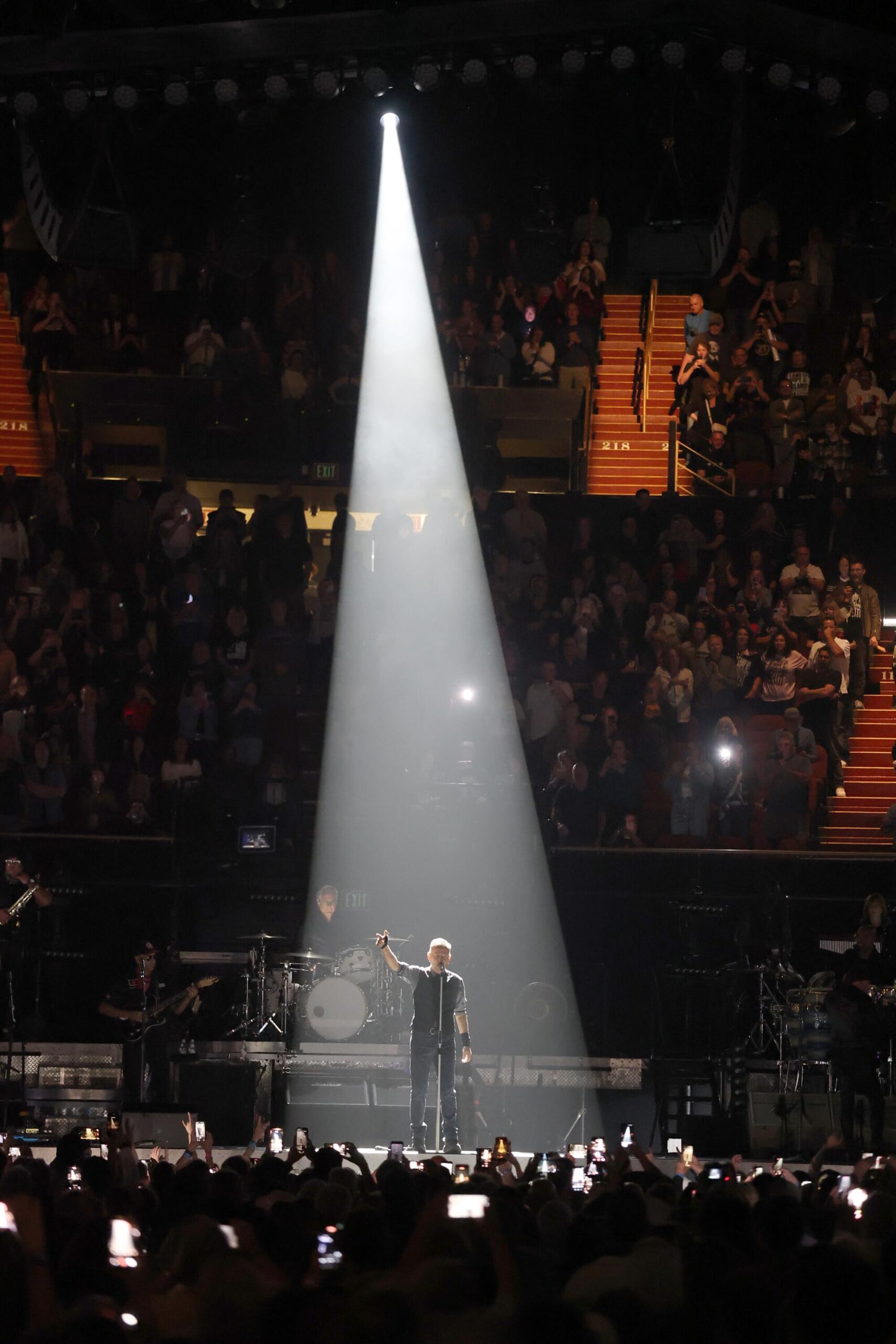
As the time approached 10:30 Tuesday night — nearly three hours after Bruce Springsteen had marched onstage at Inglewood’s Kia Forum alongside 18 of his musical comrades — the 76-year-old rock legend told the crowd he hadn’t intended to be there.
“This is a tour that we never planned,” he said. “The E Street Band is here with you tonight because we need to feel your hope and your strength. And we want to bring some hope and bring some strength for you.”
It wasn’t impossible to believe him.
After a two-year trek that finally wrapped last summer amid the release of a massive box set and a splashy Hollywood biopic, Springsteen might’ve been expected to spend 2026 counting his money and his accolades. Yet the way he tells it, the actions of a “corrupt, incompetent, racist, reckless and treasonous” president and his administration spurred him back into action.
“If you’re feeling helpless, if you’re feeling hopeless, if you’re feeling betrayed, if you’re feeling frustrated, if you’re feeling angry — I mean, I know I’ve been,” he said.
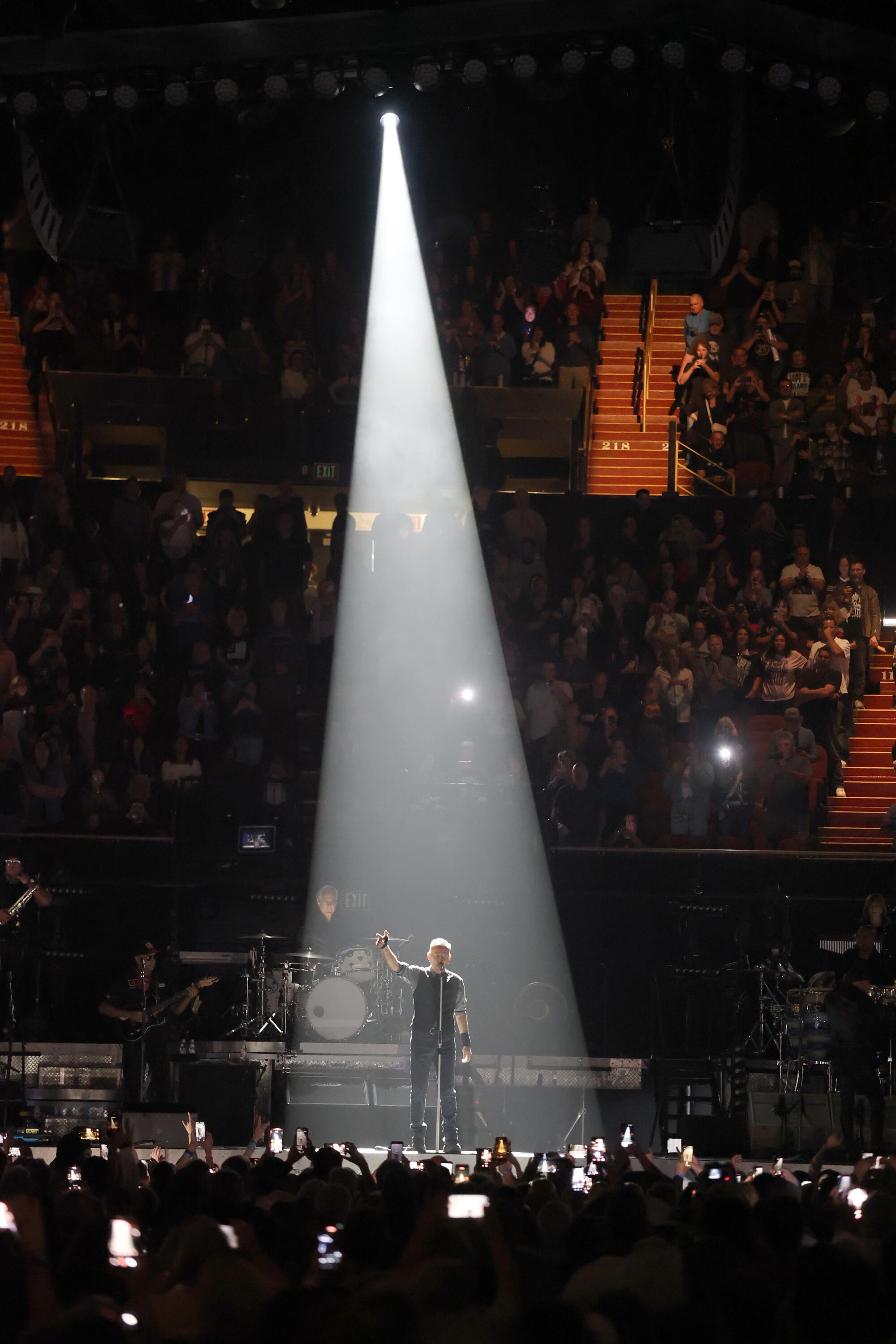
Tuesday’s show was the first of two this week at the Forum.
(Allen J. Schaben / Los Angeles Times)
Thus the hastily arranged Land of Hope & Dreams tour: two months of U.S. concert dates that began last week in Minneapolis, where federal immigration agents killed two American citizens in January, and will wrap May 27 with a stadium show in Washington, D.C.
“The White House — this White House — is destroying the American idea,” Springsteen proclaimed during Tuesday’s gig, the first of two this week at the Forum.
Before we get to the performance itself, let’s acknowledge that the Boss is sticking his neck out here. Sure, he’s protected by his wealth and his celebrity; sure, he’s preaching to the choir in every city he and the E Street Band visit.
But what other musician on Springsteen’s level is speaking out the way he is right now?
On Tuesday, he introduced “Streets of Minneapolis” — a brand-new protest song in which he mentions both Alex Pretti and Renée Good by name — with a vividly detailed monologue about the circumstances of their deaths. Then he led his players through a fervent rendition of the driving folk-rock tune.
“It’s our blood and bones / And these whistles and phones / Against Miller and Noem’s f— lies,” Springsteen sang — one lyric that might’ve inspired President Trump this month to urge his followers to boycott the singer, whom he compared in a social media post to a “dried up prune who has suffered greatly from the work of a really bad plastic surgeon.” (In truth, Springsteen probably enjoyed that.)
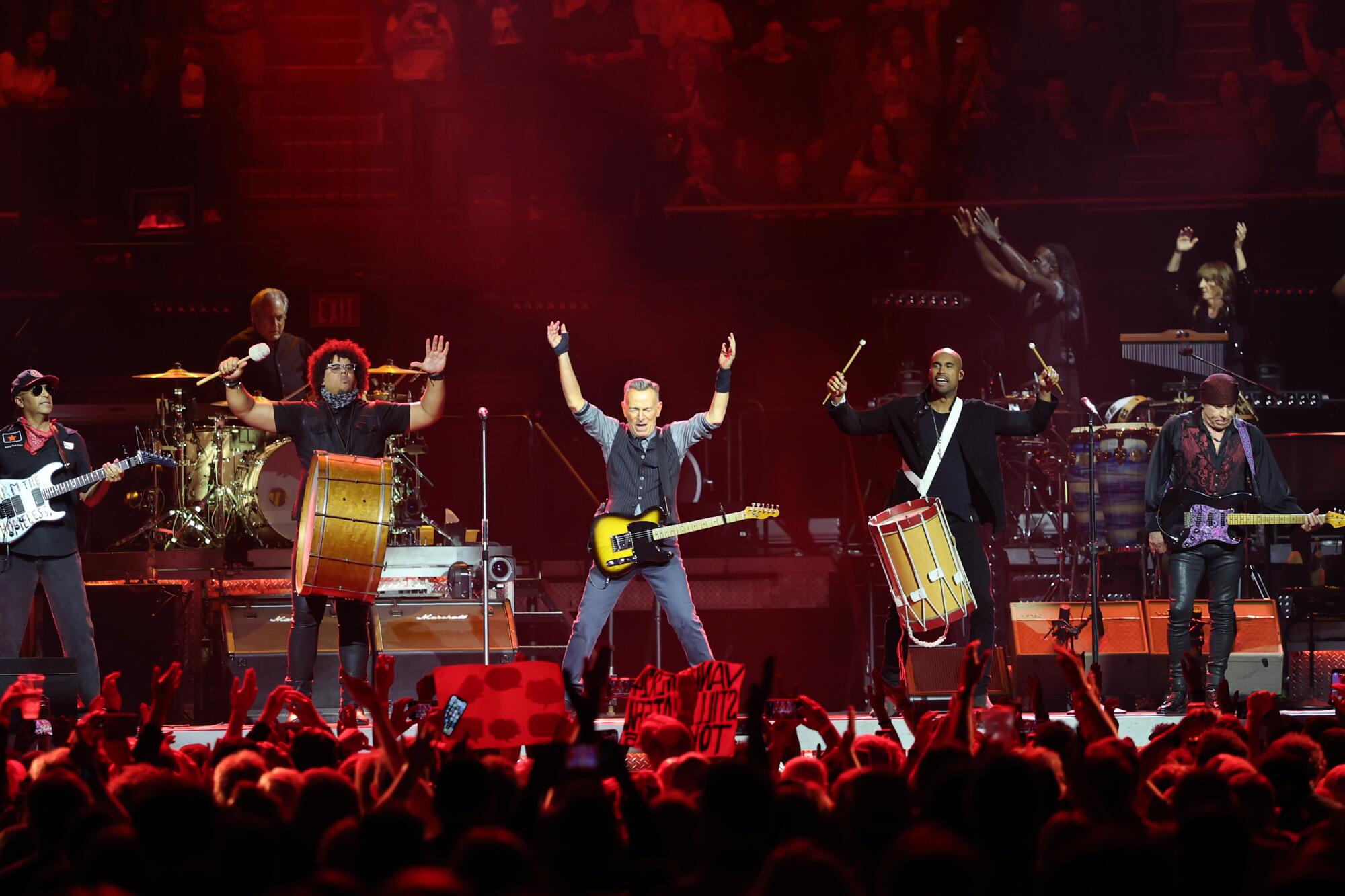
Bruce Springsteen and the E Street Band
(Allen J. Schaben / Los Angeles Times)
Whatever the risks of his speechifying, you had to admire — here in our age of political infotainment — the natural finesse with which Springsteen threaded his prepared rhetoric into Tuesday’s set. He knew just when to have the E Streeters vamp so he could talk about NATO and USAID; he knew when it was wiser to lead the audience in a chant of “ICE out.”
Indeed, as much as he was speaking his mind, Springsteen was providing his fans with an opportunity to work out their own anxieties in rowdy singalong versions of classics like “Born in the U.S.A.,” “No Surrender,” “The Promised Land” and “Out in the Street.”
If the concert’s animating impulse was outrage, the prevailing emotion was joy, even — or especially — when the music was at its most pointed, as in covers of Edwin Starr’s “War” and “Clampdown” by the Clash.
With an extra E Street member in Rage Against the Machine’s Tom Morello, Springsteen made “Badlands” and “Death to My Hometown” shimmer and stomp; “Murder Incorporated” was a gritty soul-rock rave-up, while “Youngstown” got a scabrous guitar solo by Nils Lofgren that reminded you of his other gig in Neil Young’s Crazy Horse. (Springsteen’s wife, Patti Scialfa, who said in 2024 that she has cancer, wasn’t part of the band Tuesday.)
About halfway through the show, Springsteen sang “American Skin (41 Shots),” the early-2000s song about racialized police violence he wrote after Amadou Diallo’s killing by four NYPD officers; he followed that with “Long Walk Home,” which he described as “a prayer for our country.”
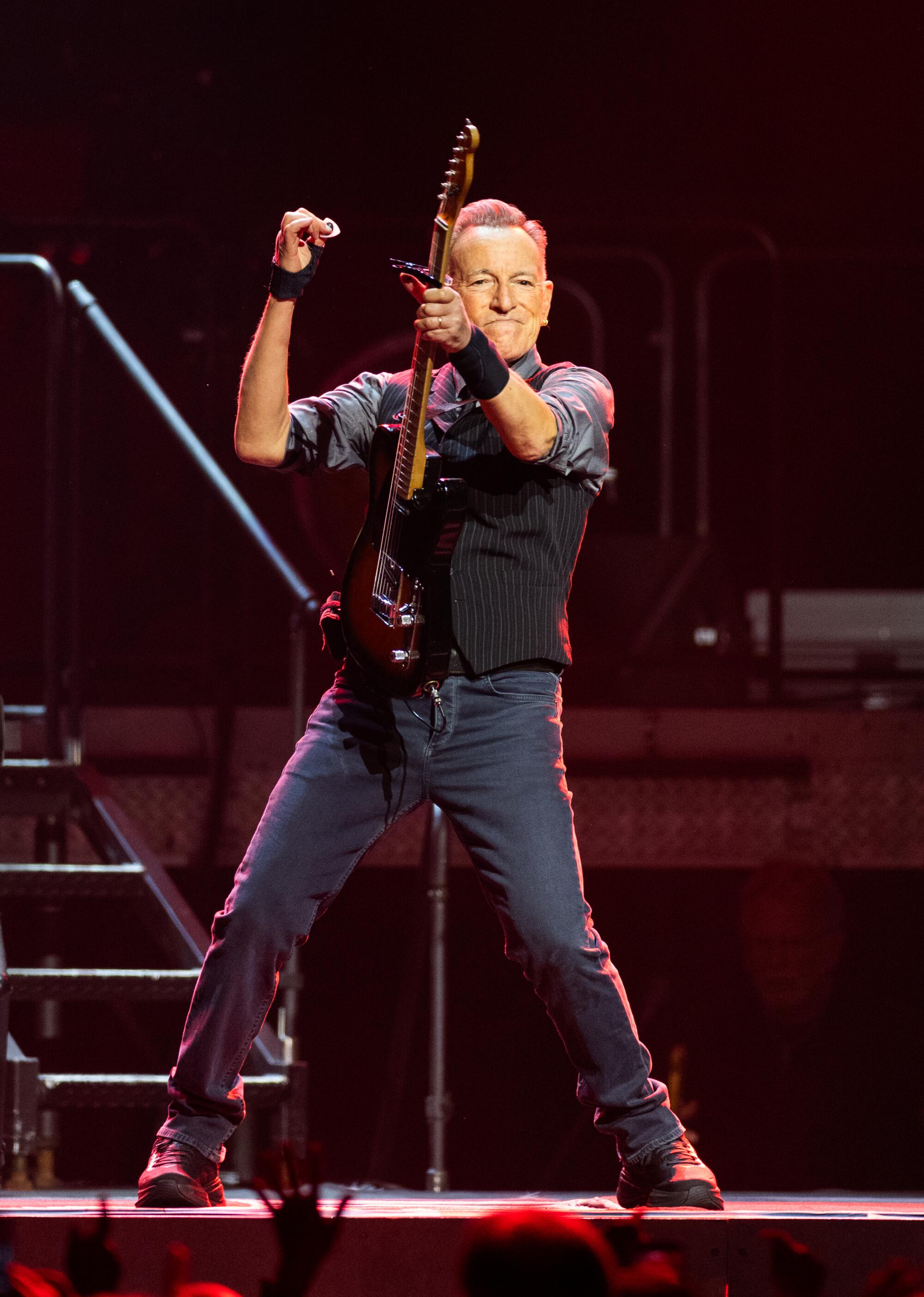
Bruce Springsteen
(Allen J. Schaben / Los Angeles Times)
Played back to back, the songs made you think of how little agreement we’ve come to over the last quarter-century about who gets to be called an American. The identity is always under attack, and it’s always being defended.
Anyone but a Bruce stan would admit that Springsteen leaned a little hard on recent stuff here: “House of a Thousand Guitars,” “My City of Ruins,” “Wrecking Ball” and the like.
Yet as with his speechmaking, he can still read a room. “It’s gotta be done,” he said with a grin as the band revved up “Hungry Heart,” one of a handful of old pop hits he did that broke from the evening’s topical throughline.
Near the end — in an encore that went bang-bang-bang with “Born to Run” into “Bobby Jean” into “Dancing in the Dark” — Springsteen, his shirt drenched with sweat, took a seat onstage and thanked members of the Immigrant Defenders Law Center for attending the show. (Also in the house Tuesday: Henry Winkler.)
Then he offered one final homily before closing with Bob Dylan’s “Chimes of Freedom.”
“These are hard times, but we’ll make it through,” he said. “We’re the Americans. What do they say? Americans do the right thing after they’ve tried everything else.” He shook his head as though he were running through a mental inventory.
“F—!”
Source: Read Full Article