






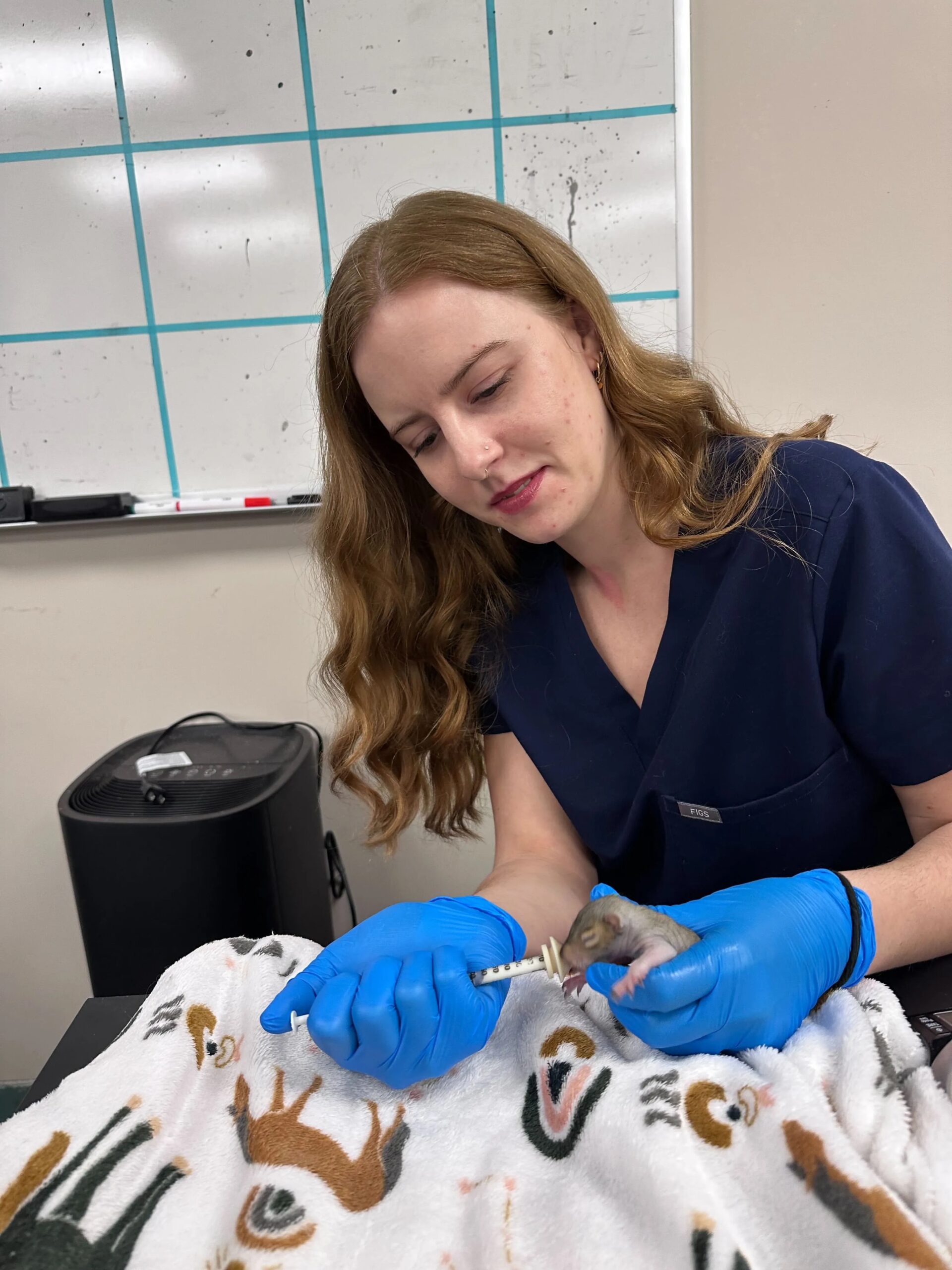
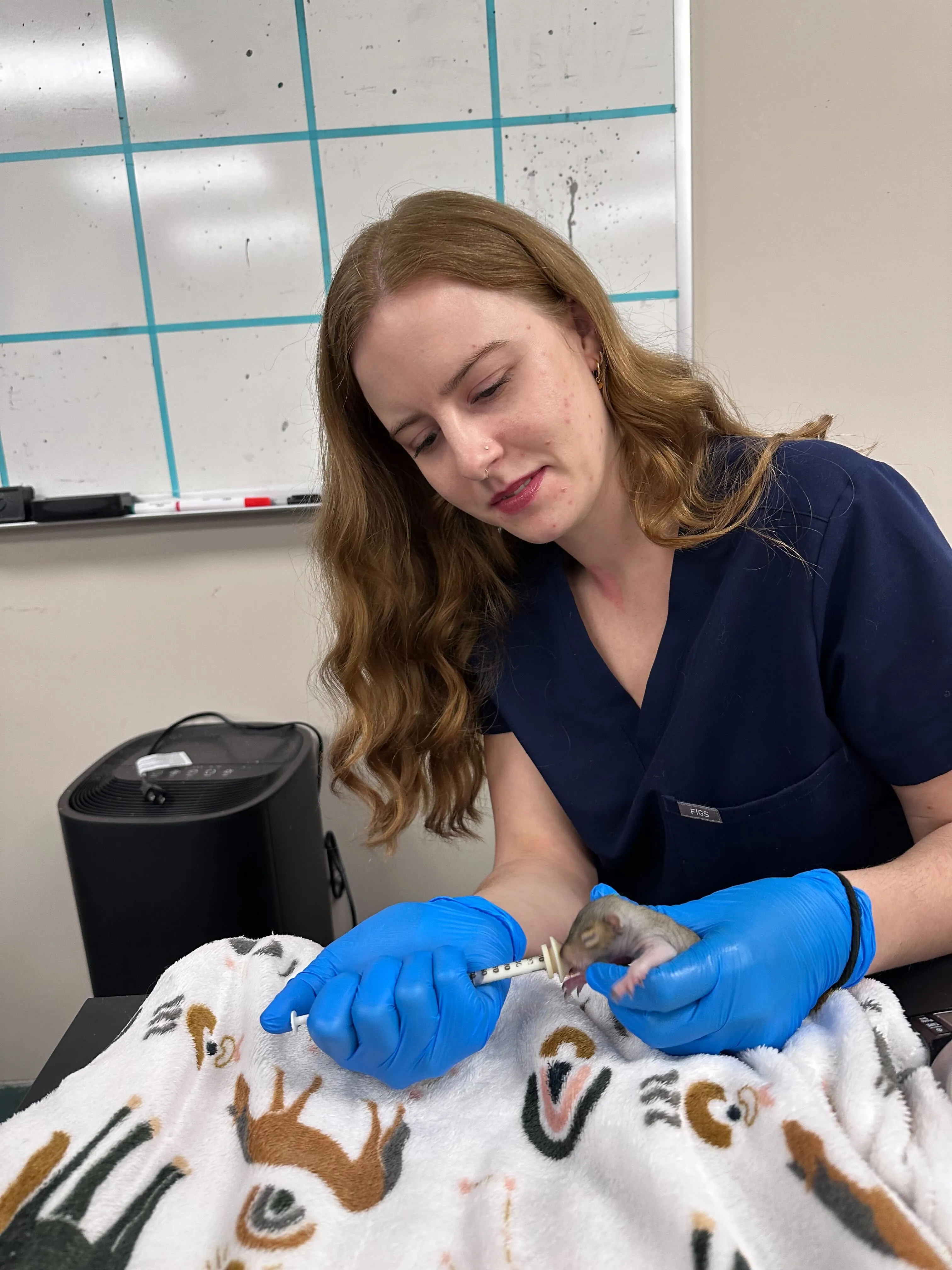
While it might not always feel like it, spring has finally sprung for those of us in the Northern Hemisphere. At the New England Wildlife Center in Massachusetts, the arrival of the first baby squirrels is an important indicator of the start of the season.
While they usually begin to come in around St. Patrick’s Day, the center has received them as early as late February. This year’s first baby squirrels have just arrived, New England Wildlife Center CEO Greg Mertz, tells Popular Science.
Regardless of their admittance date, baby squirrels always mean lots of work for the staff. And the work has just begun, as the staff must feed them specially formulated milk every half an hour.
Mertz explains that they receive the young animals in waves. They’re currently experiencing a spring wave and there will be another over the summer, and one more at the beginning of October.
Baby squirrels can fall out of their nests for a variety of reasons. Wind storms can knock the babies out of a tree, the nest could be too small, or yard work like trimming or cutting down a tree may cause problems. The mother squirrel may also be injured, killed, or have been scared away. If the mother is still alive and well she will usually return her baby to the nest, which is why people shouldn’t immediately move a baby squirrel when they find one.
“I would tell people to monitor the situation, not closely, but monitor from a distance for a good 12 hours, even if it’s overnight,” Mertz explains. “If people have indoor outdoor cats, keep the cat inside. If they have dogs, keep dogs inside and away from where that area is and let mom do her business, because as soon as we’re nearby, or dogs are nearby, or cats are nearby, she’s going to run away.”
A predator like a hawk or raccoon might still come by, “but that’s the way of nature. We’re trying to do what we can for those that are left out of the system.”
If 12 hours passes and the baby has not been recuperated, then you should pick it up and reach out to a wildlife rehabilitator, he adds.
According to an adorable New England Wildlife Center video, people could facilitate a healthy baby’s return to the mother by putting it (and a hot water bottle in case of cold weather) in an elevated basket and playing baby squirrel noises on YouTube. After setting this up, people should keep their distance.
“Yes, it can work,” Mertz says, explaining that this solution is meant to keep the baby out of reach from predators. Though he admits, “I’m not sure that it’s gonna work successfully all the time.”
When in doubt, contact your local animal rescue organization.
In Ask Us Anything, Popular Science answers your most outlandish, mind-burning questions, from the everyday things you’ve always wondered to the bizarre things you never thought to ask. Have something you’ve always wanted to know? Ask us.

2025 PopSci Best of What’s New
Source: Read Full Article