








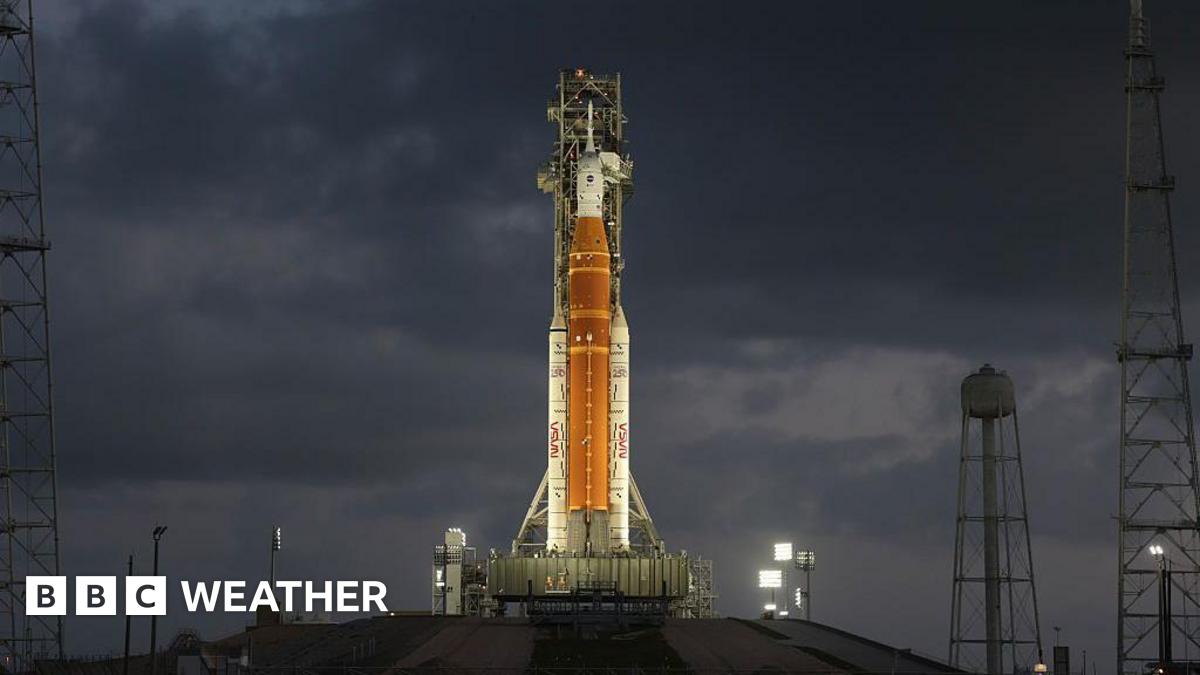
The weather rules include atmospheric electricity, types of cloud, specifically cumulus and disturbed weather like rain or strong winds.
Using a percentage chance of a violation of the rules, launch weather officers use a combination of meteorological and climatological data, local knowledge, and experience to forecast this probability.
Lightning is one of the biggest risks, but it is not only the natural lightning from a thunderstorm – or cumulonimbus cloud – that forecasters will be concerned about.
Rocket-induced lightning from an enhanced atmospheric electric field is also a major risk.
“Some types of clouds, even if they’re not producing lightning, carry an electrical charge where a rocket passing through them at high speeds with a trail of exhaust can act like a lightning rod and trigger a lightning strike,” said Burger.
This rocket-induced lightning can be triggered much more easily than natural lightning.
Source: Read Full Article