








I can’t seem to avoid 3D printed slop like articulated dragons and octopi with dangling legs. It wouldn’t be so bad if these models didn’t remind me of some of the worst aspects of 3D printing.
I won’t judge you if you print a dragon or two in the privacy of your own home, but there are bigger issues to discuss here.
The Funko Pops of the 3D printing world
3D printing appeals to different people for different reasons. For some, it’s a means to an end; a way of elevating existing hobbies like cosplay and wargaming to another level. For others, it’s strictly functional, a way to repair fridge shelves or create bespoke rack mounts for homelab gear.
Others make their 3D printer a hobby; tinkering with upgrades, experimenting with filament, and always browsing model repositories for the next thing to download and print. But 3D printing doesn’t always enjoy a rosy reputation.
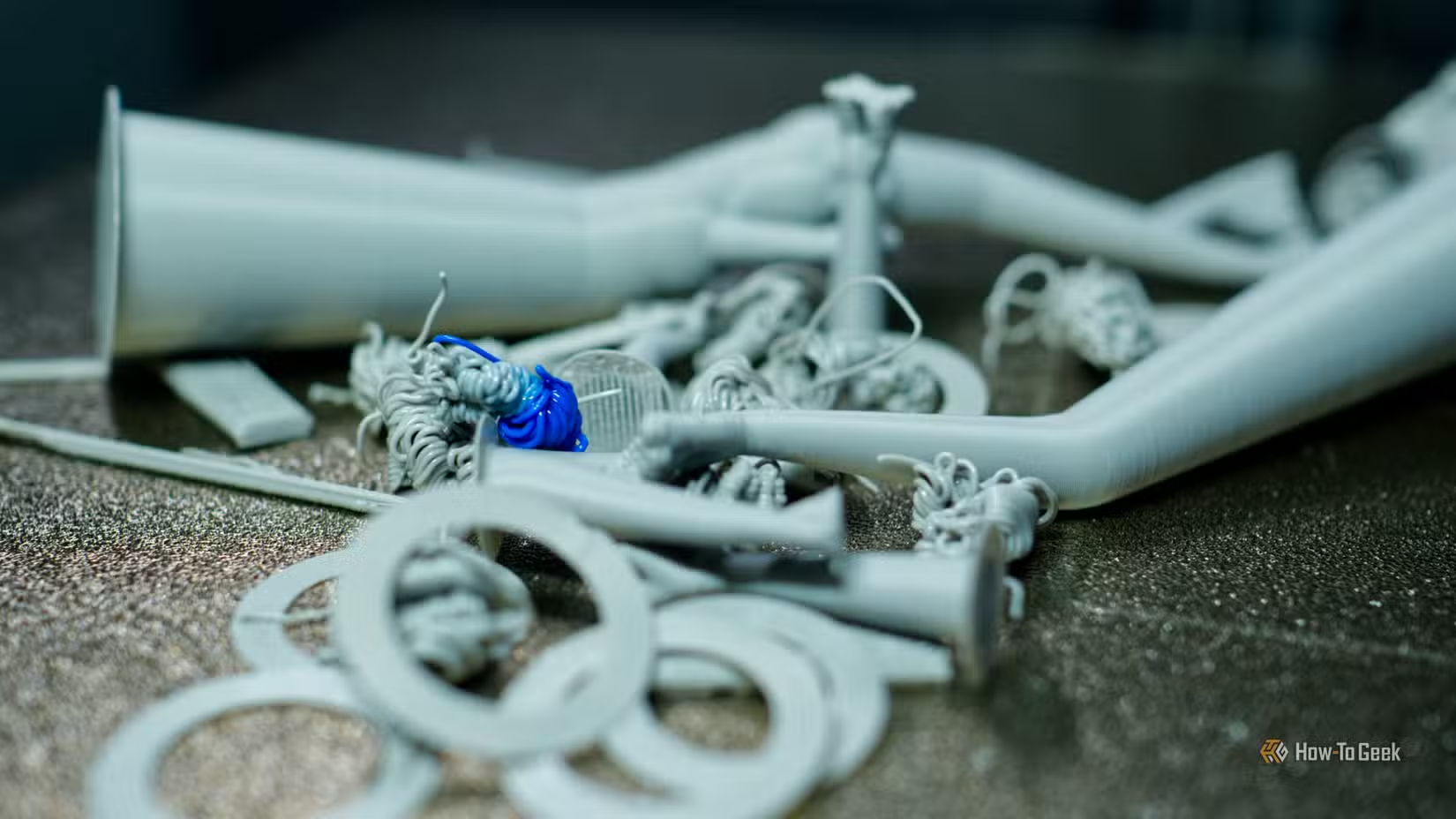
To some, it’s just another symptom of a world obsessed with disposable plastic waste. A means of creating an endless stream of dust collectors and plastic items that will entertain you for 30 seconds before never being picked up again, like novelty gifts that quickly lose their shine. Funko Pops on tap.
You can create some incredible things with a 3D printer, including highly detailed functional items like threaded step-up ring adapters and speakers that sound considerably better than their cost price. The junk printer negative connotation might not necessarily be justified, but it’s not hard to see why it’s become pervasive.
“Slop” might be an overused word, but I can’t think of a better way to describe this stuff considering the scale at which these models are pumped out.
The curious case of Kmart and the choking hazard
U.S. readers might be surprised to learn that Kmart is still a thing here in Australia. Though related to the company of the same name, Kmart Australia is actually a completely separate entity. Operationally, it’s very similar in that it’s a large retail store that sells clothing, homewares, cosmetics, toys, and more with a focus on affordability.
In 2025, Kmart issued a recall due to a safety issue that was found with a particular kind of children’s toy. The “3D Mini Animal Toy” was found to be brittle enough that parts could easily become separated and pose a choking hazard. A close look at the product image reveals the problem:
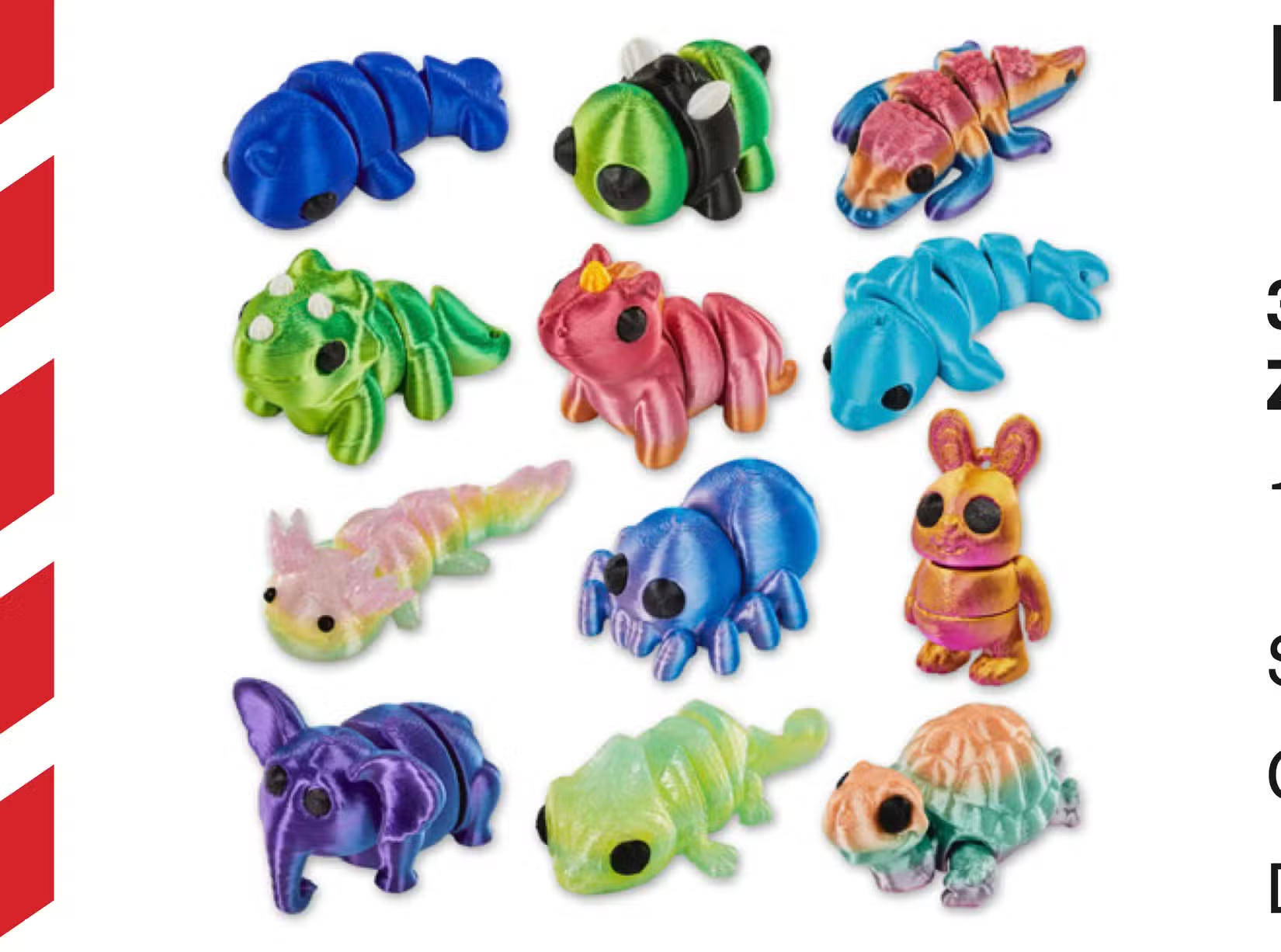
Visible layer lines confirm that these items are 3D printed, and likely done so on a mass scale with little care for print quality and durability. Since young children tend to put things in their mouths and 3D printed items often lack the kind of durability found on even the cheapest injection-molded toys, a recall was issued.
Not to be outdone, Kmart seems to have figured out a way to sell the rest of its 3D printed stock by marketing it to children who are six years or older. Right now, similar 3D printed toys are on the shelves of my local Kmart store in retail packaging. And yes, they’re dragons.
You can even see loose strands of filament stringing in the product shots.
Etsy and weekly markets are flooded with slop
3D printed items for sale in Kmart may seem odd, but these items are also all over once-respected marketplaces like Etsy. Though the company has introduced a rule that 3D printed items sold on the website must be based on the seller’s original design, actually policing this is far easier said than done.
More egregious is that these items are also taking over real-world maker fairs, farmers’ markets, and other in-person events that are traditionally associated with handmade goods.
I’m not saying that there’s no skill involved in producing 3D printed items. Modeling is hard, designing the print-in-place hinges that these designs depend on is undoubtedly a skill. Licensing 3D printed toys for sale at these events is one thing, but I’m not exactly brimming with confidence that these models aren’t just grabbed from MakerWorld and duplicated 50 times in silk PLA.
I know I sound like a grumpy old man. I’m not the 3D printing police, and I’m certainly not against printing the odd pointless thing to satisfy my curiosity. There are responsible ways to dispose of waste filament, after all.
People who want articulated dragons should be able to buy them without having to invest in a full 3D printing setup. But at the same time, it’s hard to deny that 3D printing has an image problem; this kind of slop is to blame.
Source: Read Full Article